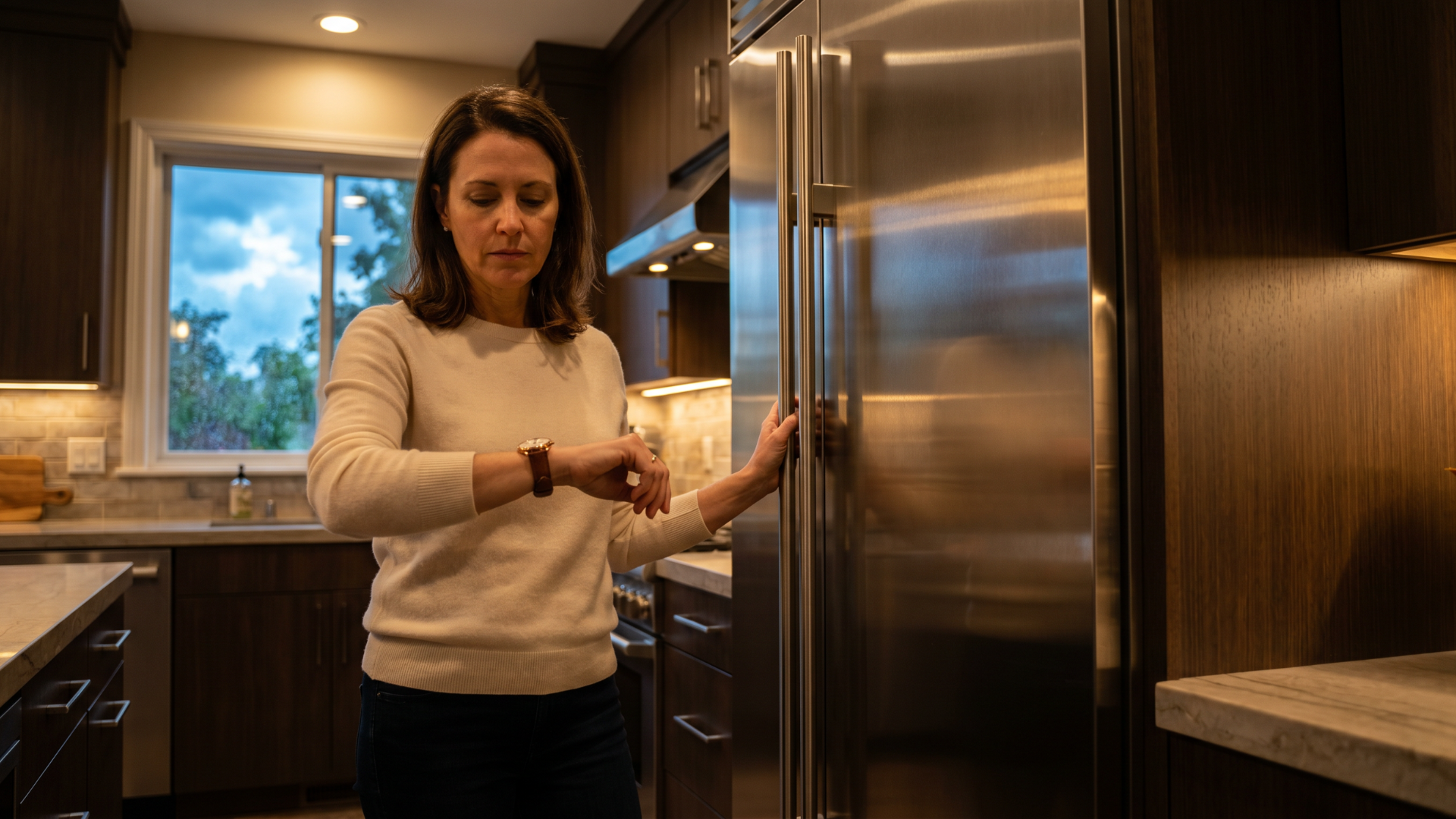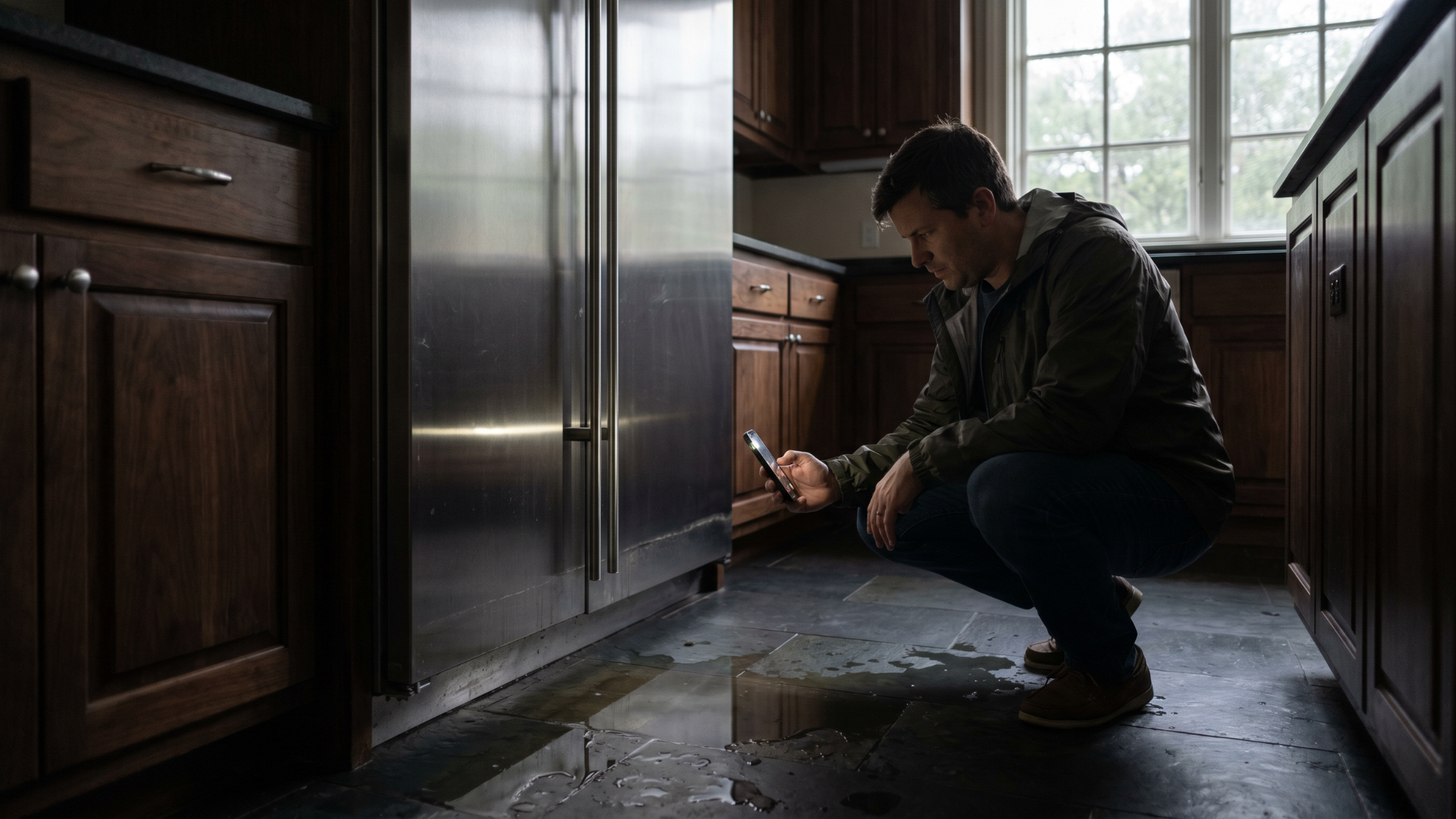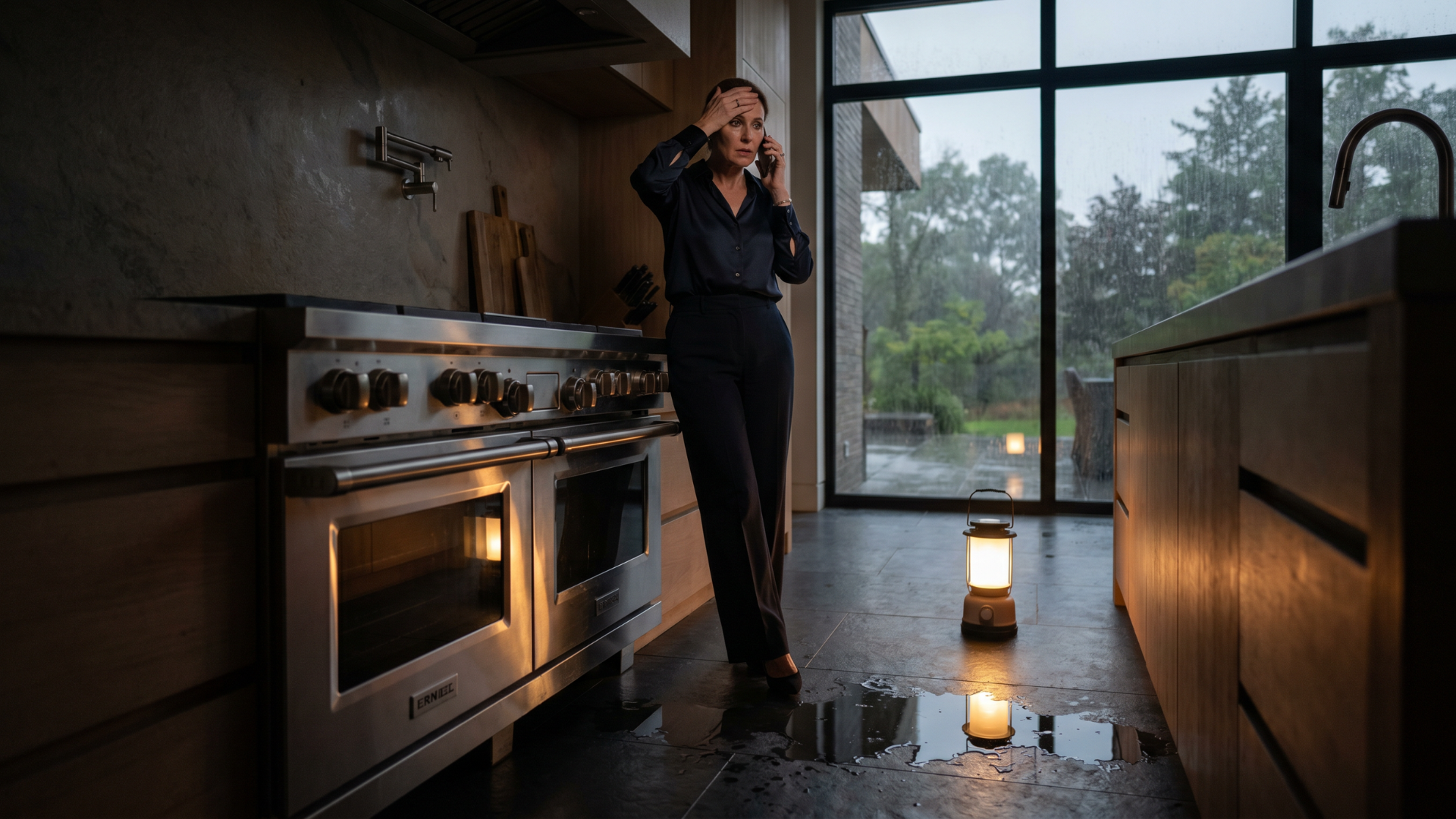





For 203 consecutive hours in February 2021, the city of Waco stayed below freezing, 53 hours longer than its previous all-time record. At the peak of Winter Storm Uri on February 15, the average temperature across Texas was 12°F, six degrees colder than Alaska on the same day. More than 4.5 million Texas homes and businesses lost power. Every one of the state’s 254 counties received a federal disaster declaration.
The storm produced more than 500,000 insurance claims and an estimated $10.3 billion in total losses. Eighty-five percent of those claims were property damage — overwhelmingly burst pipes and the water damage that followed. Four years later, Winter Weather Event Fern in January 2026 reopened the same wounds for the same households. For Texas luxury homeowners, the freeze question is not whether to prepare. It is what to prepare for beyond the obvious plumbing vulnerability.
Why Luxury Appliances Fail Differently in a Freeze
The typical homeowner’s freeze checklist stops at pipes. Drip the faucets, open cabinet doors under sinks, and wrap the exterior spigots. That playbook handles 85% of the insurance claim categories — but it misses the failure pattern that affects luxury kitchens specifically, and the damage that shows up days or weeks after the thaw.
Luxury appliances are engineered for tighter operating tolerances than commodity equipment. A Sub-Zero refrigerator’s dual-compressor sealed system assumes an ambient temperature range that excludes power-outage conditions in an unheated kitchen. A Wolf range’s electronic ignition modules are moisture-sensitive in ways that a 1970s pilot-light range is not. A built-in coffee machine with a plumbed water line is a burst-pipe vector that gets ignored because it doesn’t look like one. And a wine cellar cooling system, designed to manage a 30°F delta in one direction, doesn’t reverse gracefully when the entire building falls 40°F below its design floor.
The damage that defines a freeze event for luxury households isn’t always visible during the storm. It often surfaces during the first full-power cycle after restoration, when equipment tries to resume operation under conditions its engineers never modeled.
Phase One: Pre-Freeze Preparation (48 Hours Out)
Texas weather forecasting gives most households a 48- to 72-hour warning before a significant freeze event. The work done in that window determines everything downstream.
Plumbed appliances need the most attention. Built-in coffee machines, ice makers, wine cellar humidification systems, and refrigerator water lines all have water sitting in narrow tubing that will freeze and rupture at 32°F if the kitchen loses heat for eight to twelve hours. Shutting off the water supply line and running the appliance until the line clears is the only reliable defense.
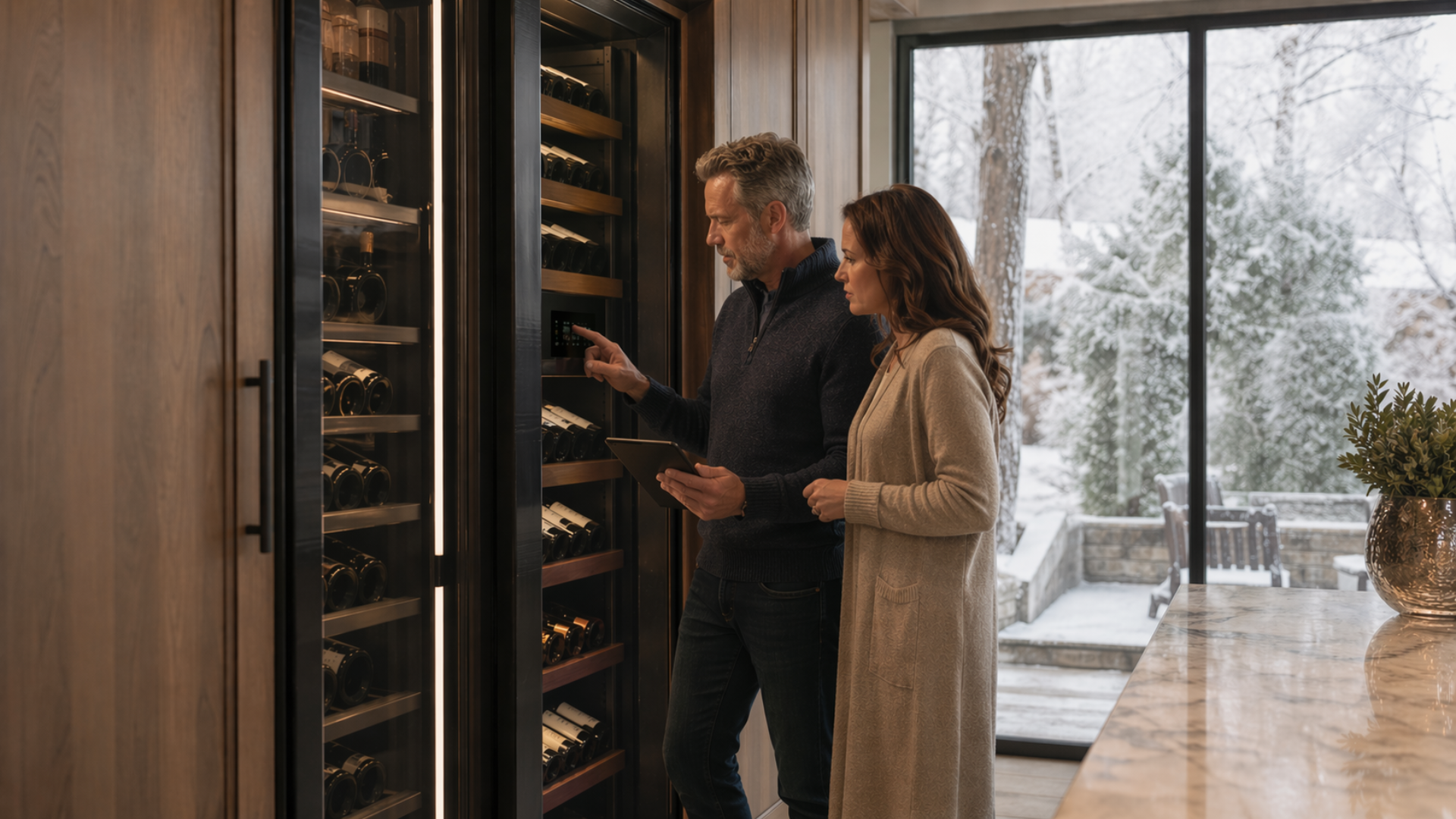
Wine cellar cooling systems require a separate decision. A properly insulated cellar holds 55°F for a long time without active cooling — but if the cooling unit is on the opposite wall from a compromised exterior envelope, ambient cold will penetrate faster than insulation assumes. Collectors with significant inventory should know where the coldest point in their cellar is before the freeze arrives, not during.
Outdoor kitchen equipment is frequently overlooked. Gas lines, outdoor refrigerators, ice makers, and water features all require winterization — not just pre-freeze, but through the end of winter. The assumption that a one-day freeze won’t damage outdoor equipment ignores what four days of sub-freezing temperatures actually do.
Phase Two: During the Event (0 to 96 Hours)
Power loss is the dominant variable. In 2021, some Houston and Dallas luxury households went 48 to 72 hours without electricity — enough time for kitchen temperatures to fall into the 30s even in well-insulated homes.
Two rules minimize damage in this window. First, do not open refrigerators and freezers except when necessary. A closed Sub-Zero holds temperature for 24 to 48 hours without power; an opened one equilibrates in hours. Second, if the wine cellar cooling system has lost power and the cellar is approaching ambient temperature, the refrigerant in the cooling unit is stable — but the system’s restart sequence after power returns is not something to trust without inspection.
The appliances most at risk during the event itself are those with active water connections. A built-in coffee machine with a plumbed line running through an exterior wall is a pipe-burst event waiting for the coldest six hours. Wine cellar cooling systems with evaporators mounted against uninsulated walls can develop micro-fractures in refrigerant lines that don’t show symptoms until the next cooling load.
Phase Three: Post-Restoration (The First 48 Hours Back)
This is the phase the homeowner’s playbook ignores entirely, and it is where the expensive damage happens.
The first full-power cycle after a prolonged outage stresses every electronic component in a luxury kitchen. Sub-Zero, Wolf, Miele, and Thermador equipment all run microprocessor-controlled startup sequences that assume specific voltage, temperature, and humidity conditions at boot. A cold, damp kitchen restored to power presents none of those conditions in their expected ranges.
The specific failures that concentrate in this phase: compressor hard-starts on refrigeration systems that sat cold for 48 hours; control-board faults on ranges and ovens where moisture condensed inside the enclosure; Sub-Zero warranty implications around sealed-system damage that the owner may not connect to the freeze event until a claim is denied months later; and plumbed-water appliances where a small line rupture wasn’t noticed during the outage because there was no water pressure to reveal it.
A post-restoration inspection by a factory-certified technician — specifically, one qualified to check the sealed systems on premium refrigeration and the gas and electrical systems on premium cooking equipment — is the single most undervalued step in Texas freeze recovery. For kitchens that have been through a recent renovation, the inspection overlaps with post-renovation appliance calibration — many of the same diagnostic checks apply.
The Insurance Documentation Gap
Texas freeze claims have a documentation problem unique to luxury appliances. Standard adjuster training focuses on visible water damage, structural issues, and commodity appliance replacement values. A claim that turns on “my Sub-Zero started making unusual sounds a week after the thaw” is adjuster-unfriendly — and the longer the delay between the freeze and the diagnosis, the harder the causation argument becomes. The Texas Department of Insurance’s published guidance on freeze-related water damage claims makes the documentation expectations explicit — policyholders who cannot show they took reasonable protective action may see claims denied.
Three documentation practices close that gap. Take dated photographs of kitchen temperature readings during the outage. Log the time and duration of power loss. And schedule a professional post-restoration inspection within 14 days of power return, with a written report that notes pre-existing versus freeze-related findings. This combination produces a causation record that most luxury-appliance freeze claims require, and most homeowners don’t have.
For a deeper read on the gap between homeowners’ coverage and luxury equipment realities, our luxury appliance insurance coverage analysis walks through the specific exclusions that matter.
A Working Freeze Playbook
Uri was not an anomaly. Fern, four years later, proved the pattern. Texas luxury kitchens operate on the assumption that power and moderate ambient temperature are constants — and that assumption will keep being wrong every few winters.
The practical response has three components. Before the freeze: shut off plumbed-appliance water lines and drain the lines. During the event, minimize door openings and know which equipment has ruptured before power returns. After restoration: schedule a certified post-freeze inspection within 14 days, regardless of whether anything appears wrong.
Every element of that playbook is cheaper than what the freeze costs without it. The lesson from Uri is not that luxury appliances are fragile in the cold. It is that the damage compounds quietly after the thaw, and the homeowners who catch it early are the ones whose service history tells the story for them.