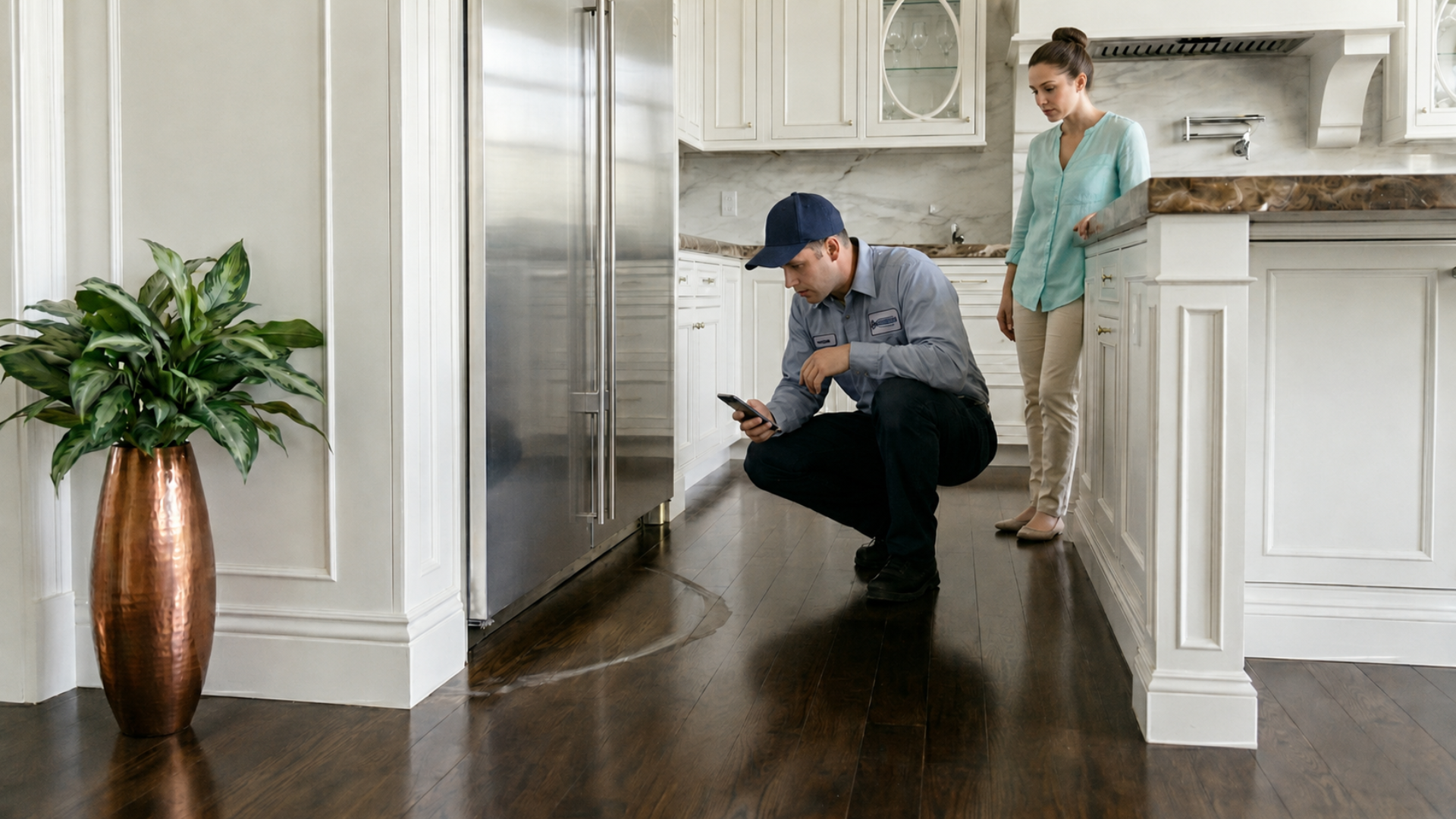





A Highland Park homeowner spends $150,000 on a kitchen remodel. Custom cabinetry, quartzite countertops, a Wolf range, a Sub-Zero refrigerator column, a Gaggenau combi-steam oven. The contractor’s team connects every appliance, confirms power, runs a quick test. The project manager signs off. The invoice is paid.
Six weeks later, the soufflés are flat. The Sub-Zero runs warm on the left side. The Gaggenau throws an error code during its first steam cycle. Nothing is broken. Everything is uncalibrated.
This is the most common failure point in luxury kitchen renovations, and it happens because the people who install appliances and the people who calibrate them are not the same people.
What “Installed” Does Not Mean
Contractors work to building codes. They confirm electrical connections, verify gas line integrity, check water supply hookups, and ensure each unit powers on. That checklist satisfies the scope of a renovation contract. It does not address whether the appliances perform to their factory specifications.
The distinction matters because luxury appliances are precision instruments shipped with factory-set calibrations that assume controlled conditions — stable power, consistent ambient temperature, clean air, level surfaces. A renovation provides none of these. Construction environments introduce dust into sensor housings. Electrical work may alter voltage consistency. New cabinetry configurations change airflow around built-in units. The appliance that left the factory calibrated to ±5°F may arrive at its permanent home reading 25°F off target, and no one verifies this before the contractor leaves.
ThermoWorks testing has found that ovens set to the same temperature can vary by as much as 90°F from one another. That figure represents the extreme, but even a 25°F offset — well within the range of post-installation drift — turns a 350°F bake into a 375°F burn or a 325°F disappointment. For a Wolf dual-fuel range or a Thermador Pro Grand that cost $8,000 to $15,000, this is not an academic concern. It is a nightly frustration that homeowners attribute to the appliance rather than to what was never done after installation.
Ovens: The Most Common Calibration Failure
Every oven cycles on and off to maintain its set temperature — the element heats past the target, shuts off, allows temperature to fall, then reignites. Normal cycling creates a ±30°F swing around the set point. This is expected behavior, not a defect. But when the baseline is already offset from the set temperature, those swings compound. An oven calibrated 20°F hot will swing from roughly 350°F to 410°F when set to 370°F. Cookies burn. Proteins overcook. The homeowner blames the recipe.
Digital ovens — now standard in luxury lines — offer calibration through keypad sequences specific to each model. Wolf ranges use a different entry method than Thermador wall ovens, which differs again from Miele’s menu-driven interface. The adjustment compensates for sensor offset, typically in 5°F increments up to ±35°F. If the variance exceeds that range, the sensor itself or the relay control board may have sustained damage during installation, and no amount of keypad adjustment will fix it.
Analog ovens require physical calibration: removing the temperature knob, locating the adjustment screw on the thermostat shaft, and turning it in precise 1/8-turn increments — each turn shifting the reading by roughly 10°F. Overshooting requires recalibration in the opposite direction, and each test cycle takes 30 minutes to verify against a precision thermometer placed at the oven’s center on the middle rack.
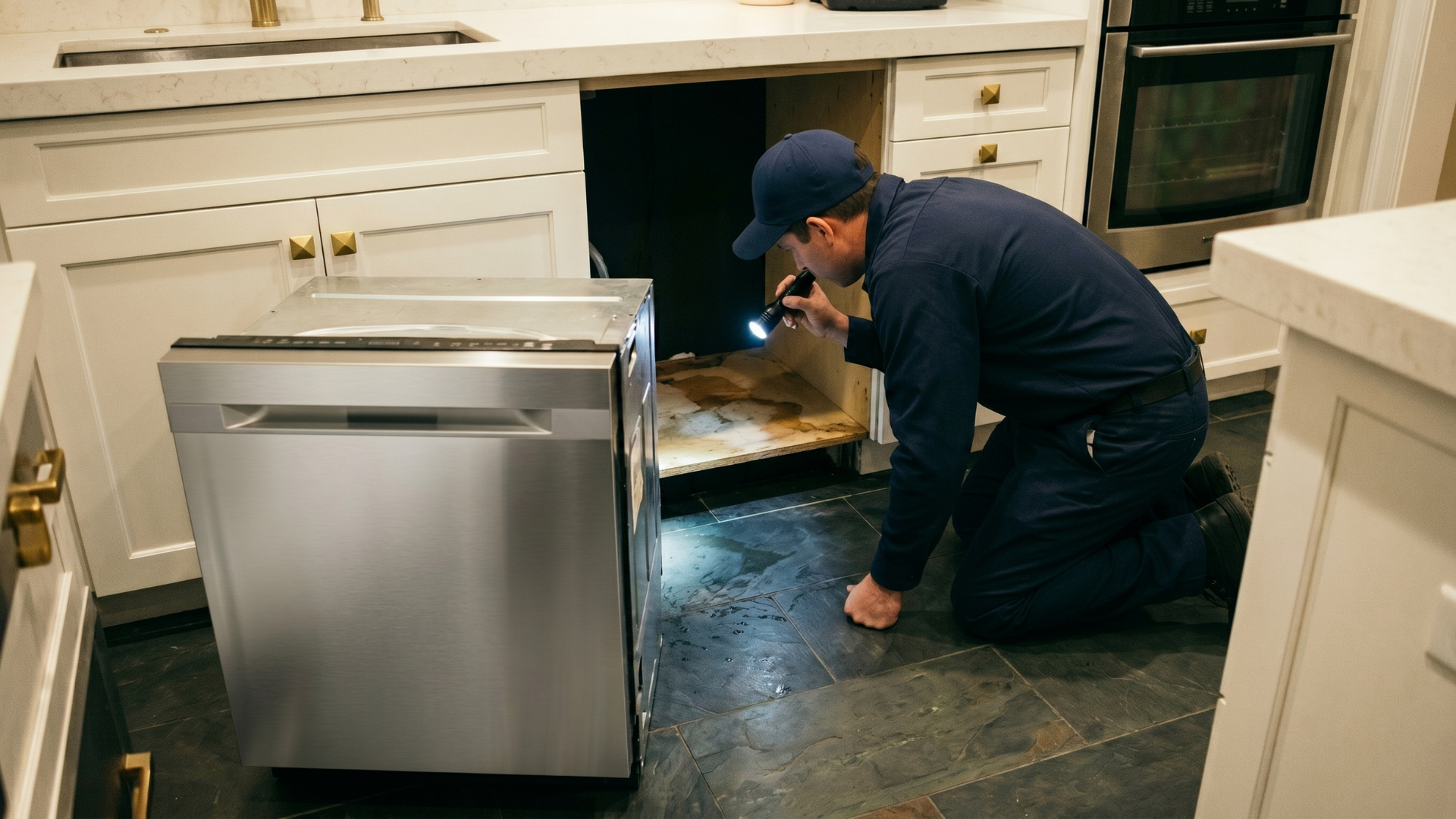
Steam and combi-steam ovens introduce another layer entirely. Gaggenau’s combi-steam models require a post-installation calibration cycle to establish the boiling point at the unit’s specific altitude and water pressure. The manufacturer estimates 20 minutes. Homeowners on Houzz have reported cycles running over three hours — and that is when the cycle completes successfully. If the waste line loop sits too high or the water supply pressure falls outside specification, the calibration fails entirely, sometimes producing error codes that send homeowners into a panic over appliances that are not defective. They are simply unfinished.
Refrigeration: The 24-Hour Window Nobody Mentions
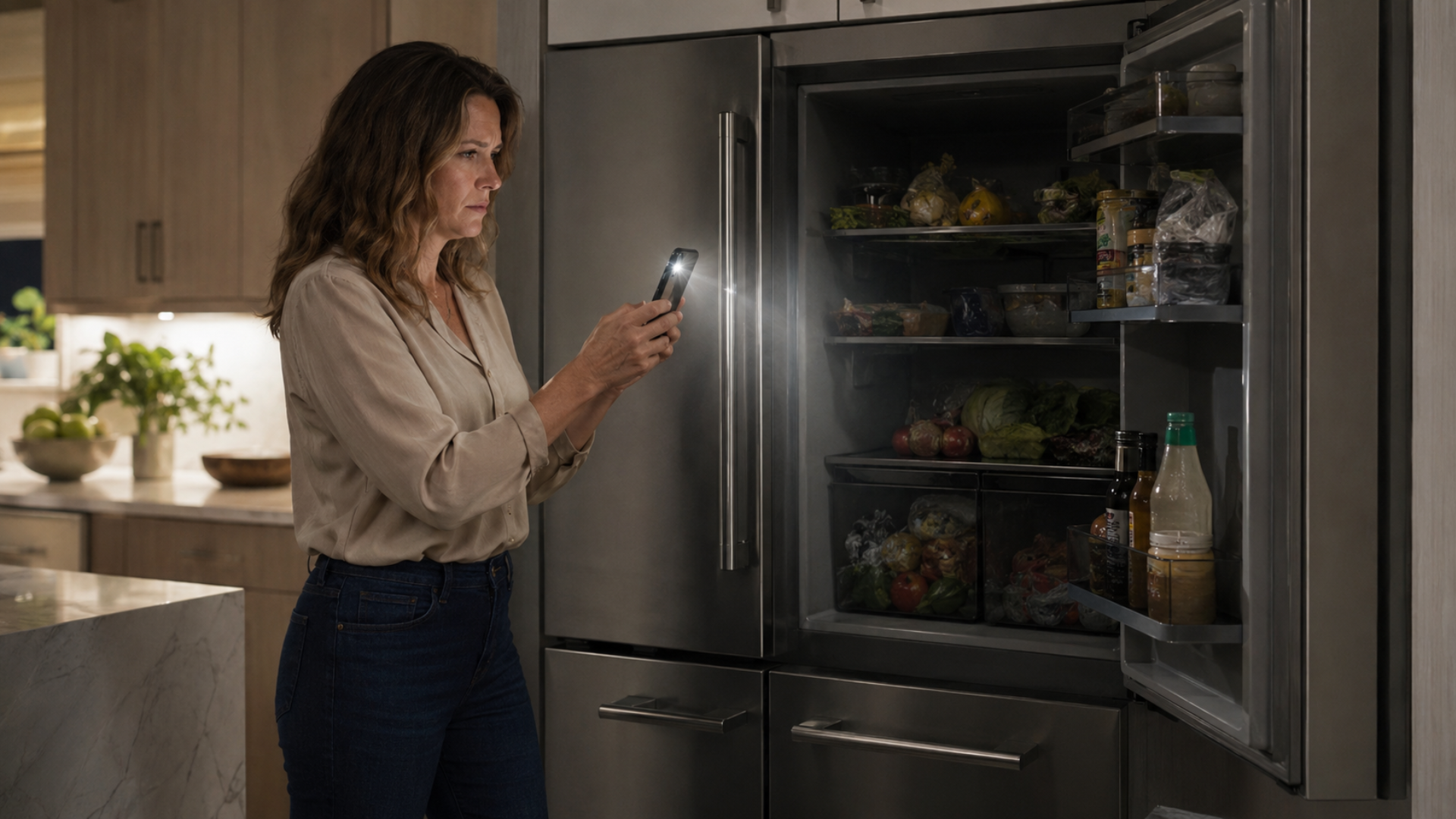
Sub-Zero’s own documentation is explicit: allow 24 hours for the unit to reach its set temperature after installation or any power interruption. During that stabilization period, temperature readings fluctuate as the compressor cycles, sensors calibrate to the new environment, and the dual refrigeration system finds equilibrium. Loading groceries before stabilization extends the timeline and can trigger false error codes.
Most contractors hand over the keys before that window closes. The homeowner stocks the refrigerator immediately, notices uneven temperatures the next morning, and concludes something is wrong with the unit. In many cases, nothing is wrong — the appliance simply was not given the time or conditions it needed to self-calibrate.
Beyond the stabilization window, post-renovation environments create ongoing calibration challenges for built-in refrigeration. New cabinetry that fits tightly against a Sub-Zero column can restrict condenser airflow, causing the unit to run longer and warmer than expected. Altered kitchen ventilation — a common byproduct of open-concept renovations — changes the ambient temperature the unit contends with. These factors do not trigger error codes. They create slow, persistent drift from optimal performance that compounds over months.
Wine storage units face the same issues at higher stakes. A wine cellar cooling system calibrated in a controlled warehouse environment may need complete recalibration when installed in a home where ambient temperature, insulation quality, and humidity levels differ significantly from factory test conditions. For collectors maintaining five- and six-figure portfolios in River Oaks or Preston Hollow, the margin between proper aging and accelerated deterioration is measured in single degrees.
What Calibration Actually Involves
Professional post-renovation calibration is not a single adjustment. It is a systematic verification of every performance parameter against manufacturer baselines.
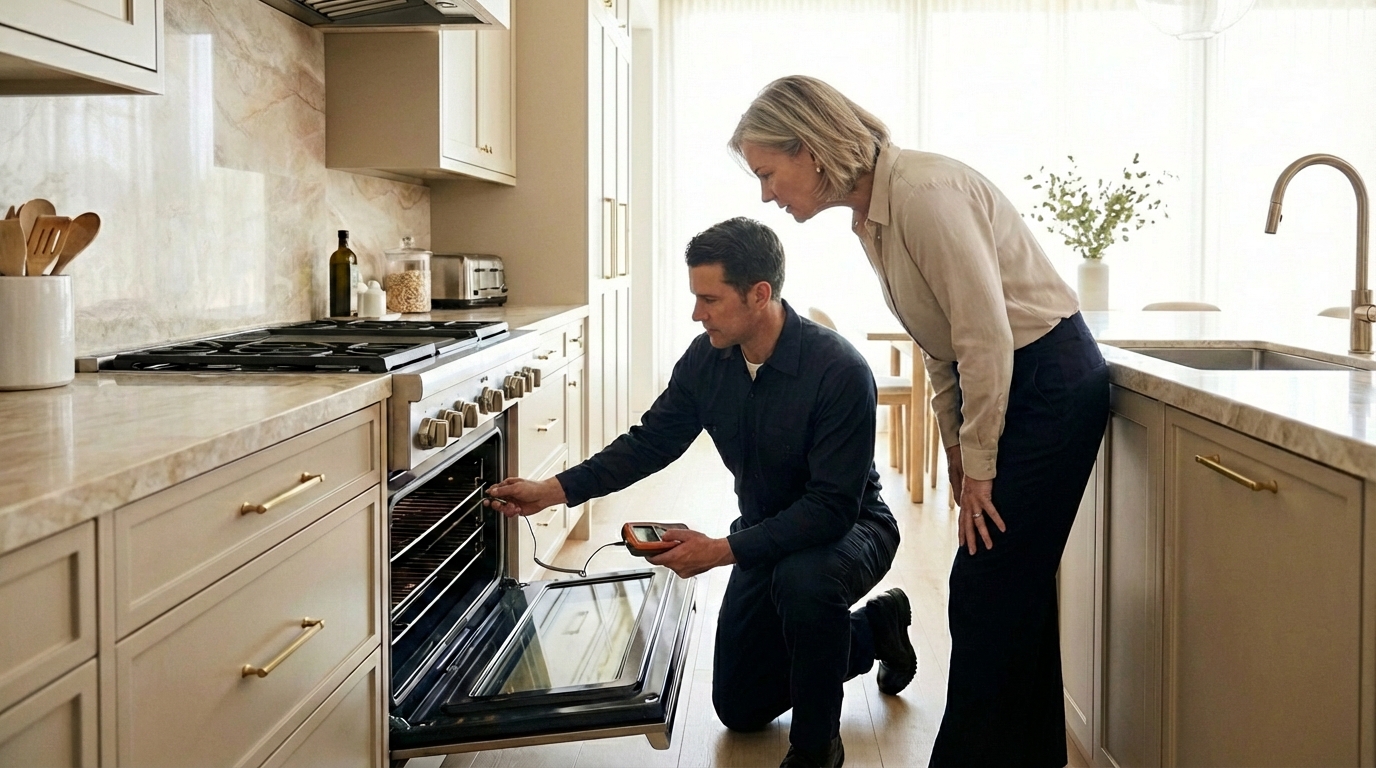
For cooking appliances, this means testing actual oven cavity temperature against the displayed set point at multiple temperatures — not just 350°F — using calibrated instruments. The offset at 350°F may differ from the offset at 450°F, and a luxury oven that performs acceptably at baking temperatures can run significantly hot or cold at roasting or broiling temperatures. It means verifying burner flame patterns, igniter timing, and convection fan operation. For induction cooktops, it means confirming that each zone delivers its rated wattage and that the power boost function does not trip the kitchen’s electrical panel — a common post-renovation issue when circuit loads have been redistributed.
For refrigeration, it means monitoring compartment temperatures over a full 24-hour cycle after stabilization, verifying that door sensors and alarms function correctly, and confirming that the compressor cycle times fall within manufacturer specifications for the installed environment. For wine storage, it includes humidity verification — a variable that temperature-only monitoring misses entirely.
The process requires manufacturer-specific diagnostic knowledge, calibrated reference instruments, and the patience to verify results across full operating cycles rather than spot-checking a single reading.
The Cost of Skipping This Step
A luxury kitchen remodel costs $85,000 to $250,000 in design, materials, and labor. The appliances alone may account for $30,000 to $60,000 of that total. Professional calibration after installation typically costs a fraction of a single appliance — yet it is the step most commonly omitted from renovation budgets and timelines.
The consequences accumulate quietly. An uncalibrated oven costs nothing dramatic on any given night, but over months of slightly burned edges and undercooked centers, the homeowner develops workarounds — lowering the set temperature, rotating pans obsessively, cutting bake times short — that should never have been necessary. An uncalibrated refrigerator runs longer cycles than it should, increasing energy consumption and accelerating compressor wear on a unit designed to last 20 years.
More critically, many luxury brands require professional installation verification as a condition of their warranty terms. An uncalibrated appliance that fails within the warranty period may face a coverage dispute if the manufacturer determines that post-installation calibration was never performed. The 2-year warranty Uptown provides on all service work exists specifically to bridge this gap — ensuring that both the calibration itself and its results are protected well beyond the typical 90-day coverage.
Finishing What Your Contractor Started
Uptown Appliance Repair provides post-renovation calibration across all major luxury brands — Sub-Zero, Wolf, Viking, Thermador, Dacor, Gaggenau, Miele, and Bosch — with technicians who carry manufacturer-specific diagnostic credentials and calibration tools. We verify every appliance in the kitchen against its factory performance specifications, document the results, and make the precision adjustments that transform installed equipment into properly performing equipment.
For homeowners in Houston and Dallas who have just completed a renovation, or who completed one months ago and suspect their appliances have never been quite right: the problem is almost certainly not the appliance. It is the last step that nobody scheduled.
(281) 758-9978 (Houston) · (214) 761-8300 (Dallas)