




TL;DR: After a power surge or extended outage, document appliance damage in this order: photograph each unit’s serial number and visible damage first, then capture food spoilage, then any secondary water or burn damage. Do all of this before you clean, repair, or discard anything. Then call your insurer — not after. Your Texas homeowners policy may cover up to $500 in spoiled food with no deductible, and a separate personal property claim may apply for surge-damaged appliances.
Document appliance damage for a Texas homeowners insurance claim by photographing serial numbers, visible damage, and food spoilage before touching anything — then contacting your insurer immediately. Standard HO-3 policies typically cover power-surge damage to appliances under personal property coverage, while food spoilage from utility failure is a separate, smaller benefit often capped at $500 by Texas carriers.
After a major power event, the instinct is to start cleaning. Throw out the food, wipe down the fridge, call a repair company. That instinct is understandable — and it’s also the fastest way to undercut your own insurance claim.
The documentation window closes fast. Some evidence disappears in hours. This guide walks you through exactly what to capture, in what order, so your insurer has everything they need.
The Four Categories Your Claim Will Cover (Document Each Separately)
Insurance adjusters reviewing appliance damage claims organize evidence into distinct categories. Your documentation should match that structure from the start.
1. Appliance Hardware Damage
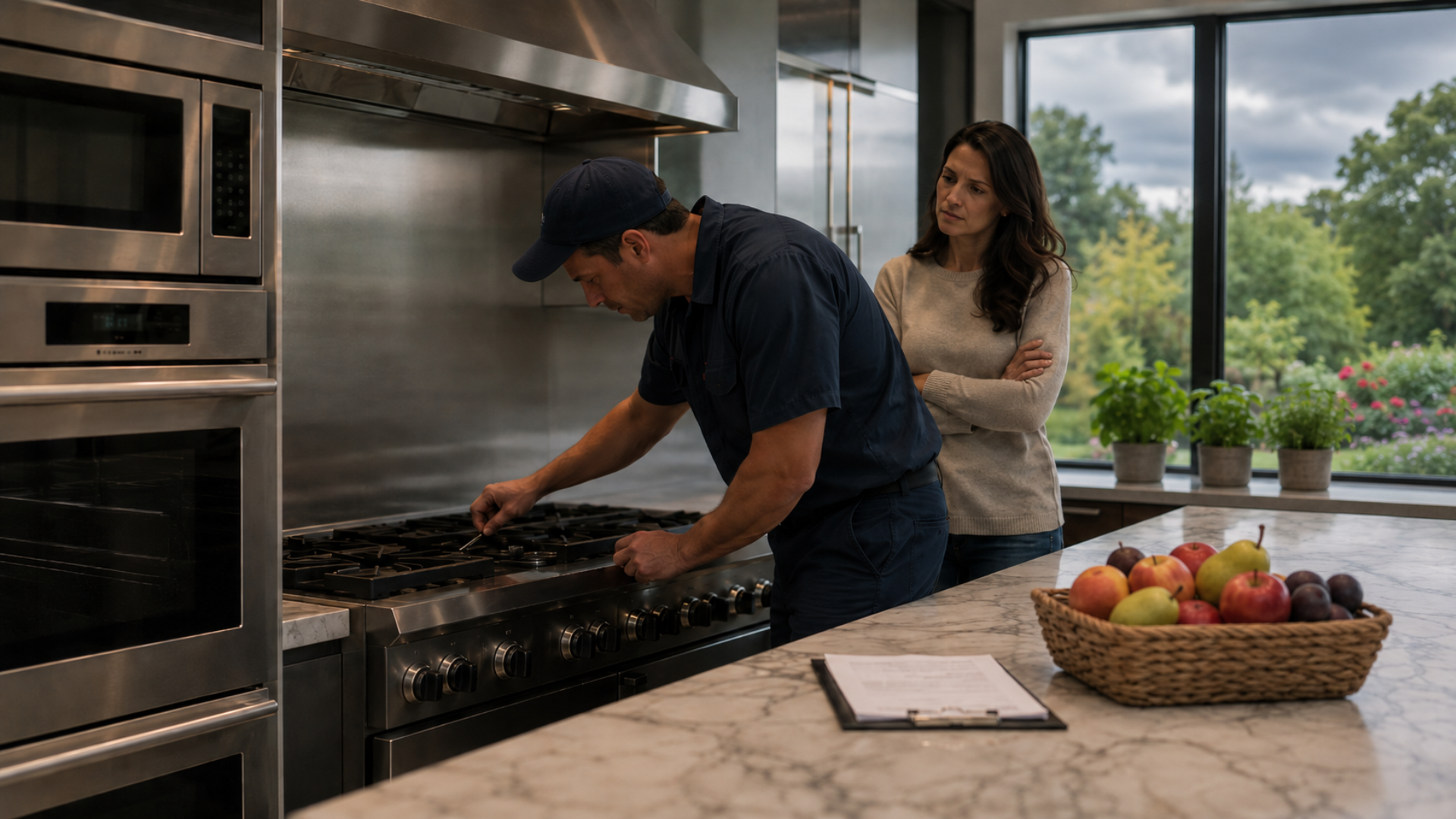
This is the core claim for most homeowners with Sub-Zero, Wolf, Miele, Viking, or Thermador equipment. A power surge can destroy a $3,000 control board in a Sub-Zero column, fuse inverter board capacitors in a dual-compressor unit, or burn out the spark module in a Wolf range — damage that isn’t visible from the outside but is fully documented in a professional diagnostic report.
For each affected appliance: photograph the serial number label first (inside the door frame or back panel), then exterior views from multiple angles, then the outlet or dedicated circuit — discoloration or melted plastic at the receptacle is direct evidence of a surge. If error codes appear on a display panel, photograph those too.
Do not power the appliance back on before photographing. An unresponsive unit that hasn’t been touched is cleaner evidence than one that’s been restarted and shows different error states.
2. Food Spoilage
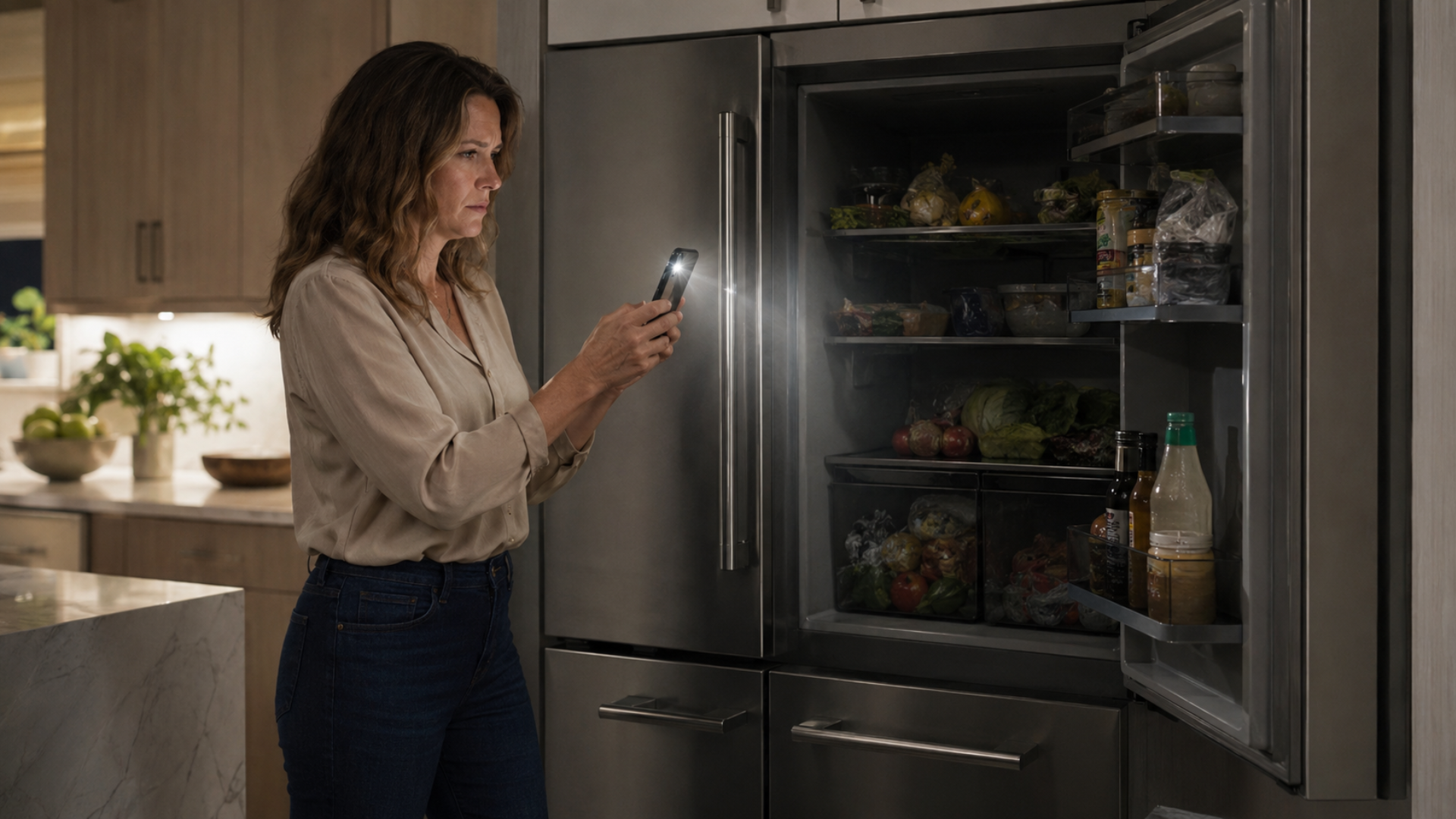
The Texas Department of Insurance confirms that some Texas homeowners policies pay up to $500 for spoiled food when power fails — sometimes with no deductible. KHOU’s post-Beryl coverage confirmed this benefit is accessible, but it requires documentation: a written inventory of spoiled items with estimated costs, photos of the open refrigerator and freezer before anything is discarded, and receipts where available. The food-spoilage claim is typically separate from the appliance hardware claim and is processed independently. File both.
3. Secondary Damage — Water and Burn Evidence
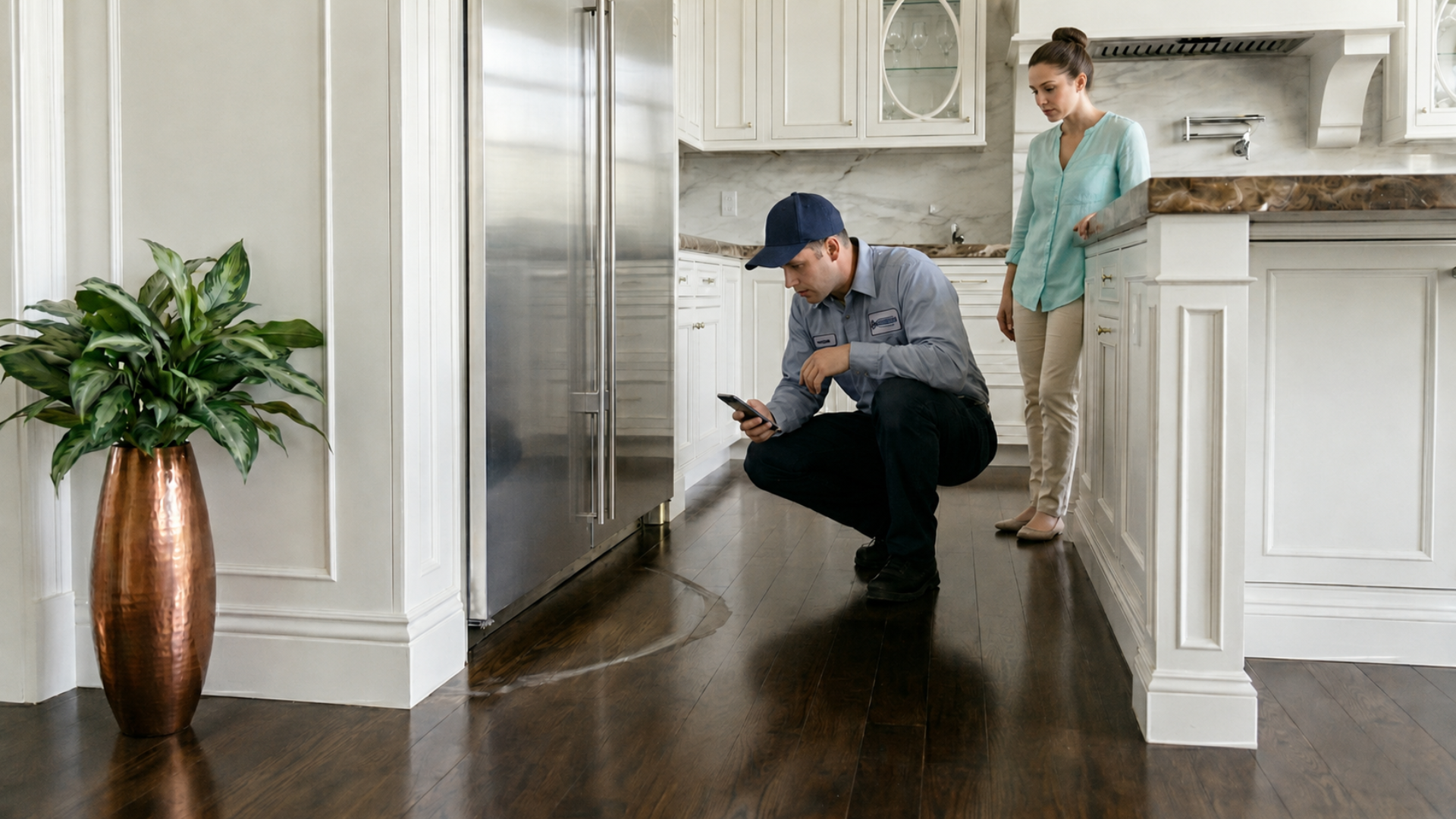
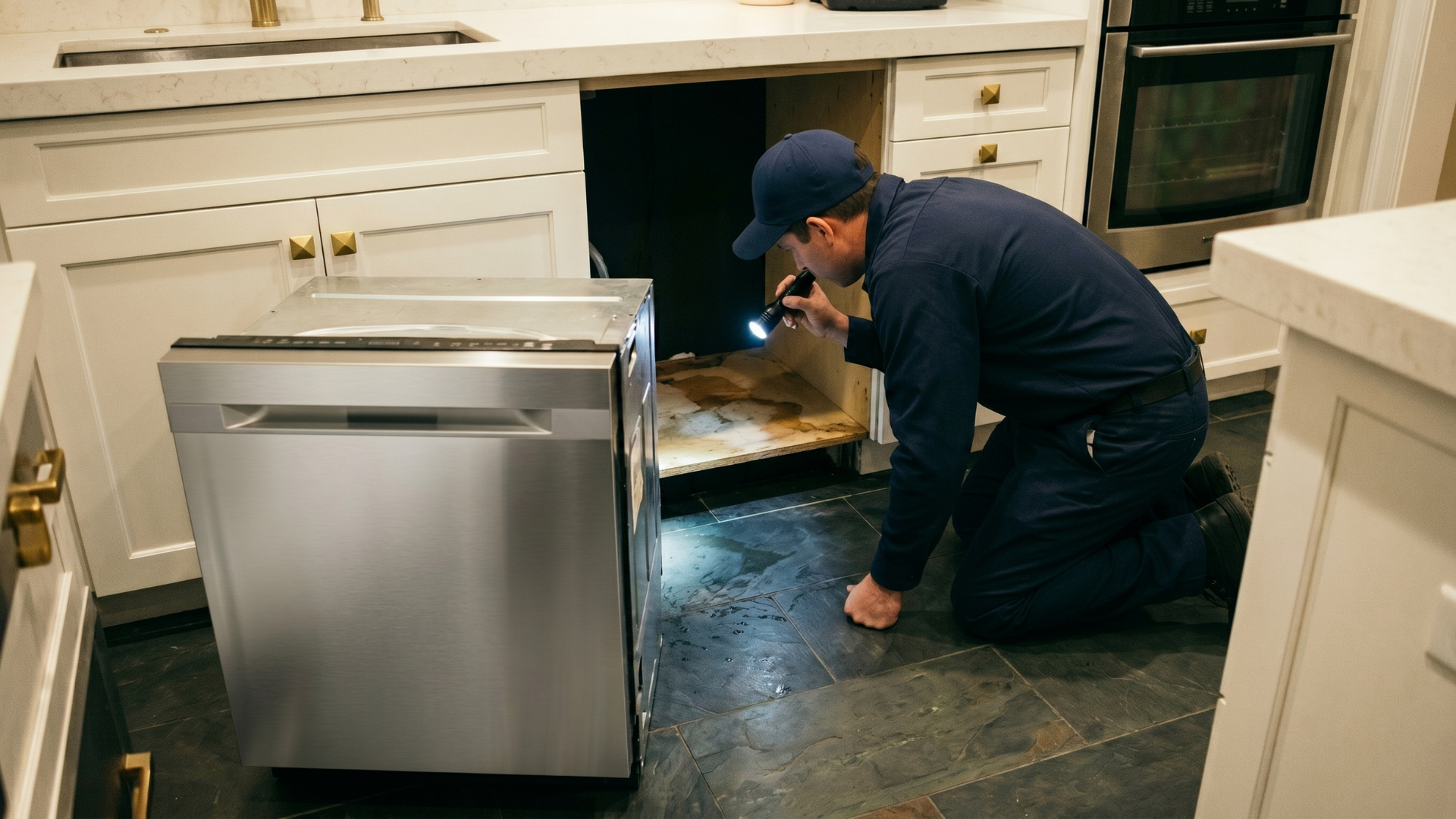
Appliance failures can produce secondary damage that extends to surrounding cabinetry: a Sub-Zero running warm may cause condensation migration; a burned Wolf spark module may leave scorch marks at the mounting surface; a surge-tripped Miele Aqua-Stop may have released water before shutting down.
Document secondary damage before cleaning or mitigation: water marks on floors or adjacent cabinetry, scorch marks at mounting surfaces, and any mold evidence if the outage ran past 48 hours (Houston’s humidity accelerates this timeline).
If you have water intrusion from a flood event — not just appliance failure — review the TDI’s homeowners insurance disaster claims FAQ before filing. Flood damage requires a separate flood policy, and conflating the two claims can delay both.
4. Service and Repair Costs
Every invoice, every diagnostic report, and every estimate from a qualified technician is a claim document. A written assessment from a factory-certified technician carries significantly more weight with an adjuster than a verbal quote or a generic estimate from a non-specialist.
When Uptown’s technicians assess post-event appliance damage, the service report documents the precise failure mode — which board failed, what the thermal evidence indicates, whether the failure pattern is consistent with a surge or a brownout — in language that maps directly to what adjusters need to see. Keep every document.
The Photo and Video Documentation Checklist
Work through this in sequence, before you do anything else.
Step 1: Establish the timeline with timestamps.
Your phone’s camera already embeds a timestamp in every photo’s metadata. Do not turn this off. If you’ve already taken photos without timestamps, that’s manageable — but going forward, keep location services and timestamp embedding enabled for every shot during the documentation session.
Step 2: Wide establishing shots of each room.
Start with the kitchen, then any utility area with affected appliances. One wide shot from each corner of the room. These establish context — which units are where, what the overall scene looked like.
Step 3: Serial number documentation.
Sub-Zero serial labels are typically inside the refrigerator compartment on the left wall, or on the kick plate. Wolf range labels are on the frame behind the control panel or inside the door. Miele labels are inside the appliance door frame. Photograph each serial number label so it’s readable — it will be referenced in every document that follows.
Step 4: Damage close-ups.
For each appliance: multiple close-ups of any visible damage. Fill the frame. Adjusters can’t approve what they can’t see.
Step 5: Outlet and circuit documentation.
Photograph every outlet or dedicated circuit serving a damaged appliance. Any discoloration, melting, or scorch evidence here is critical corroborating evidence for a surge claim.
Step 6: Video walkthrough.
After stills, record a short narrated video walkthrough — identify each appliance, describe visible symptoms, and point out the outlet behind each unit. Video shows continuity in a way still photos can’t.
Step 7: Food spoilage documentation.
Open the refrigerator and freezer. Photograph open — wide shot, then items. Do not discard food until photographed.
What Your Texas HO-3 Policy Actually Covers (and What It Doesn’t)
Standard Texas homeowners policies — the HO-3 form most carriers write — cover personal property against sudden and accidental damage from covered perils. Power surges from lightning strikes are a named peril in most HO-3 policies. Utility-company grid failures that cause surges are sometimes covered, sometimes excluded — check your policy’s “perils insured against” section carefully.
Texas led the nation in lightning loss claims in 2024, recording 4,369 homeowners insurance claims with an average payout of $38,558 per claim, according to the Insurance Information Institute’s July 2025 Texas analysis. That average includes everything from roof damage to whole-home electrical systems — but it signals that Texas carriers are actively processing these claims, and that documentation quality matters to the settlement amount.
Standard HO-3 typically covers: sudden surge damage from a named peril (lightning, electrical surge from a covered event); fire or smoke damage resulting from that surge; and food spoilage up to $500, often with no deductible.
Standard HO-3 does not cover: flood damage (requires a separate NFIP or private flood policy); mechanical breakdown from normal wear; or damage from a utility interruption alone if your policy excludes “loss of power.”
If your kitchen contains a Sub-Zero column, Wolf dual-fuel range, or Miele built-in system, the replacement cost of any one unit likely exceeds your standard HO-3 personal property sublimit. A scheduled personal property endorsement lets you insure high-value items at full replacement value. Uptown’s article on luxury appliance insurance and coverage gaps covers this in detail — read it before your next policy renewal, not after a storm.
Why a Professional Assessment Report Changes the Claim
An insurance adjuster reviewing an appliance claim isn’t necessarily an appliance technician. They know insurance. They read reports.
A written assessment from a factory-certified technician — one who can document “surge-induced capacitor failure on the inverter board consistent with voltage spike above 135V, confirmed by thermal marking on board traces” — gives the adjuster exactly what they need to approve the claim at replacement cost rather than actual cash value. A generic note from a non-specialist gives them grounds to request additional documentation or default to a depreciated payout.
When we assess post-event damage at Uptown, we document the failure mode technically and in plain language, reference the OEM specifications the damaged component was designed to meet, and state clearly whether the damage pattern is consistent with a surge event, a flood event, or normal wear. That report goes in your claim file and does most of the work for you. This matters most for units like a Sub-Zero ICBBI-36 or a Wolf DF36, where the control board replacement alone runs $2,000–$3,000.
Common Adjuster Pushback and How to Counter It
Even with strong documentation, claims can encounter friction. Three patterns come up repeatedly for Texas appliance damage claims.
“We can’t confirm this was surge-related.” Provide the technician’s written assessment citing the failure mode and its consistency with surge damage, paired with your outlet photos showing scorch evidence. Your utility company’s outage report for the event date is available from CenterPoint Energy or Oncor and serves as independent corroboration.
“The appliance’s age means we’ll pay actual cash value, not replacement cost.” Review your policy for “replacement cost value” (RCV) language — many quality HO-3 policies include it. If yours defaults to actual cash value (ACV), a scheduled personal property endorsement for your high-value appliances is the fix at renewal.
“Food spoilage isn’t covered / the deductible makes it not worth filing.” Call your insurer before assuming. TDI guidance specifically notes that some Texas policies waive the deductible for food spoilage claims. Confirm with your carrier directly.
Wine Cellar Losses Follow the Same Logic
Wine cellar cooling unit failures after a power event are handled similarly — photograph the unit, any temperature readings still displayed, and the collection before any wine is moved. The cooling unit may fall under personal property; the wine collection itself, if valuable, typically requires a separate collectibles rider. Uptown’s guide on wine collection insurance and how proper maintenance reduces premiums covers the coverage structure in detail.
Filing Timeline
Texas doesn’t set a single statutory deadline for homeowners claims, but your policy does — commonly one year from the date of loss. Waiting degrades your claim: evidence disappears, and adjusters become more skeptical of damage that was never documented at the time.
The practical sequence: document everything before touching anything → open the claim with your insurer immediately → schedule a professional assessment while evidence is present → submit photos and the technician’s report together → follow up every phone call with a written summary.
The Texas Power Grid article we published earlier covers the grid’s structural exposure to surge and outage events. The next event is a planning assumption. Your documentation practice should be ready before it happens.
FAQ
Does my Texas homeowners insurance cover power-surge damage to my Sub-Zero or Wolf appliance?
Usually yes, if the surge resulted from a covered peril — lightning is the most common named peril that qualifies. Coverage for surges caused by utility company grid failures depends on your specific policy language. Review your “perils insured against” section or call your agent. The key is documentation: a surge-consistent failure mode confirmed by a factory-certified technician gives your claim a factual foundation that’s difficult to dispute.
How long do I have to file a homeowners insurance claim in Texas after a power event?
Your policy sets the deadline — commonly one to two years from the date of loss. Texas law requires insurers to acknowledge claims promptly, but your window to file is defined by the policy contract. File as soon as possible: evidence quality and adjuster responsiveness both drop over time.
What if I already threw out the spoiled food before taking pictures?
File the food spoilage claim anyway with a written inventory and estimated costs. Many carriers will still process it with a signed statement and available receipts. Going forward, photograph before discarding.
What does “actual cash value” vs. “replacement cost value” mean for a damaged $12,000 Sub-Zero?
Actual cash value (ACV) is purchase price minus depreciation — a 6-year-old Sub-Zero might carry an ACV of $6,000–$7,000 even though a replacement costs $12,000+. Replacement cost value (RCV) coverage pays the actual replacement cost. Check your policy for RCV language; if it’s not there, ask your agent about a scheduled personal property endorsement.
Does flood damage to my appliances work the same way as surge damage for insurance purposes?
No — these are handled by entirely different policies. Surge damage falls under your standard HO-3’s personal property coverage. Flood damage requires a separate flood insurance policy, either through the National Flood Insurance Program or a private carrier. If your kitchen had water intrusion from a storm flood event (as opposed to an internal leak from a failed appliance), your HO-3 will not cover the appliances that were submerged. Contact your flood insurer separately.
Should I get an appliance assessment before or after filing my claim?
Before, if possible — or simultaneously. Opening the claim starts the clock and secures your position. Having the technician’s written assessment ready when you submit your claim documentation accelerates the process significantly. Waiting to get an assessment after filing means the adjuster is making decisions with less information than they need, which tends to produce lower initial offers.
If your appliances were affected by a recent power event and you haven’t had them assessed yet, we’re here to help. A written diagnostic report from our team can be ready for your insurer within 48 hours of the service call.
We’re a call away — (281) 758-9978
Sources
- Texas Department of Insurance — Your insurance might cover spoiled food from power outage — TDI confirmation that some Texas HO policies pay up to $500 for spoiled food, sometimes with no deductible; foundation of the food-spoilage claim section
- Texas Department of Insurance — Home damaged FAQ — TDI guidance on homeowners disaster claims, including flood vs. appliance damage distinction
- Insurance Information Institute — Texas Home Insurance Market Analysis, July 2025 — III data on Texas lightning loss claims: 4,369 claims in 2024 with average payout of $38,558
- KHOU — Power outage spoiled food insurance coverage (post-Beryl) — Post-Hurricane Beryl local coverage confirming the food-spoilage benefit is accessible to Houston homeowners
- FEMA — National Flood Insurance Program — NFIP reference for flood coverage, cited in FAQ on flood vs. surge damage distinction
- CenterPoint Energy — Houston area utility; source for outage event reports used as independent corroboration in surge claims
- Oncor — Dallas area utility; source for outage event reports used as independent corroboration in surge claims
Related Reads from Uptown
- Luxury Appliance Insurance: What Coverage Gaps Cost Houston Homeowners — details scheduled personal property endorsements for Sub-Zero, Wolf, and Miele equipment that exceeds standard HO-3 sublimits; essential reading before policy renewal
- Wine Collection Insurance Claims: How Proper Cellar Maintenance Reduces Premiums — covers cooling unit failure documentation and collectibles rider structure for wine cellar losses after a power event
- Texas Power Grid Issues: Protecting Your Appliances During Outages — explains the grid’s structural vulnerability to surge and outage events; context for why documentation readiness matters before the next event
- Hurricane Season Appliance Prep: Protecting Wine Cellars from Power Outages — pre-storm preparation checklist that reduces the severity of damage you’ll need to document and claim after a major weather event