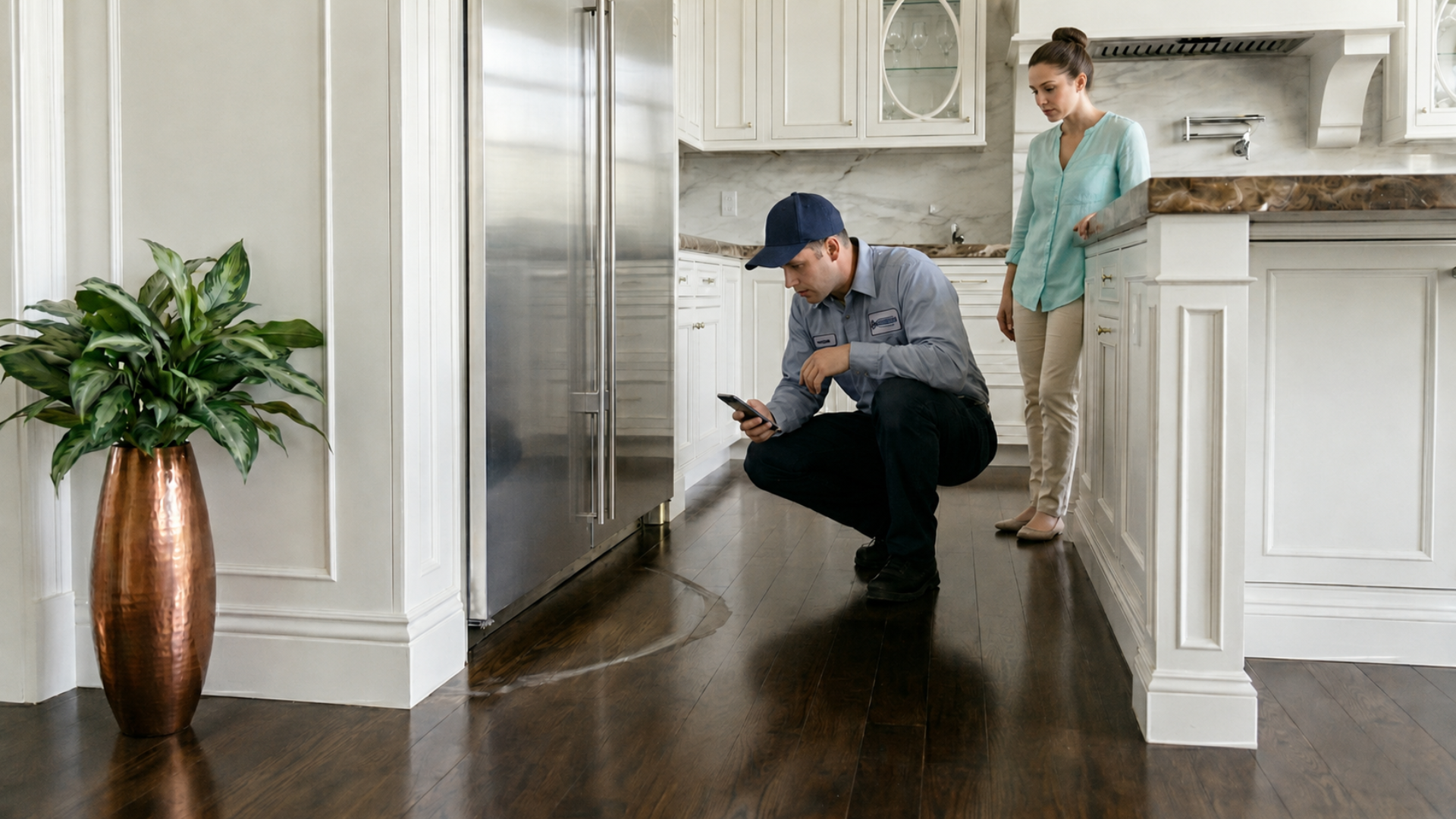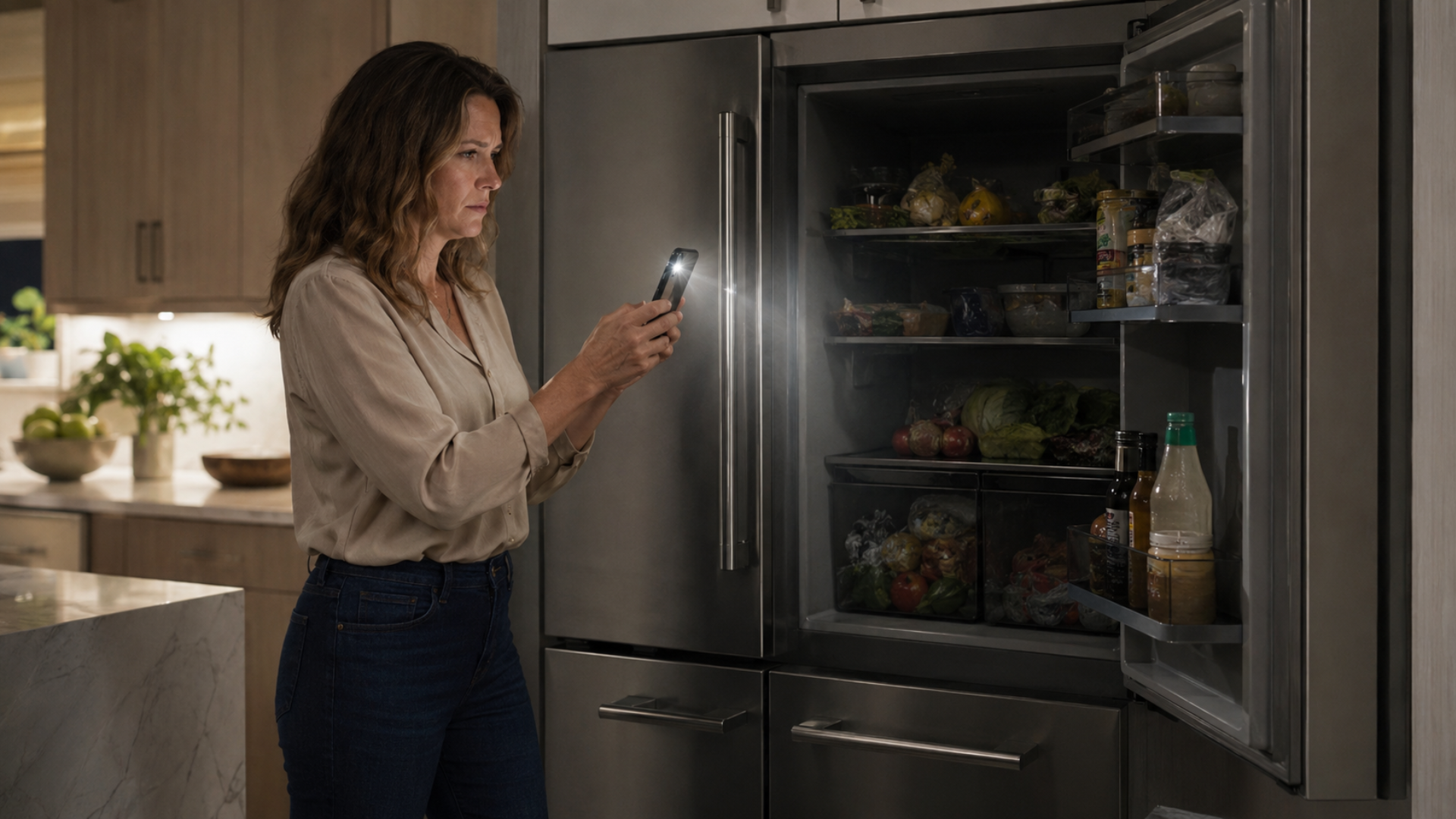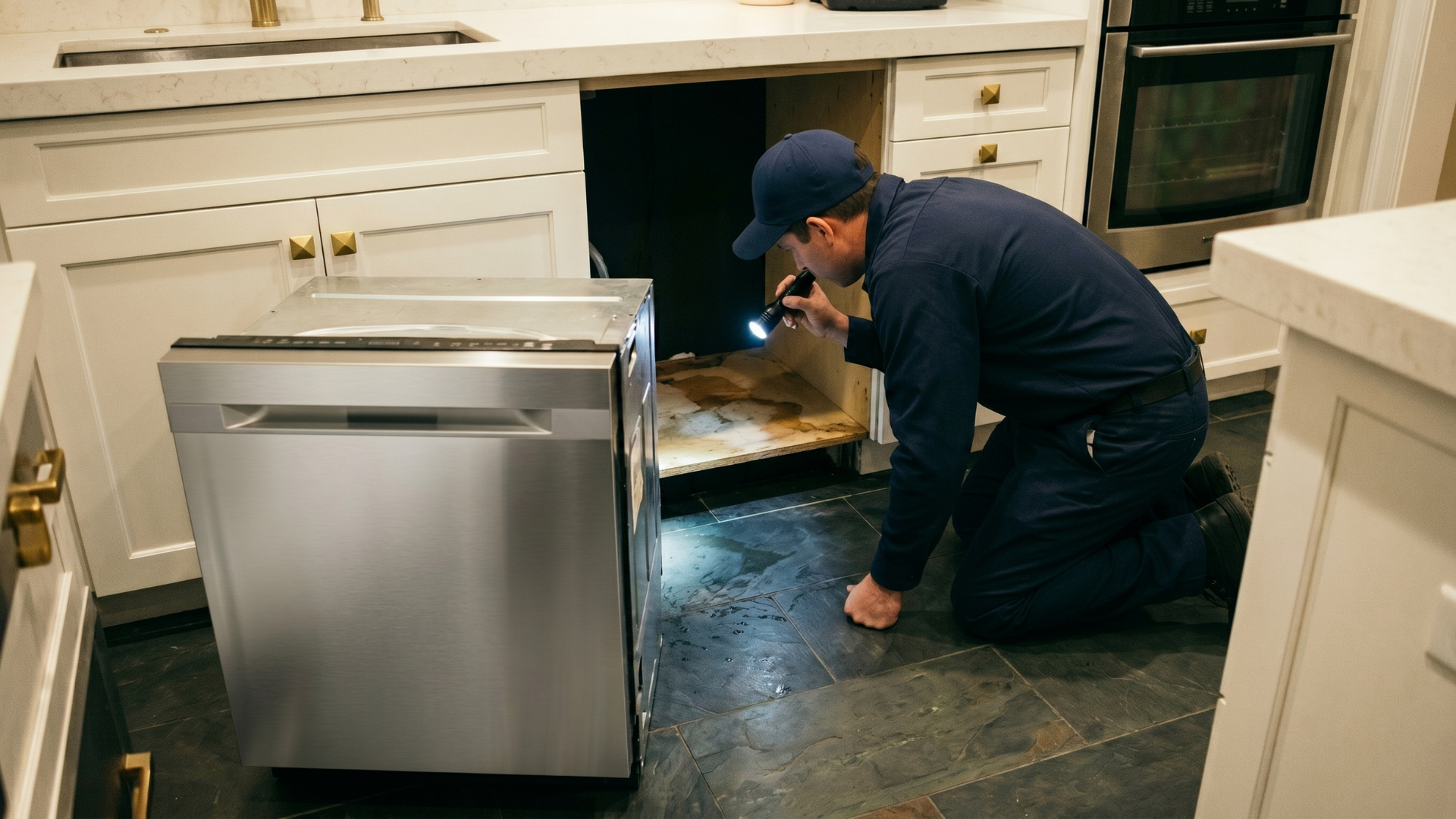





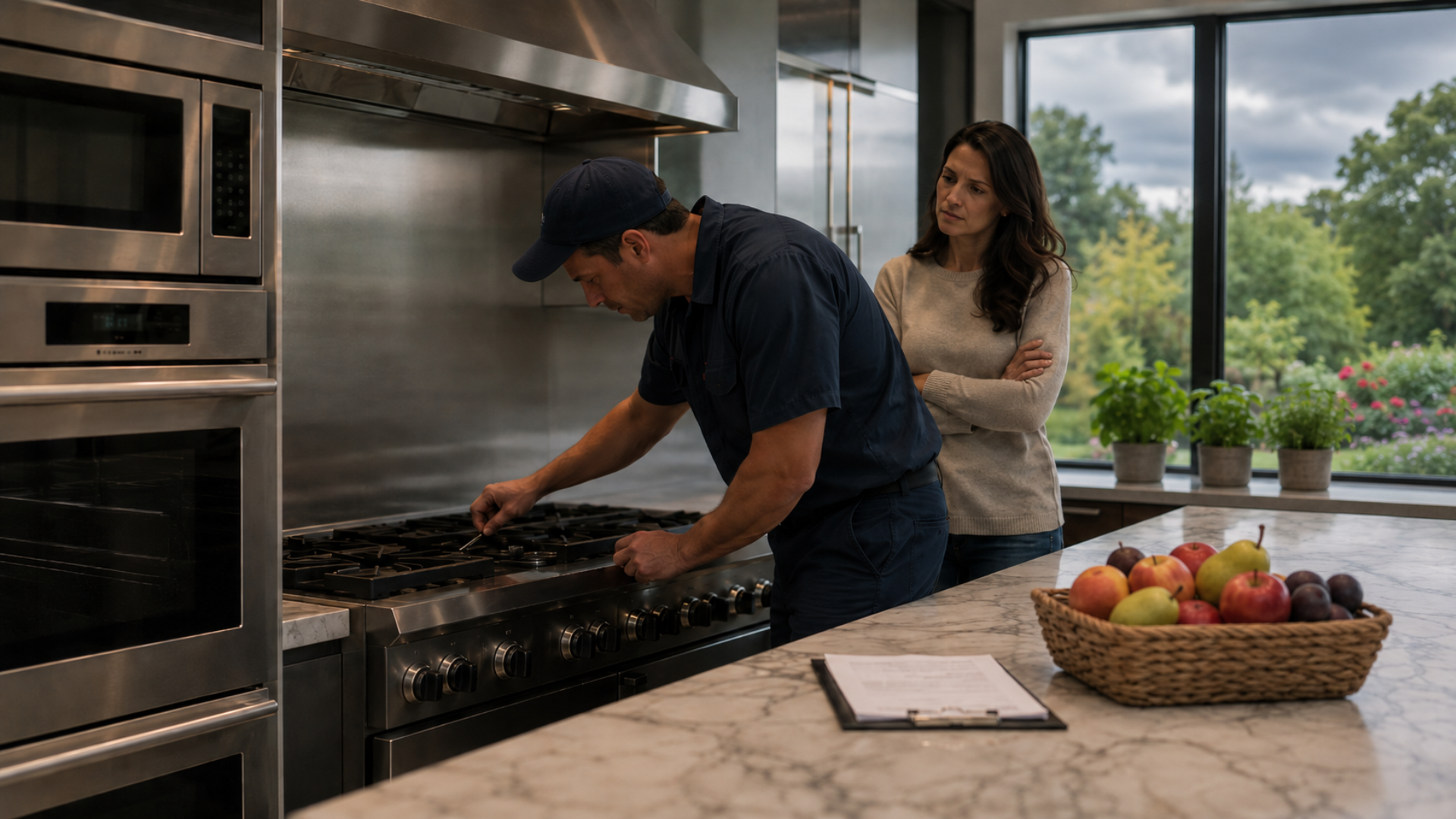
TL;DR: When Hurricane Beryl knocked out power for 2.6 million CenterPoint Energy customers in July 2024 — with hundreds of thousands still dark eight days later — it exposed something most appliance manuals don’t cover: how a premium kitchen suffers differently than an ordinary one. Sub-Zero compressors, Wolf control boards, and Miele ice-maker harnesses don’t fail the same way a builder-grade refrigerator does, and the recovery sequence isn’t the same either. Here’s what owners of $15,000–$50,000+ kitchen equipment should do before the next named storm arrives.
What Hurricane Beryl Actually Did to Houston’s Grid — and Why It Matters to Your Kitchen
Hurricane Beryl made landfall near Matagorda Bay on July 8, 2024, packing sustained winds around 80 mph. The storm was a Category 1, but its damage footprint was Category-5-level in the one metric that matters most for premium appliances: duration.
CenterPoint Energy serves roughly 2.6 million customers in the greater Houston area. According to Texas Tribune reporting on the Public Utility Commission’s investigative report, more than 2.6 million of those customers lost power when Beryl came through — effectively the entire service territory. By day eight, an estimated 226,000 customers were still without electricity. At least 23 people died during the storm and its aftermath.
For the residents of River Oaks, Memorial, Bellaire, Tanglewood, and West University, that translated into something very specific: eight-plus days of 90°F+ heat, heat indices approaching triple digits, and a $15,000 Sub-Zero sitting in a warming kitchen with nothing to protect it.
The PUC investigation found that CenterPoint’s own outage tracker failed during the storm, leaving customers with no reliable information about when their power would be restored. The cost to repair the distribution infrastructure — downed poles, broken wires — came to between $1.2 and $1.3 billion. That’s damage to CenterPoint’s system alone. It doesn’t account for what happened inside 2.6 million kitchens.
Why duration is the defining variable for premium appliances: A 30-minute outage barely registers on a Sub-Zero’s performance. A two-hour outage is manageable with closed doors. An eight-day outage is a different category of event entirely — one that touches compressors, control boards, ice-maker harnesses, and in some cases, seals and insulation you can’t see from the outside.
The Specific Damage Profile Premium Appliances Took
Not every appliance failure looks the same. When we talk to Houston homeowners about what Beryl-era outages did to their kitchens, four failure modes come up consistently.
1. Control Board Damage from Voltage Irregularities at Restoration
The most common surge damage to a premium refrigerator isn’t from the initial outage — it’s from the restoration. When CenterPoint restores power to a neighborhood after a prolonged event, the grid doesn’t always stabilize instantly. Brief voltage spikes, irregular frequency, or low-voltage “brownout” conditions at the moment of restoration can damage a refrigerator’s control board without the homeowner ever noticing anything dramatic.
According to Alpine Intel’s analysis of refrigerator damage causes, the control board is the most sensitive component in a premium refrigerator and the most commonly damaged when electrical current creates excessive heat. The good news: control board damage is often reparable. The less good news: on a Sub-Zero or Viking, a control board is not a $40 part.
2. Compressor Brownout Stress
A brownout — sustained low voltage rather than a complete outage — is harder on a compressor than a clean outage. When voltage drops below the minimum threshold but the unit keeps trying to run, the compressor motor draws higher amperage to compensate. Over hours or days, this can accelerate wear on compressor windings.
Sub-Zero specifies that their units require 104 volts AC minimum, continuously. If your neighborhood experienced brownout conditions before CenterPoint fully cut or restored power — a common pattern with storm-damaged distribution lines — your Sub-Zero may have been running in a damaging voltage range without triggering any obvious alarm.
This is also why the generator sizing requirements matter so much: an undersized generator that can’t maintain 104V under load creates exactly the same brownout condition inside your home that the grid failure created outside it.
3. Ice-Maker Harness and Sensor Damage
An ice maker is the most electrically complex subsystem in a premium refrigerator, and it’s the first thing that tends to stop working after a multi-day outage and restoration. The harness connecting the ice-maker assembly to the main control board is sensitive to the kind of micro-surge conditions that accompany grid restoration. Sensors that govern water fill timing, harvest cycles, and temperature thresholds can misread or fail entirely.
Sub-Zero ice-maker issues after a power event are among the most common post-storm calls we take. The unit appears to be running normally — the refrigerator and freezer temps are fine — but the ice maker won’t produce. That’s usually a sensor or harness issue, not a compressor problem, and it’s diagnosable and repairable.
4. The Surge Protector Restart Trap
Here’s a detail that catches many owners off-guard, and it comes directly from Sub-Zero’s own documentation: external surge protectors, AFCIs, and GFCIs may prevent the unit from restarting after power is restored.
That means a well-intentioned owner who plugged their Sub-Zero into a surge protector strip as storm prep might return to find the refrigerator unresponsive after power comes back — not because the refrigerator is damaged, but because the surge protector interrupted the restart signal. Sub-Zero specifically notes that their units lack built-in surge protection, but external protective devices can block the restart.
If your Sub-Zero didn’t come back on after Beryl — or after any future outage — check whether a surge protector or GFCI outlet is in the circuit before assuming the unit is damaged.
The Sub-Zero-Specific Recovery Sequence
If you own a Sub-Zero refrigerator or freezer column and you’re coming out of a multi-day outage, follow this sequence. It won’t prevent every problem, but it will avoid the most common mistakes that turn a manageable situation into an expensive repair call.
Step 1: Check the circuit breaker first. A tripped breaker is the most common reason a Sub-Zero doesn’t come back on after an outage. Rule it out before assuming appliance damage.
Step 2: Remove any external surge protector. Plug directly into the wall outlet. External surge protection can block the restart signal — this is a well-documented Sub-Zero caveat.
Step 3: Wait 24 hours. Sub-Zero’s warm-refrigerator troubleshooting guidance is explicit: allow 24 hours after restart before assessing cooling performance. The compressor and refrigerant system need time to stabilize.
Step 4: Know the food safety thresholds. Per Sub-Zero’s food storage guidance: refrigerator food becomes unsafe at 42°F; frozen food should not be refrozen above 20°F. An empty refrigerator can reach unsafe temperature in about three hours. Keep doors closed to extend that window.
Step 5: Call a factory-certified tech if temperatures don’t recover. If temperatures remain above 48°F after 24 hours, or if the ice maker doesn’t resume within 48 hours, schedule a professional diagnosis. Sub-Zero’s dual-compressor systems require factory-certified training to diagnose safely.
The Wolf Gas-Valve Mid-Cycle Freeze Pattern
Beryl-era calls didn’t only involve refrigeration. Wolf range owners in Houston reported a specific failure mode that appeared days after power was restored: a burner that lit normally but then cut out mid-cook, requiring the knob to be turned off and back on to re-ignite.
This is the gas-valve mid-cycle freeze pattern, and it’s related to the control board’s gas-valve relay — not the burner head itself. When power surges at restoration affect the electronic spark module or the gas valve relay circuit, the valve can lose the signal to stay open, even while the burner appears to be functioning.
The practical test: if your Wolf range ignites cleanly but cuts out within a few minutes of cooking — particularly at lower flame settings — that’s the relay pattern, not a gas-pressure or burner-orifice issue. It’s also not a job for a general appliance technician; the Wolf spark module and gas-valve circuit have model-specific relay logic that requires brand training to diagnose.
Wolf’s own guidance notes that generator-supplied power can cause problems if the generator isn’t properly sized — and the same voltage irregularities that affect generator performance also occur during grid restoration.
What “Doing It Differently” Looks Like in 2026
The lesson from Beryl isn’t just about what went wrong in July 2024. It’s about building a kitchen that handles the next eight-day outage — or the one after that — with less damage and a faster recovery.
Here’s what a thoughtful approach looks like for 2026.
Right-Size Your Generator Before June
The Atlantic hurricane season runs June 1 through November 30. If you don’t have a whole-home generator, or if you have a portable generator and aren’t sure it’s adequate for your kitchen, now is the time to work through the math.
Sub-Zero specifies a minimum 2,800-watt generator, with a continuous voltage floor of 104V AC at 60Hz. A dual-compressor column draws close to 24 amps at startup — which means you need a generator that handles that spike without dropping voltage below the 104V minimum. An undersized generator that technically “runs” the unit can still cause brownout damage over a multi-day event. Wolf notes that damage from an undersized generator is a real risk, not a theoretical one — and Wolf’s requirements vary by product, so if you’re running multiple appliances simultaneously, sum the loads before sizing.
A whole-home standby generator rated for your full kitchen load eliminates this math entirely and switches automatically during an outage.
Understand the Surge Protector Paradox
This deserves its own moment because it’s genuinely counterintuitive: plugging your Sub-Zero into a surge protector can leave the refrigerator unresponsive after an outage ends, even if the power company restores your electricity normally.
Sub-Zero units are not designed to run on generator power long-term, and the safest practice during an extended outage is to turn the unit off at the circuit breaker — not to rely on a generator or a surge protector strip to manage the power quality. If you’re leaving the unit running during an event, plug directly into a properly grounded wall outlet, not through an external surge-protection device.
This doesn’t mean surge protection is irrelevant. Whole-home surge protection at the breaker panel — installed by an electrician — is a different thing from a plug-in strip, and it’s worth discussing with your electrician before hurricane season.
Schedule a Post-Event Inspection, Not Just a Repair Call
Homeowners call for service when something stops working, but rarely schedule an inspection for things that still appear fine. A compressor that weathered an eight-day outage may be functioning today — but voltage stress during that period can accelerate winding wear that shows up as a failure 18 months from now.
A post-event inspection covers compressor operation under load, control board diagnostics, ice-maker sensor function, door seal integrity, and gas-valve relay function for Wolf ranges. That appointment gives you either confirmation everything is fine, or early identification of stress damage before it becomes an emergency call.
Document, Even If Nothing Seems Wrong
Texas homeowners’ insurance policies typically cover up to $500 for food spoiled due to a power outage, according to KHOU 11. For appliance damage, a written diagnosis from a factory-certified technician — noting that the failure pattern is consistent with voltage irregularity at restoration — carries weight with insurance adjusters. Most homeowners don’t think to get that documentation until after they’ve filed a claim without it.
Houston Neighborhoods and Grid Restoration Priority
Not every Houston neighborhood carried the same outage duration during Beryl, and that pattern matters for premium-appliance owners planning their generator and inspection strategy.
Houston’s restoration sequencing during a major event prioritizes hospitals, emergency services, and major commercial corridors first. Residential neighborhoods — particularly those with older above-ground distribution infrastructure — see longer wait times. Meyerland, parts of the Braeswood Corridor, and some sections of central Bellaire have historically experienced extended outage durations. Knowing your neighborhood’s typical restoration window helps you right-size your generator backup and set realistic expectations for your inspection timeline.
Our Texas Power Grid and Appliance Protection guide covers the broader grid-vulnerability context for Houston and Dallas premium-kitchen owners.
For a broader look at how Texas storm patterns differ between metros, our article on two-climate failure profiles covers the Houston-vs-Dallas comparison. For wine cellar owners — a separate but related concern during extended outages — our hurricane season appliance prep guide covers cellar cooling systems specifically.
Frequently Asked Questions
How long did Hurricane Beryl’s power outage last in Houston? Hurricane Beryl knocked out power for approximately 2.6 million CenterPoint Energy customers when it made landfall on July 8, 2024. Eight days later, an estimated 226,000 customers were still without electricity, according to Texas Tribune reporting. Restoration times varied significantly by neighborhood, with some areas returning to power within 48 hours and others waiting well over a week.
What’s the minimum generator size to run a Sub-Zero refrigerator? Sub-Zero specifies a minimum 2,800-watt generator, with a continuous voltage supply of at least 104 volts AC at 60Hz. A dual-compressor Sub-Zero column can draw close to 24 amps at startup, which is the figure that drives generator sizing — the generator needs to handle that startup spike without dropping voltage below 104V. For a full premium kitchen with Wolf and Miele equipment also running, the requirements are higher; consult manufacturer specs and sum the loads before sizing.
Why won’t my Sub-Zero turn back on after a power outage? The most common reasons, in order: a tripped circuit breaker on the circuit serving the outlet; a surge protector or GFCI outlet in the circuit that blocked the restart signal; or the unit needing up to 24 hours to cool down and stabilize after a lengthy outage. Try the circuit breaker first, then remove any surge protector and plug directly into the wall outlet. If the unit still doesn’t respond after those checks, call a factory-certified technician — there may be control board or compressor damage that requires professional diagnosis.
How long does food stay safe in a Sub-Zero during a power outage? According to Sub-Zero’s food storage guidance, refrigerator-section food becomes unsafe when it warms to 42°F. Frozen food should not be refrozen if it rises above 20°F. An empty refrigerator compartment can reach an unsafe temperature in approximately three hours. A full refrigerator — where the thermal mass of food helps maintain temperature — holds safe longer, especially with doors kept closed. In a multi-day outage like Beryl, an empty or lightly loaded refrigerator without any supplemental cooling (dry ice, block ice) will cross the safety threshold quickly.
Does Texas homeowners insurance cover appliances damaged during a storm outage? It depends on the policy and the type of damage. Most Texas homeowners’ policies cover up to $500 for food spoiled due to a power outage, per KHOU 11’s reporting. Appliance damage from power surges may be covered under equipment breakdown or specific endorsements — review your policy carefully and document all damage with photos and a professional technician’s written diagnosis before filing a claim.
What damage should I look for in a Wolf range after a Houston power event? The most common post-outage Wolf failure is the gas-valve mid-cycle freeze: the burner lights normally but cuts out during cooking, requiring the knob to be reset. This typically indicates surge-related damage to the gas-valve relay circuit in the spark module, not a problem with the burner head or gas supply. If your Wolf range ignites correctly but doesn’t stay lit — especially at lower flame settings — that’s the signal to have the relay circuit inspected by a Wolf-certified technician.
Is it safe to run a Sub-Zero on a generator for several days? Sub-Zero’s own documentation states that their products “are not designed to operate properly on long-term, generator-supplied power.” Running the unit on a properly sized generator for short periods is manageable, but sustained operation on generator power — particularly if the generator’s output isn’t clean and stable — can cause the same brownout stress as a degraded grid supply. The safest approach during a multi-day outage is to run the generator in cycles to maintain safe food temperatures rather than running it continuously, and to ensure the generator output meets the 104V AC minimum at all times.
Prepare Now, Not 72 Hours Before Landfall
The National Weather Service Houston-Galveston shifts into full hurricane-season posture in May. CenterPoint Energy has committed to grid upgrades under its Greater Houston Resiliency Initiative — storm-resilient poles, underground lines, automation devices — and those improvements will help. But they won’t eliminate the outage window for premium appliances. A 48-hour outage is still enough to stress a compressor and spoil a Sub-Zero’s full food load.
The tools that protect your kitchen aren’t complicated: a right-sized generator, a post-event inspection cadence, and working knowledge of how your specific equipment responds when the grid fails. Handle the generator sizing and inspection scheduling in May, when you have time. By the time a named storm is 72 hours from Galveston, those appointments are gone.
If you’d like to schedule a post-Beryl inspection or discuss whether your kitchen is ready for 2026, we’re a call away — (281) 758-9978.
Sources
- Sub-Zero Generator Considerations — Sub-Zero factory guidance on minimum generator wattage (2,800W), voltage floor (104V AC), and the surge-protector restart caveat
- Sub-Zero Food Storage Without Power — Sub-Zero’s official food safety thresholds: refrigerator unsafe at 42°F, frozen food not to refreeze above 20°F
- Sub-Zero Warm Refrigerator/Freezer Troubleshooting — Sub-Zero guidance to allow 24 hours after restart before assessing cooling performance
- Wolf Product Generator Considerations — Wolf factory notes on generator-supplied power risks and model-specific load requirements
- Texas Tribune — PUC Investigative Report on CenterPoint and Hurricane Beryl — Public Utility Commission investigation findings on CenterPoint’s Beryl response
- Texas Tribune — Texans Without Power After Hurricane Beryl — Day-eight reporting: 226,000 customers still without electricity
- Alpine Intel — Leading Causes of Refrigerator Damage — Analysis identifying the control board as the most commonly damaged component in premium refrigerators during electrical events
- KHOU 11 — Power Outage Food Spoilage and Insurance Coverage — Texas homeowners’ policies typically cover up to $500 for food spoiled in a power outage
- Wikipedia — Hurricane Beryl — Storm overview: Category 1 landfall near Matagorda Bay, July 8, 2024; 2.6M CenterPoint customers affected
- Wikipedia — CenterPoint Energy — Utility profile for context on service territory and grid infrastructure
- National Weather Service Houston-Galveston — Hurricane Guide 2025 — NWS Houston-Galveston hurricane season preparedness guidance
Related Reads from Uptown
- Texas Power Grid Issues: Protecting Your Appliances During Outages — The foundational guide to grid-vulnerability context for Houston and Dallas premium-kitchen owners; pairs directly with this article’s generator-sizing and brownout sections
- Hurricane Season Appliance Prep: Protecting Wine Cellars from Power Outages — If your home includes a wine cellar or dedicated cooling column, this is the storm-prep companion read for cellar-specific outage risks
- Texas Freeze and Your Luxury Appliances: Lessons from Winter Storm Preparedness — The winter-storm counterpart to this article — how Texas’ other grid-failure scenario creates a different but equally serious set of premium-appliance risks
- Emergency Refrigerator Repair: What to Do When Your Sub-Zero Stops Cooling — Step-by-step emergency guidance for the exact scenario Beryl created: a Sub-Zero that won’t resume normal cooling after power is restored
- Two-Climate Failure Profiles: Outdoor Kitchen Repair in Dallas and Houston — Houston-vs-Dallas climate comparison for appliance owners with properties in both markets