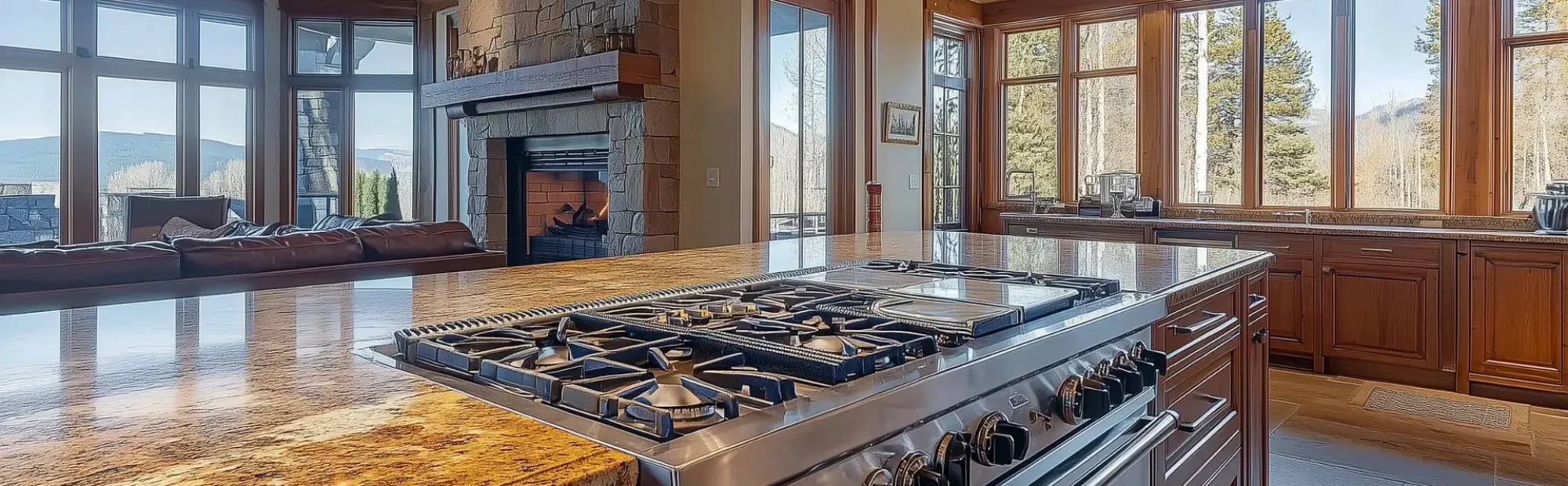
Running a gas line for a stove involves handling potentially dangerous materials, so safety is paramount.
Begin by turning off your home’s main gas supply to prevent any accidental gas flow during installation.
Next, identify an existing gas line close to where you want to place the stove.
You’ll typically use either copper or black iron pipe for this extension, sized according to local codes, often requiring a 1/2-inch or 3/4-inch diameter for residential stoves.
These pipes must be cut and threaded precisely to fit with the necessary fittings like elbows or couplings.
Attach a flexible gas line, commonly a yellow corrugated hose, to the extended rigid line.
This connection should be made with fittings and sealed with Teflon tape to ensure no leaks.
The flexible line then connects to the stove’s gas inlet, again sealed securely.
After all connections are made, it’s critical to check for leaks.
This is done by applying a soap solution to the joints. If there are no bubbles forming, indicating no gas escape, you can proceed.
If leaks are detected, tighten the connections and recheck until no leaks are present.
Upon confirming there are no leaks, gradually turn the gas back on, watching for any signs of leakage as the system pressurizes.
Finally, test the stove to ensure it ignites and operates correctly.
Given the risks involved with gas, this task is generally recommended to be performed by a licensed professional to adhere to safety standards and local building codes.