




TL;DR: Sub-Zero’s own engineers warn that external surge protectors, AFCIs, and GFCIs can prevent your refrigerator from restarting after power comes back on. The unit isn’t broken — it’s blocked. Here’s the engineering reason it happens, the right way to protect a built-in refrigerator from surges, and what to do if your Sub-Zero is sitting silent right now.
If your Sub-Zero won’t restart after an outage and you have a surge protector on the outlet, remove the surge strip and restore power directly to the dedicated circuit. That single step resolves the restart lockout for most homeowners in this situation. The rest of this article explains why it happens and how to keep your refrigerator protected the right way going forward.
What Sub-Zero Actually Says
Most homeowners assume that plugging any appliance into a surge protector is a responsible, protective move. For a lamp or a TV, that instinct is correct. For a built-in Sub-Zero refrigerator or freezer, it can work against you.
Sub-Zero’s own technical FAQ states this plainly:
“A surge protector, AFCI, or GFCI may prevent power being restored to the unit. Therefore, the unit may stay off after a power outage.”
Source: Sub-Zero Generator Considerations — official FAQ
This isn’t a design flaw. It’s a deliberate engineering trade-off, and understanding it changes how you think about protecting a premium refrigerator worth $9,000 to $20,000 or more.
Why AFCI, GFCI, and Surge Strips Can Lock Out a Restart
A Sub-Zero refrigerator with two compressors can draw close to 24 amps at startup — significantly more than its steady running draw. This burst of current is called inrush current, and it happens in the first fraction of a second as the compressor motor accelerates from zero to operating speed. Sub-Zero’s circuits are built to handle it. Surge protectors, AFCIs, and GFCIs are not.
Surge protectors detect voltage spikes and, in some designs, current spikes. When the compressor fires up after power restoration — especially if the grid comes back with a brief transient surge, which it often does — a sensitive surge strip may interpret that inrush as a threat and cut power. The strip trips, the Sub-Zero stays off, and your food sits in a warming refrigerator.
AFCIs (Arc-Fault Circuit Interrupters) detect irregular current signatures that precede electrical fires. A compressor startup can produce a current pattern an AFCI breaker reads as a potential arc fault, tripping the breaker before the compressor completes its startup sequence.
GFCIs (Ground-Fault Circuit Interrupters) watch for imbalances between current going out through the hot wire and returning through the neutral. On older GFCI outlets or those at the end of a long circuit run, a compressor’s startup transient can produce just enough asymmetry to trip the fault detection.
In all three cases, the protective device is doing exactly what it was designed to do. It just wasn’t designed with a dual-compressor built-in refrigerator in mind.
The Right Architecture for Surge Protection in a Premium Kitchen
The answer isn’t “no surge protection” — it’s protection at the right layer.
1. A dedicated 20-amp circuit
Sub-Zero refrigerators and freezers should run on their own dedicated circuit — typically 20-amp, 120V — not shared with any other outlet or device. A dedicated circuit removes the variables that cause nuisance trips: nothing else is drawing current when the compressor tries to start. If your Sub-Zero is currently on a shared circuit or plugged into a power strip, that’s the first thing to address.
2. Whole-home (Type 2) surge protection at the panel
The most effective protection for built-in refrigeration is a whole-home surge suppressor installed at your electrical panel. These devices (Type 2 surge protective devices, or SPDs) clamp voltage spikes at the service entrance before they reach any circuit in the house.
A panel-mounted SPD doesn’t interrupt the circuit. It absorbs and redirects excess energy. Your Sub-Zero never loses power, and the startup sequence happens normally when the grid comes back. Panel SPDs typically cost $200–$600 plus electrician labor — straightforward math against a kitchen outfitted with $40,000+ in Sub-Zero and Wolf equipment.
3. What to avoid
- Point-of-use surge strips on built-in refrigeration — exactly the configuration Sub-Zero flags in their FAQ.
- Extension cords — Sub-Zero explicitly advises against them; many don’t carry startup current cleanly.
- GFCI outlets on the refrigerator circuit without confirming with a licensed electrician that the placement is appropriate for a compressor-driven load.
Diagnostic Walkthrough: If Your Sub-Zero Won’t Restart After Power Comes Back
Work through these steps in order. Most restart lockouts resolve at step 2 or 3.
- Check for a surge strip or GFCI outlet. Look at what the Sub-Zero is plugged into. If it’s connected to a power strip — even one marketed as a surge protector — unplug the strip from the wall and plug the Sub-Zero’s cord directly into the wall outlet instead. Then wait 90 seconds to see if the unit initializes.
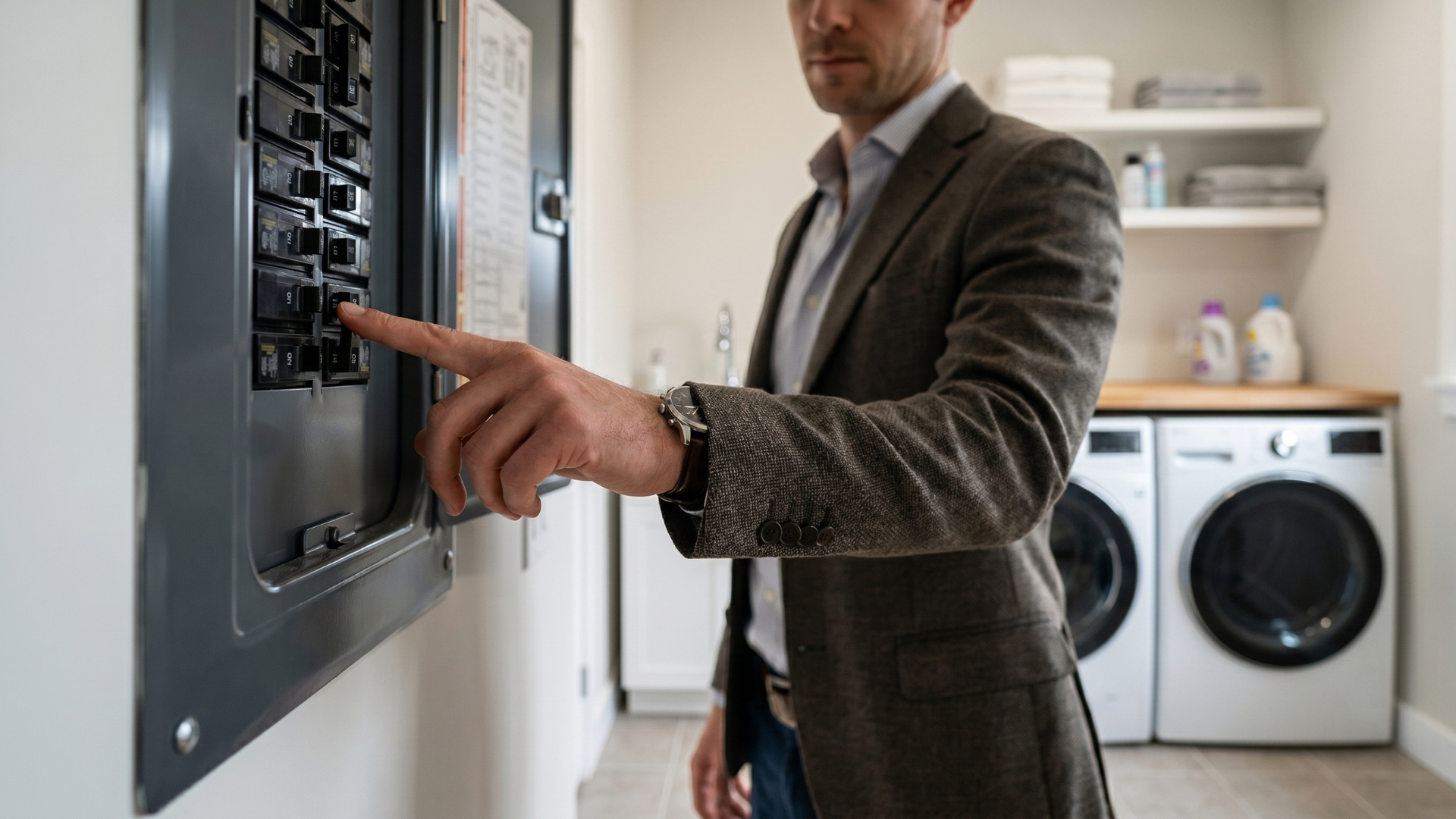
- Check the dedicated circuit breaker. Go to your electrical panel and find the breaker labeled for the refrigerator. If it’s tripped (the toggle will be in a middle or fully “off” position, not aligned with the “on” switches around it), reset it by pushing it firmly to “off” and then back to “on.” Return to the kitchen and listen for the compressor startup sequence.
- Check for a tripped GFCI outlet. If the outlet the Sub-Zero is connected to has a “Test” and “Reset” button on its face, it’s a GFCI outlet. Press the “Reset” button firmly until it clicks. Power should restore to the outlet.
- Wait for the 24-hour cooling cycle. Sub-Zero units can take up to 24 hours to reach target temperatures after a restart, particularly following an extended outage. If the unit powers on, the control panel responds, and you can hear the compressor running — the unit is working. Give it time before assuming something is wrong with the refrigeration system itself.
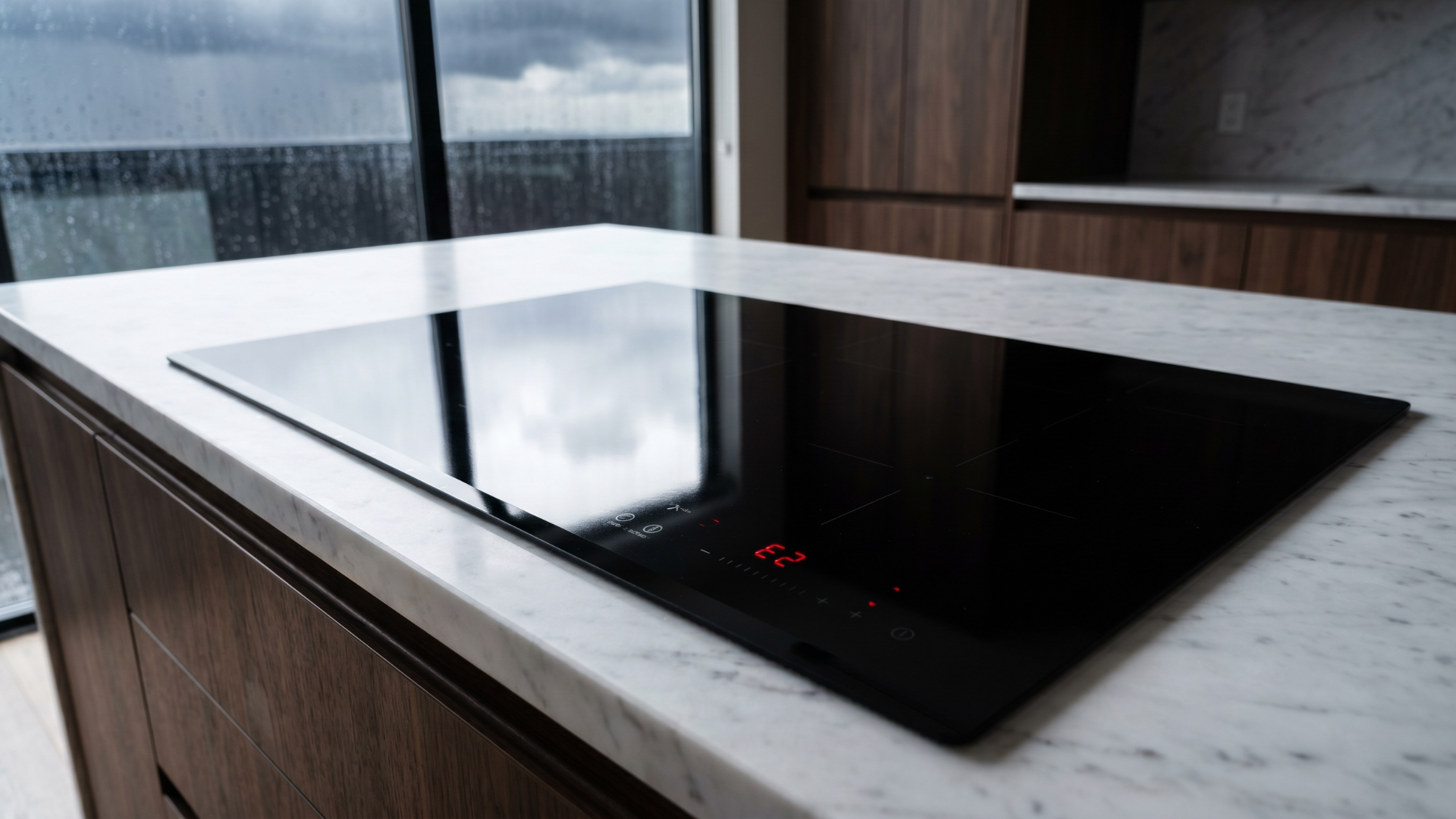
- Check for an error code on the display. If the control panel shows an alphanumeric error code, note it exactly and look it up in your model’s documentation or search Sub-Zero’s FAQ at subzero-wolf.com/assistance. Some error codes clear after a manual power cycle (locate the unit’s circuit breaker, flip it off for 30 seconds, then restore).
- Rule out a generator power-quality issue. If you’re running on generator power rather than grid power, verify that your generator meets Sub-Zero’s minimum electrical requirements: 115/125V AC, 60Hz, with the ability to sustain at least 104 volts continuously and handle the 24-amp startup load. An undersized or unstable generator can produce the same lockout symptoms as a tripped surge protector — with the added risk of damaging the control board if the voltage runs low for extended periods.
- If none of the above resolves it, stop and call a certified technician. Persistent failure to restart after a power event — especially if accompanied by an error code that doesn’t clear, a compressor that runs but produces no cooling, or repeat circuit breaker trips — indicates something beyond the restart-lockout scenario. At that point, continued troubleshooting without proper equipment can delay the diagnosis and, in rare cases, worsen the condition.
When to Call a Pro
Some scenarios go beyond a restart lockout:
Compressor lock. If the unit hums continuously but doesn’t cool, and the compressor is hot to the touch, the compressor may have failed to start — a condition that requires a technician to assess, not more breaker resets.
Persistent error codes. Error codes that return immediately after a power cycle indicate a logged fault condition. A technician with diagnostic tools can determine whether it’s a control board, refrigerant system, or sensor failure.
Repeat tripping. A circuit breaker that trips every time the Sub-Zero tries to start points to a wiring or compressor issue, not a surge protector problem.
Evidence of a true surge event. If the power event included a visible flash, a burning smell, or a loud pop at the panel, a surge may have reached the appliance. According to Alpine Intel’s analysis of refrigerator damage claims, high-voltage surges most commonly damage the control board first, followed by compressor windings and the ice maker assembly. A damaged control board produces symptoms that look identical to a tripped surge protector from the outside.
If you’re in Houston or Dallas and your Sub-Zero isn’t responding after working through the steps above, our team is available for an assessment.
Thinking About Storm Season
When the grid comes back after a storm event, power restoration isn’t always clean — voltage can spike briefly before stabilizing, which is exactly when a point-of-use surge protector is most likely to trip on your refrigerator. The architecture that holds up best: whole-home surge protection at the panel, dedicated circuits for each major appliance, and no point-of-use surge strips on built-in refrigeration.
The same restart-risk logic applies to your Wolf range. Sub-Zero Group’s Wolf generator considerations FAQ notes voltage minimums for Wolf products (104V continuous for 120V units, 208V for 240V units) and reinforces that unstable or undersized power sources can cause problems at startup.
For more on protecting your appliances during Texas grid events, see our guide on Texas power grid issues and appliance protection. If you have a wine cellar in the mix, our article on protecting wine cellars from power outages covers the temperature thresholds that matter most.
FAQ
Q: Can I use any surge protector with my Sub-Zero refrigerator?
A: Sub-Zero’s official guidance advises against point-of-use surge protectors, AFCIs, and GFCIs connected directly to their units. The concern is that these devices can prevent the refrigerator from restarting after a power outage. The manufacturer-recommended approach is whole-home surge protection installed at your electrical panel, which protects the appliance without interrupting its circuit during restart.
Q: My Sub-Zero was working fine before the outage. Why won’t it turn on now?
A: The most common reason is that something on the outlet circuit — a surge strip, a tripped GFCI outlet, or a tripped circuit breaker — cut power during the outage and didn’t reset automatically. Work through the diagnostic steps in this article before assuming the appliance itself is damaged. In the majority of cases, the refrigerator is fine; the circuit just needs to be restored.
Q: What does inrush current mean, and why does it matter for my refrigerator?
A: Inrush current is the burst of electricity a compressor motor draws in the first instant of startup. For a dual-compressor Sub-Zero, that inrush can approach 24 amps. Surge protectors and fault-sensing devices weren’t designed to pass this startup load cleanly, which is why they can trip during what the refrigerator considers a normal restart.
Q: Is a whole-home surge protector expensive? Is it worth it for a kitchen with Sub-Zero and Wolf appliances?
A: Panel-mounted surge protective devices typically cost $200–$600 plus electrician labor. For a kitchen with $30,000 or more in Sub-Zero and Wolf equipment, it’s a reasonable one-time investment. One control board replacement on a Sub-Zero alone typically costs more than a whole-home SPD.
Q: What’s the difference between an AFCI and a GFCI?
A: A GFCI (Ground-Fault Circuit Interrupter) detects small current leaks to ground — typically found on kitchen, bathroom, and garage outlets, identified by the “Test/Reset” buttons on the outlet face. An AFCI (Arc-Fault Circuit Interrupter) is built into the circuit breaker at the panel and detects irregular current signatures that suggest arcing. Both can cause restart problems for compressor-driven appliances. If you’re unsure which type is on your Sub-Zero’s circuit, a licensed electrician can check in a few minutes.
We’re a call away if you need us — (281) 758-9978, or schedule a service assessment and we’ll get someone out to take a look.
Sources
- Sub-Zero Generator Considerations — official FAQ — Sub-Zero’s own statement that surge protectors, AFCIs, and GFCIs may prevent the unit from restarting after a power outage; source of the 24-amp inrush and dedicated-circuit guidance
- Wolf Product Generator Considerations — official FAQ — Sub-Zero Group’s parallel guidance for Wolf products, including voltage minimums (104V continuous) for startup stability
- Leading Causes of Refrigerator Damage — Alpine Intel — analysis of refrigerator damage claims showing high-voltage surges most commonly damage the control board first, followed by compressor windings and ice maker assembly
Related Reads from Uptown
- Texas Power Grid Issues: Protecting Your Appliances During Outages — the broader guide to grid-event prep for Houston and Dallas homeowners with premium appliances
- Hurricane Season Appliance Prep: Protecting Wine Cellars from Power Outages — covers the temperature thresholds that matter for wine cellars when power is unreliable
- Sub-Zero Not Cooling: Troubleshooting Steps to Consider — pairs directly with this article for cases where the Sub-Zero powers back on but isn’t reaching temperature
- When Your $18,000 Sub-Zero Stops Cooling: Why Memorial Park Homeowners Need Specialized Repair — the stakes of premium refrigeration failure and why certified technicians matter for high-value appliances