




A Wolf cooktop that won’t ignite disrupts more than dinner plans—it signals potential safety concerns that demand immediate attention.
For Houston and Dallas homeowners who’ve invested in professional-grade cooking equipment, understanding the difference between simple maintenance and serious malfunction is essential.
The Three Primary Culprits
Clogged Burner Components
Food debris, grease spills, and cooking residue accumulate in burner ports and around igniters, blocking gas flow and preventing sparks from reaching the gas. This is the most common cause of ignition failure in Wolf cooktops and the most straightforward to address.
DIY Solution: Remove the burner grate and cap once the cooktop is completely cool. Dampen a soft cloth with mild degreaser (never spray directly on components). Wipe down the burner base and cap, rinse under running water, and dry thoroughly. Use a dry toothbrush and a straightened paper clip to clear burner port holes. Wolf recommends this cleaning routine as regular maintenance rather than just troubleshooting.
Critical detail: The igniter must be completely dry to spark. If you’ve just cleaned, allow 5-10 minutes for air drying or use a hairdryer on a low setting to eliminate lingering moisture.
Misaligned or Damaged Igniters
Wolf’s spark ignition system relies on precise electrode positioning. Misaligned burner caps after cleaning, damaged ceramic igniters, or persistent clicking without ignition indicate igniter problems.
If clicking continues after the burner lights—or if you hear clicking but see no spark—the igniter electrode may be cracked, corroded, or incorrectly positioned. Moisture on the igniter also causes continuous clicking until it evaporates.
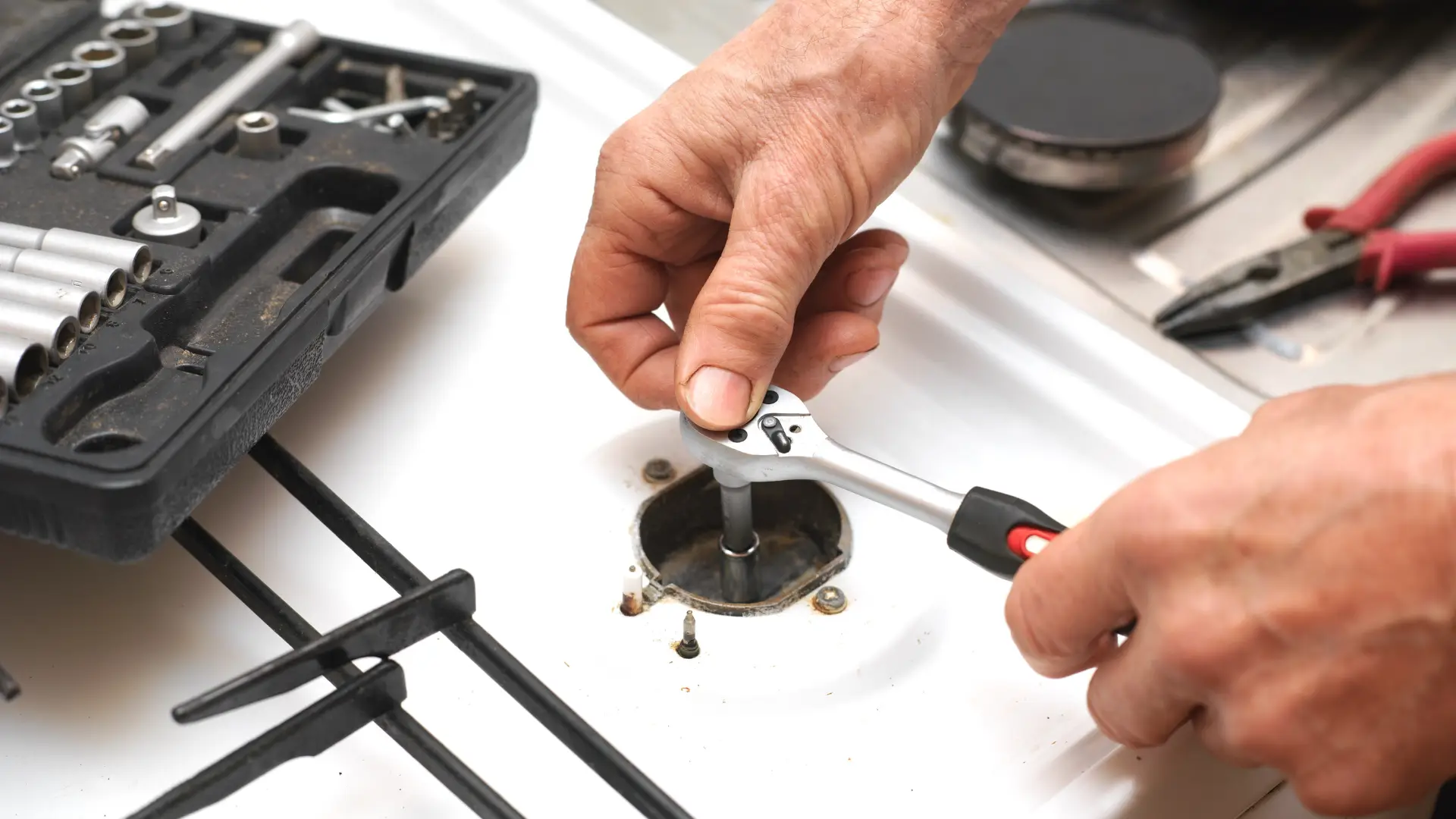
When DIY Ends: Replacing igniters requires accessing internal components and working near gas connections. Professional technicians confirm that faulty igniters demand specialized Wolf repair expertise.
Power and Gas Supply Issues
Wolf cooktops need electricity to generate ignition sparks, even though they burn gas. Check that the unit is properly plugged in, circuit breakers haven’t tripped, and you’re using the correct gas type (propane vs. natural gas).
Less commonly, gas supply interruptions or closed valves prevent ignition regardless of the igniter function. These scenarios require different troubleshooting approaches than burner clogs.
Why Gas Appliances Demand Professional Expertise
Unlike electric appliances, gas cooktop repairs involve potentially catastrophic consequences. Improper reassembly, undetected leaks, or incorrect igniter installation create fire, explosion, and carbon monoxide poisoning risks.
EPA regulations require certification for technicians working with gas appliances. Factory-trained Wolf technicians understand the brand’s proprietary components—sealed burner assemblies, specific igniter modules, and gas valve systems—that generic repair approaches compromise.
The warranty consideration: Wolf voids manufacturer coverage when unauthorized technicians perform repairs. For appliances representing a significant investment, maintaining warranty protection matters.
When to Call Professional Help
Three scenarios demand certified technician involvement:
- No spark after cleaning suggests failed igniter modules or spark switches requiring diagnostic equipment
- Gas odor mandates immediate professional response—turn off gas supply, ventilate, and evacuate
- Persistent issues after basic troubleshooting indicate electrical or gas supply problems beyond DIY capability
Factory-certified technicians bring manufacturer-specific training, genuine OEM parts access, and the specialized tools Wolf’s precision engineering requires.
Prevention: The Best Strategy
Weekly burner cleaning prevents most ignition issues. Remove grates and caps, wipe down components with mild degreaser, and clear burner ports with a soft brush. This simple routine maintains optimal performance and extends component lifespan.
For Houston and Dallas restaurants and high-use residential kitchens, professional maintenance inspections catch wear before failures occur. Regular service identifies deteriorating igniters, gas valve issues, and electrical connections that might compromise safety.
The Bottom Line
Most Wolf cooktop ignition problems stem from accumulated debris blocking burners or igniters—issues homeowners can address through careful cleaning. When problems persist, involve gas odors, or show igniter damage, professional diagnosis protects both your appliance investment and household safety.
The distinction matters: cleaning burner components is maintenance; repairing ignition systems is specialized work requiring factory training and proper certification. Knowing which category your issue falls into prevents both unnecessary service calls and potentially dangerous DIY attempts.
Factory-certified Wolf cooktop repair serving Houston and Dallas. Genuine OEM parts, 2-year warranty. Call (281) 758-9978 for Houston or (214) 761-8300 for Dallas.
Related Reading: