




The 75205 ZIP code tells a story that Highland Park’s more famous neighbor does not. University Park, the 3.7-square-mile city that sits immediately north of Highland Park, holds a median household income of $250,001 — more than double the Texas state average and among the highest in the United States. But the number that matters more for appliance service is not the income figure. It is the housing stock pattern that the income figure has produced — and the way that pattern shapes what appliances live in University Park kitchens, what goes wrong, and what kind of service relationship actually works.
Because University Park and Highland Park together comprise the Park Cities, an enclave incorporated in 1924 and bordered on three sides by the City of Dallas, the communities are often discussed as one market. For day-to-day questions of dining and demographics, that treatment works. For appliance service, it does not. University Park’s housing has evolved along a different trajectory than Highland Park’s, and the service profile follows.
Three Housing Generations Living in the Same ZIP Code
Walk a block in the heart of University Park and you will see, within a single tenth of a mile, three distinct generations of luxury kitchens operating side by side. The service implications are specific.
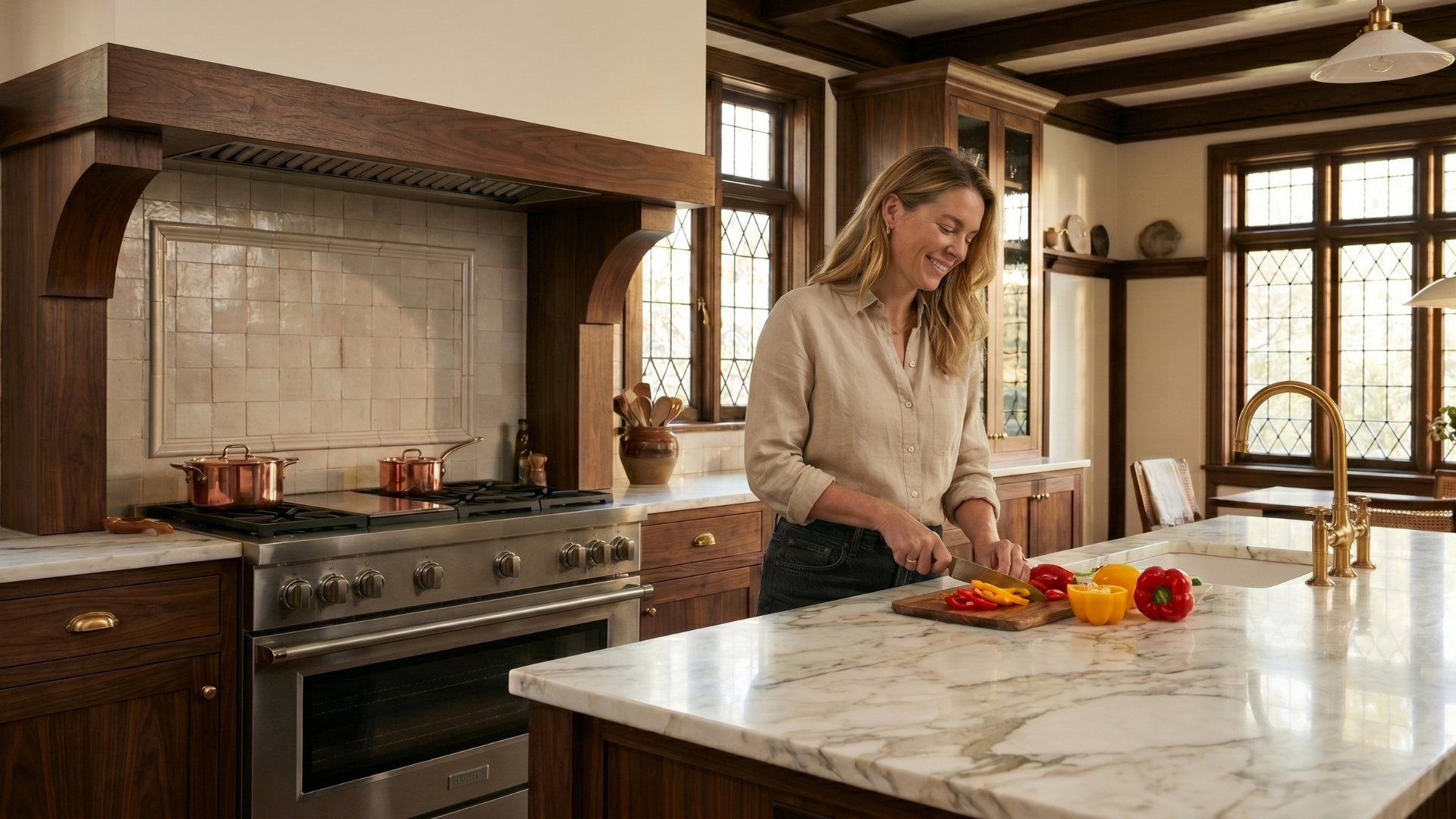
The first generation is the pre-WWII Park Cities home — often a two-story Tudor or Georgian built in the 1920s or 1930s, originally for an SMU faculty family or an early Dallas professional. Many of these homes have had one or two major kitchen renovations in their history. The current-generation owner typically inherits a kitchen that was last renovated in the 1990s or 2000s, with Sub-Zero and Wolf equipment that is now 15 to 25 years old. Service on these homes concentrates on end-of-life refrigeration: Sub-Zero units that have exceeded their manufacturer-warranty compressor window but still have working sealed systems, Wolf ranges with ignition modules from a production run that has since been superseded, and Miele dishwashers that pre-date the current diagnostic platform. The repair question is rarely “fix the symptom” — it is “assess the remaining useful life of a 20-year-old luxury appliance package and decide what stays and what gets replaced.”
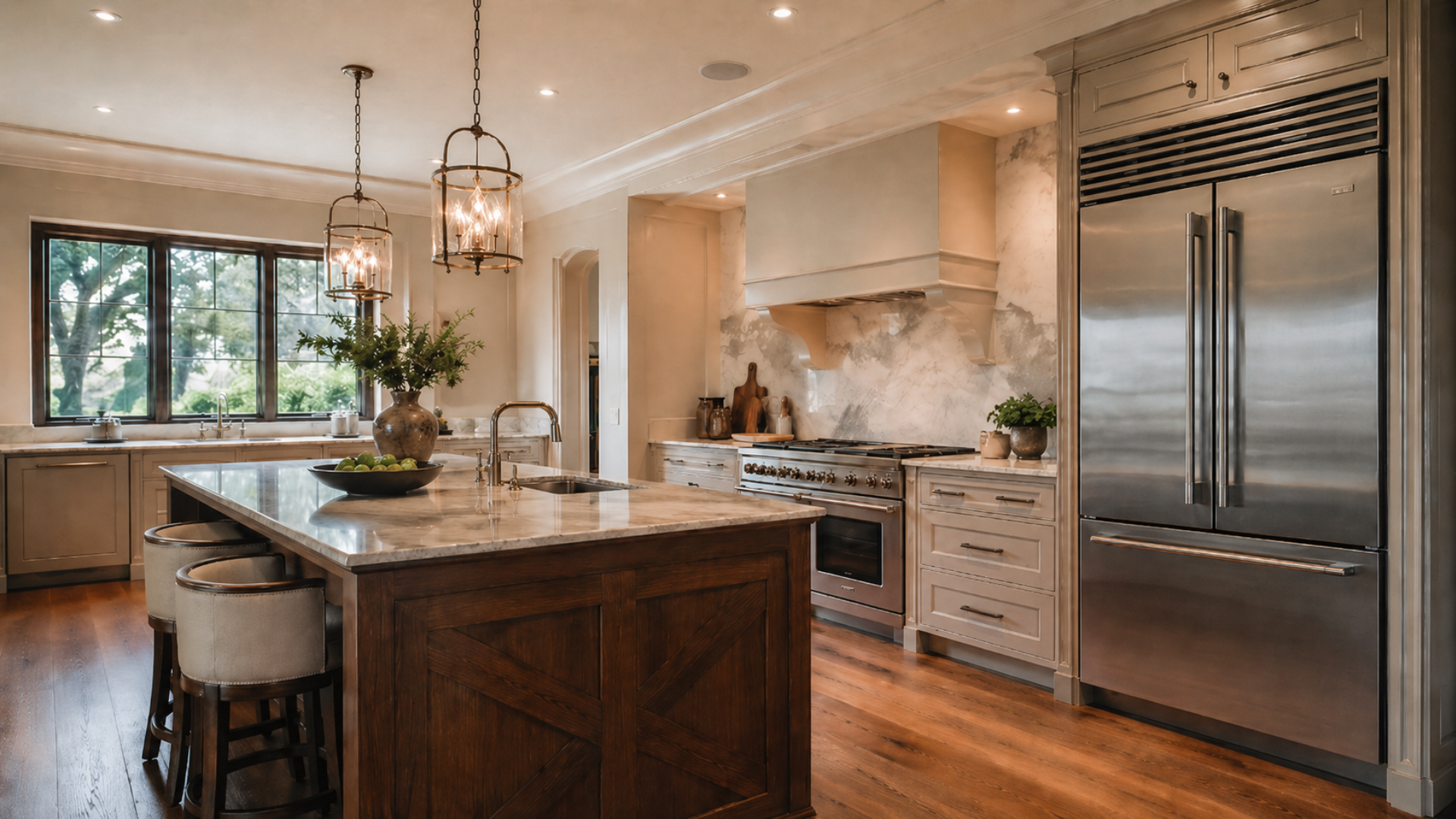
The second generation is the 2000s-era teardown and rebuild. As land values rose through the first two decades of the century, a meaningful portion of University Park’s pre-war housing was replaced with new construction on the original lot. These homes shipped with full Sub-Zero/Wolf packages, often including 48-inch dual-fuel ranges, column refrigeration, and integrated wine storage. The appliances are now 10 to 18 years old, concentrated in the window where condenser cleaning, gasket replacement, and preventive control-board work determine whether the equipment lasts its design life or fails early.
The third generation is the current new-construction estate — typically a 7,000 to 12,000 square-foot home built between 2018 and the present, often with a Gaggenau or Miele kitchen rather than the Sub-Zero/Wolf standard. These homes present a different service profile entirely: installation calibration, post-renovation verification work, and smart-appliance network integration dominate the early-life service calls, and the underlying equipment is too new to have reached its first major wear-out cycle.
A service provider working across University Park is, in practice, working across three different equipment eras in the same afternoon. The diagnostic sequence, the parts-inventory assumptions, and even the customer expectations are different between them.
Why the Neighborhood’s Service Expectations Are Not Highland Park’s
Highland Park and University Park share Highland Park ISD, a unified city management relationship, and a cultural identity as the Park Cities. They do not share identical service markets. Three factors distinguish University Park:
The SMU presence brings a distinct resident profile that Highland Park does not share. The Cox School of Business, the Dedman School of Law, the Meadows School of the Arts, and the medical faculty associated with UT Southwestern all maintain housing clusters within walking distance of campus. Faculty households, while universally affluent by regional standards, often carry different expectations for service scheduling — academic calendars, travel schedules, and sabbatical absences produce a different service-call rhythm than a CEO household.
The multi-generational family pattern is stronger in University Park than in most Texas luxury markets. Homes stay in families for decades. Appliances stay in kitchens for decades. The service relationship a University Park household builds with a repair provider in 2026 may be the same relationship a son or daughter inherits in 2046 with the same appliances still in the house. Providers whose service model optimizes for one-off transactions do not fit this market; providers whose model supports long-term maintenance records across multiple generations of occupancy do.
And the architectural conservation ethic is real. University Park homeowners renovating pre-war homes frequently choose to preserve as much of the original kitchen structure as possible, which means working around non-standard cabinet dimensions, legacy electrical systems, and original gas-line configurations. Appliance installation and service in this context is not a generic exercise; it is a problem of matching current-generation equipment to historic envelopes.
The Service Implications in Practice
The practical service framework for University Park looks different from a residential market built on one housing generation.
Brand coverage matters more, not less. A service provider who covers Sub-Zero and Wolf but not Miele, Gaggenau, Dacor, or Thermador is covering two of the four equipment eras poorly. The factory certification required for Sub-Zero and Wolf service is one credential stack; the BSH family certification for Bosch/Gaggenau/Thermador is another; the Miele Diagnostic Unit authorization is a third. University Park kitchens routinely require all three in the same service visit.
Parts-inventory depth matters more in older homes. A 22-year-old Sub-Zero 650 with a sealed-system issue requires parts that cycle through the manufacturer’s 15-year availability commitment and then into remanufactured and OEM-equivalent supply chains. Providers whose parts inventory assumes current-generation equipment cannot service the oldest quarter of University Park’s installed base.
Service documentation matters more in a market with long-tenured homes. A service record that will be referenced by the next generation of the family, or by the next buyer during a pre-purchase inspection, has to be structured for long retention and clear interpretation — not just as internal notes.
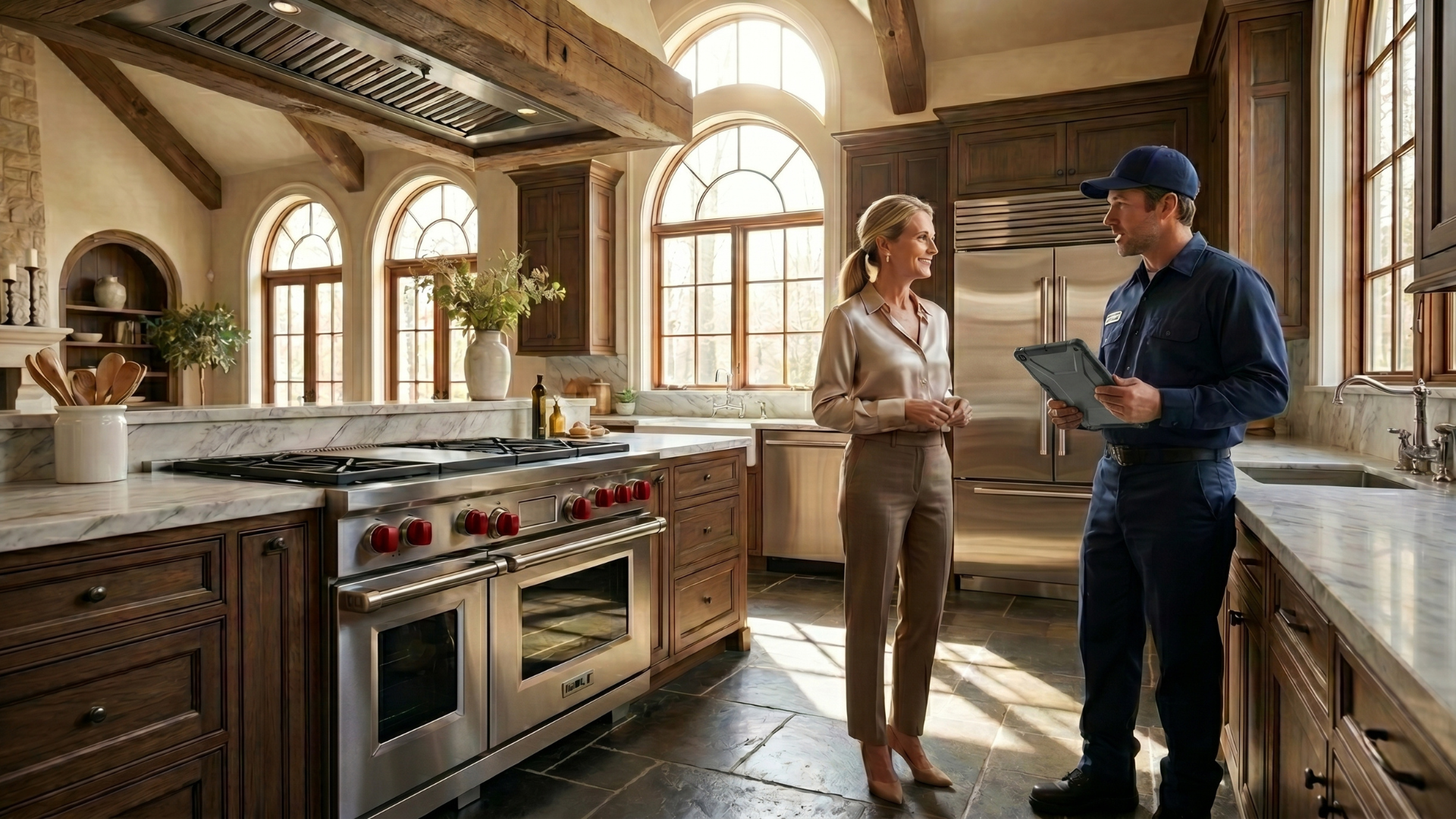
Uptown’s service framework in Dallas — operating from the Snider Plaza office in the 75205 ZIP code itself — is built around the cross-generational, cross-brand reality of Park Cities service. Proximity matters here for response time, but the deeper fit is technical: factory certification across Sub-Zero, Wolf, Miele, and BSH family brands; parts-inventory depth that covers 20-year-old and 2-year-old equipment in the same service van; and documentation practices that assume the kitchen may outlive the current owner’s tenure in the home.
For University Park households whose appliance package represents five to six figures of original investment and another two decades of expected service life, the service provider relationship is not a commodity decision. It is the infrastructure that determines whether the kitchen lasts its design life — or fails early because the wrong technician saw it first.