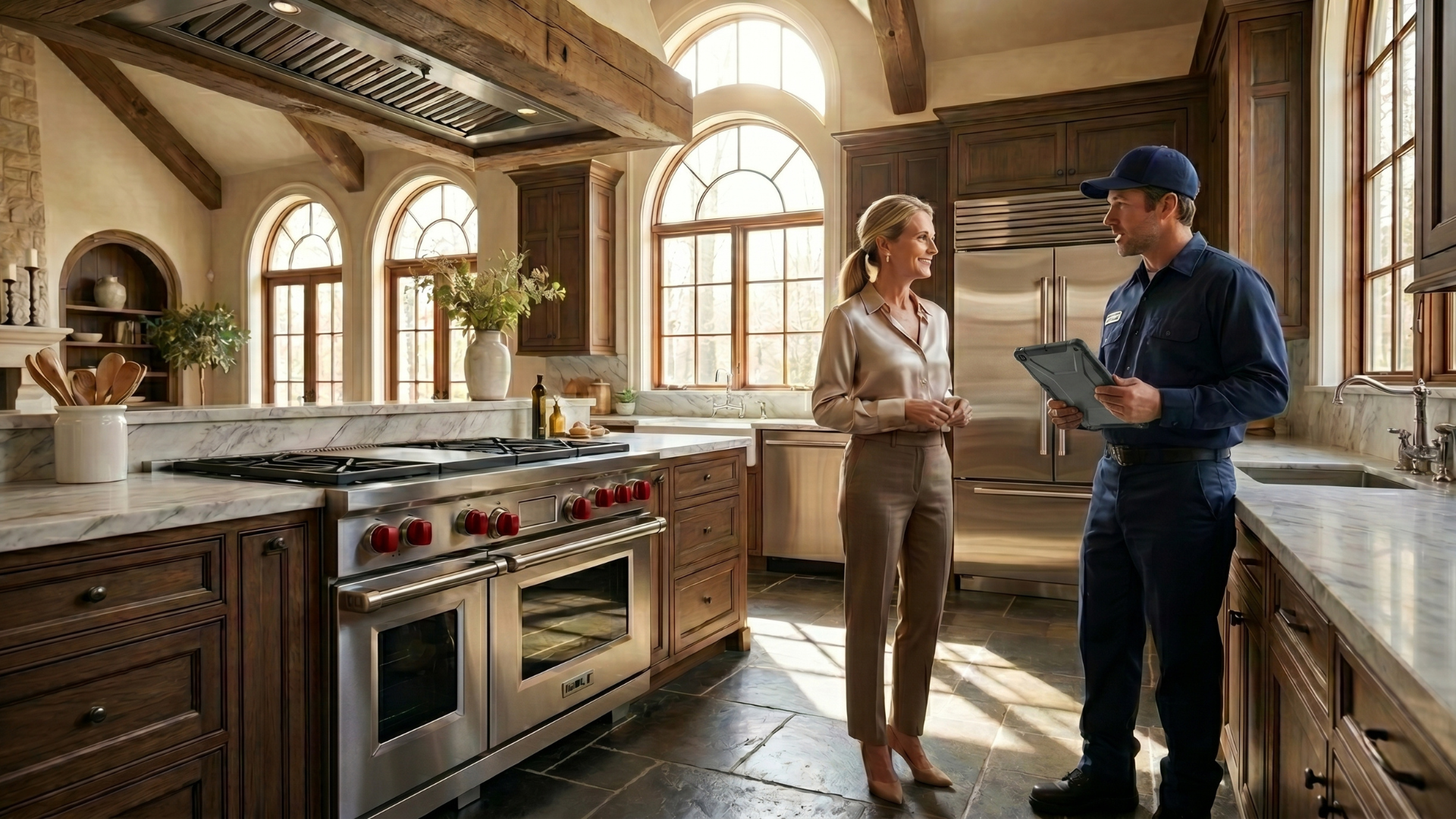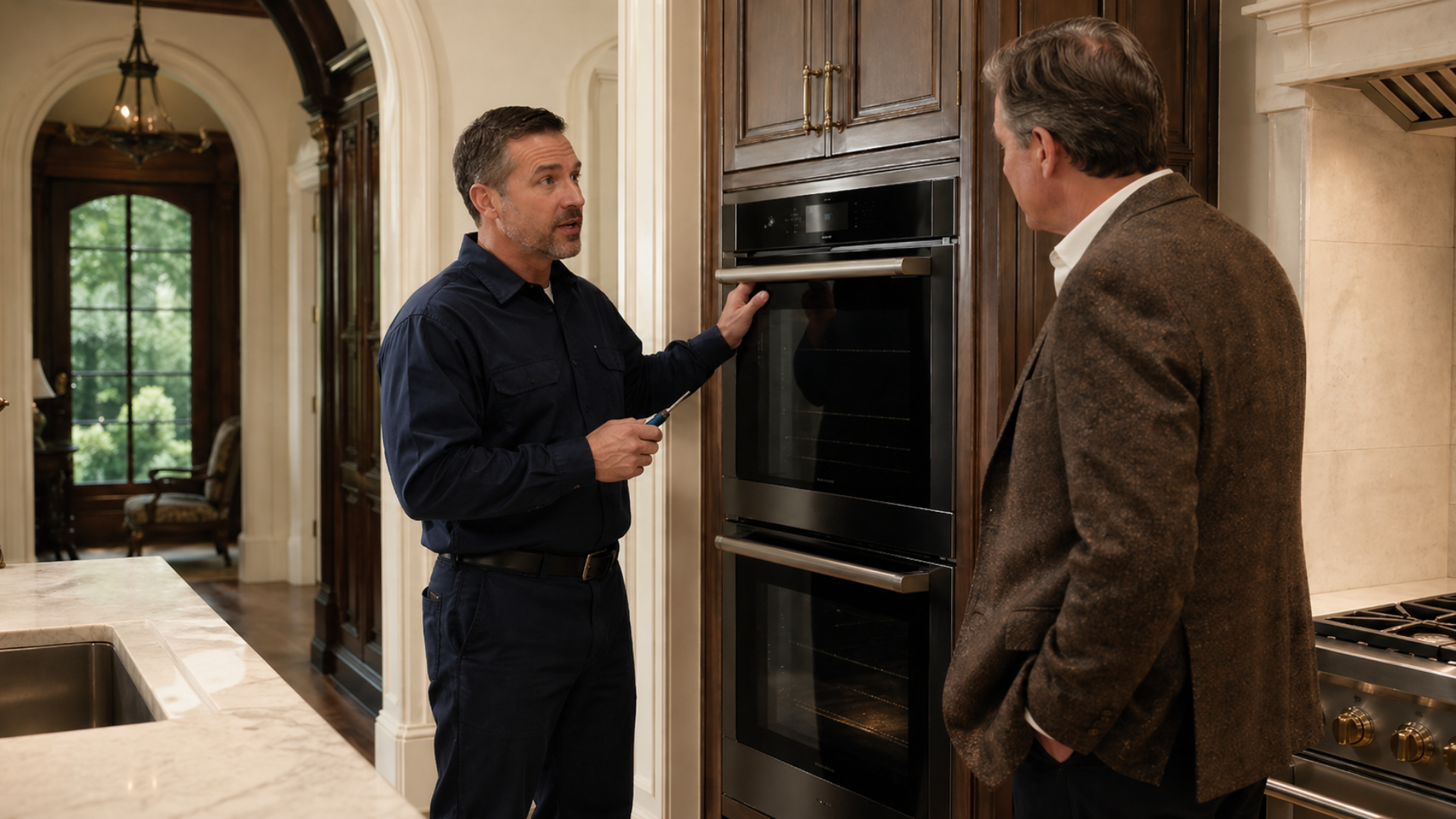





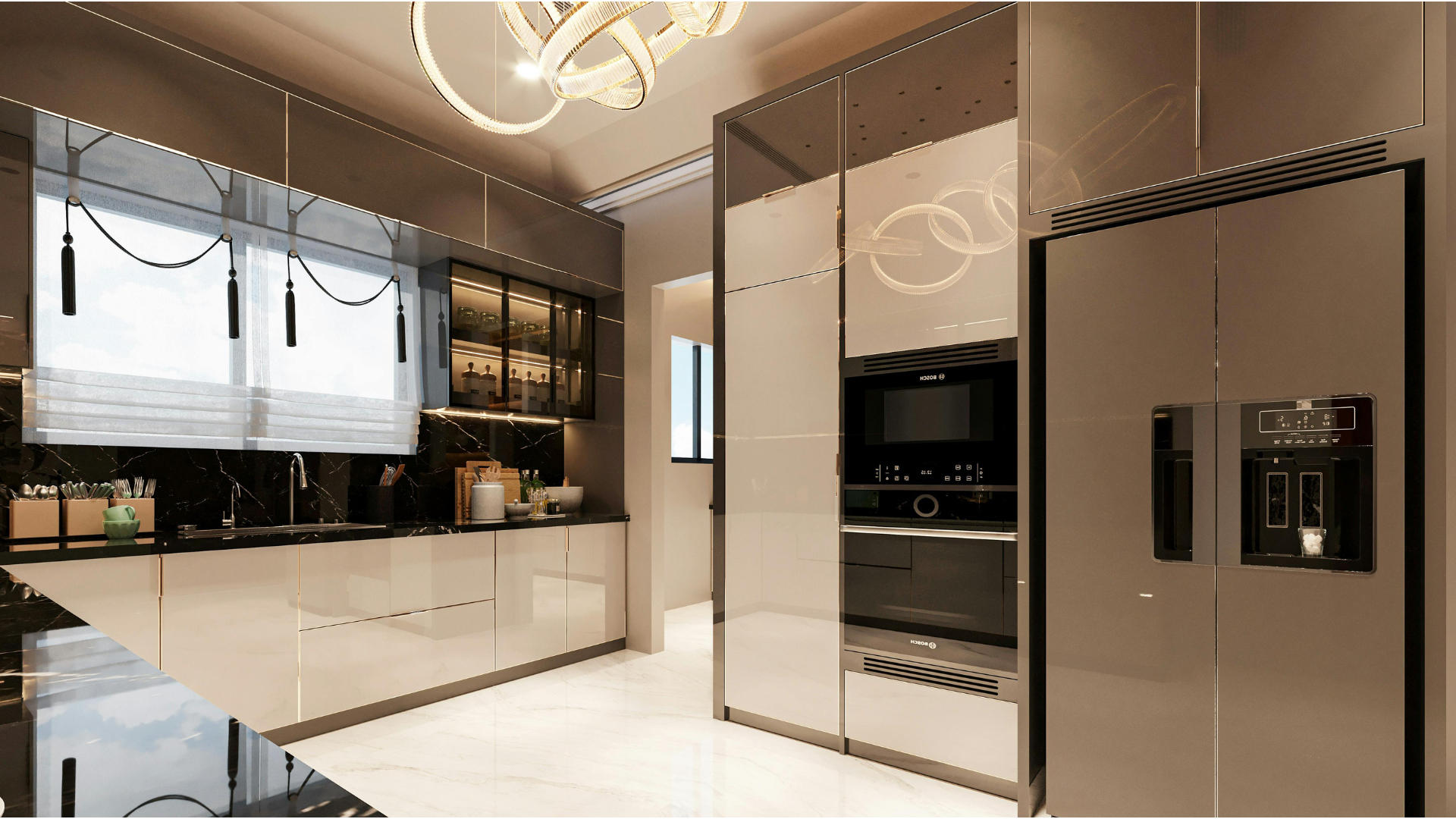
A typical Preston Hollow estate kitchen contains $40,000–$60,000 in appliances. A 48-inch Sub-Zero built-in refrigerator behind custom cabinetry panels. A Wolf 60-inch dual fuel range venting through a 1,200 CFM hood liner. A built-in Miele coffee system. Dual dishwashers — one in the kitchen, one in the butler’s pantry. A 500- to 3,000-bottle wine room with dedicated cooling. All of it is integrated into a Control4 or Crestron system that automates lighting, ventilation, and climate response when any single appliance changes state.
When something fails in this ecosystem, calling a general repair service creates problems that didn’t exist before the technician arrived.
The neighborhood where appliance repair is fundamentally different
Preston Hollow spans roughly six square miles north of Northwest Highway, encompassing approximately 4,600 single-family homes across 30-plus subdivisions. Average lot size runs 1.5 acres — among the largest in Dallas proper. The estate core along Strait Lane commands $20–$40 million, while the broader neighborhood holds a median around $1.9 million with average household income exceeding $500,000.
This concentration of wealth produces a specific appliance landscape. Sub-Zero and Wolf dominate virtually every high-end new build and renovation. Thermador appears frequently in builder-grade luxury. Miele built-in coffee systems are nearly ubiquitous. Viking maintains presence in homes built between the 1990s and 2010s. Gaggenau shows up in the most architecturally forward contemporary estates.
The result: Preston Hollow contains one of the densest concentrations of luxury appliances in Texas, and nearly every unit presents complications that standard repair training doesn’t address.
Panel-ready integration: the $2,500 complication
The defining service challenge in Preston Hollow is panel-ready appliance installation. A Sub-Zero built-in refrigerator doesn’t look like a refrigerator — it looks like cabinetry. Custom wood or metal panels, matched to $50,000-plus kitchen packages from makers like Eggersmann or Shiloh, cover every visible surface. Each panel uses proprietary attachment methods specific to the cabinetry vendor.
Servicing the appliance behind those panels requires removing and reinstalling them with alignment precision to within 1/8 inch. A misaligned panel after repair announces itself immediately in a kitchen where every surface was specified by a designer. Panel removal and reinstallation alone can add $400–$2,500 above standard service costs, depending on complexity and materials.
A technician unfamiliar with panel-ready systems risks scratching custom finishes, bending mounting hardware, or misaligning doors that sat flush before the service call. In a kitchen where the cabinetry cost more than most cars, that damage becomes a separate — and expensive — problem.
Smart home coordination: the integration layer
Preston Hollow estates run on home automation platforms that tie appliances into broader building systems. Control4 installations typically cost $15,000–$50,000. Crestron systems run $40,000–$150,000-plus. Savant falls between at $25,000–$80,000.
These systems don’t just control lights and music. When a Wolf range activates, the automation system may trigger the ventilation hood, adjust kitchen lighting to a cooking scene, modify HVAC airflow for the zone, and raise motorized window shades. Disconnecting the range for repair without coordinating with the integrator can cascade errors across those automations — errors that persist after the appliance is back online.
For connected Sub-Zero units with WiFi diagnostics, firmware updates are exclusively available through factory-certified technicians. A general technician may fix the mechanical issue while leaving the appliance unable to communicate with the home network — or worse, resetting configurations that took the integrator hours to program.
Gated access and estate protocols
Many Preston Hollow properties require advanced security clearance for service personnel. Gated entries, dedicated security staff, background check requirements, and separate service entrances are standard for homes above the $5 million threshold. High-profile residents — the neighborhood has been home to former President George W. Bush, Mark Cuban, and other public figures — expect complete discretion. No photography, no social media, no identifying details shared externally.
This isn’t a luxury preference. It’s an operational requirement that determines which service providers can even access the property. Companies without established protocols for estate service often fail at this threshold before they ever see the appliance.
Why factory certification isn’t a marketing claim here — it’s structural
In a standard home, factory certification is a quality signal. In Preston Hollow, it’s a functional requirement for three specific reasons.
Proprietary diagnostic access. Sub-Zero’s Service Central portal — containing service manuals, schematics, and technical bulletins organized by model and serial number — is restricted to authorized technicians. The diagnostic suite reads internal error logs that the display panel doesn’t show, tests individual sensor calibration, and verifies refrigerant charge across the dual-compressor system. Without this access, diagnosis relies on guesswork. On a $10,000–$25,000 appliance, guesswork is expensive.
Parts access and first-visit resolution. Factory-certified providers achieve approximately 90% first-visit completion rates compared to 60–70% for non-certified services. Parts arrive within two days through factory-direct channels versus potentially weeks through third-party sourcing. In an estate kitchen where the refrigerator is built into the wall and the panels take an hour to remove, every unnecessary visit doubles the disruption and cost.
Warranty protection. Sub-Zero’s warranty — two years full coverage, five years on sealed systems, twelve years on compressor components — requires factory-certified service at every tier. Not recommended. Required. A single uncertified repair can void protection on an appliance designed to last over two decades.
The wine cellar dimension
Preston Hollow wine rooms range from 150-bottle Sub-Zero storage units to dedicated underground vaults holding 3,000-plus bottles with barrel-vault ceilings and tasting areas. Collections in the estate core routinely reach six figures, with some exceeding $500,000.
These systems — whether EuroCave, CellarPro, WhisperKool, or Breezaire — operate under different engineering constraints than kitchen refrigeration. Temperature must hold within ±1°F. Humidity must stay between 60–70%. Dallas’s 108 days annually at or above 90°F push cooling systems to their rated limits for months at a time.
A technician who services kitchen refrigerators but lacks wine cellar training may restore cooling while destroying humidity balance — drying corks and exposing the collection to oxidation that no repair can reverse.
What to verify before any Preston Hollow service call
Three questions separate qualified providers from those who will learn in your kitchen:
Does the company carry factory certifications for the specific brands installed in your home — not general appliance credentials, but manufacturer-issued authorizations from Sub-Zero, Wolf, Thermador, Miele, or Gaggenau?
Can the technicians demonstrate experience with panel-ready removal and reinstallation, and do they carry insurance adequate to cover damage to custom cabinetry during service?
Does the company offer a warranty that extends beyond the industry-standard 90 days? An extended warranty on parts and labor signals confidence in both the diagnosis and the repair — and provides protection during the critical months after service when latent issues surface.
Preston Hollow’s appliance landscape demands more than repair skill. It demands integration awareness, estate-level protocols, and diagnostic access that only factory authorization provides. The neighborhood was built for precision. Its service should match.
Dallas: (214) 761-8300 | Houston: (281) 758-9978