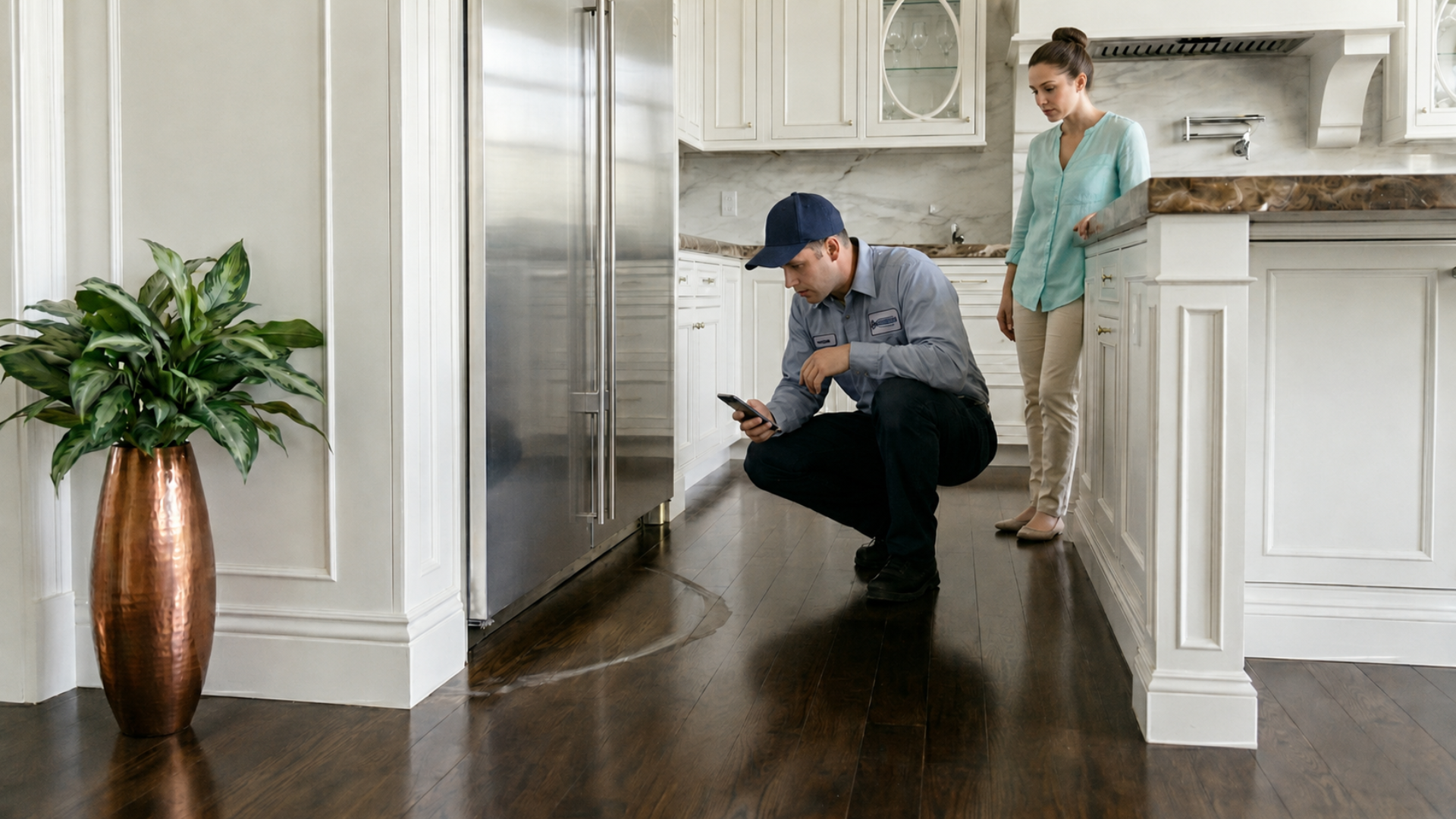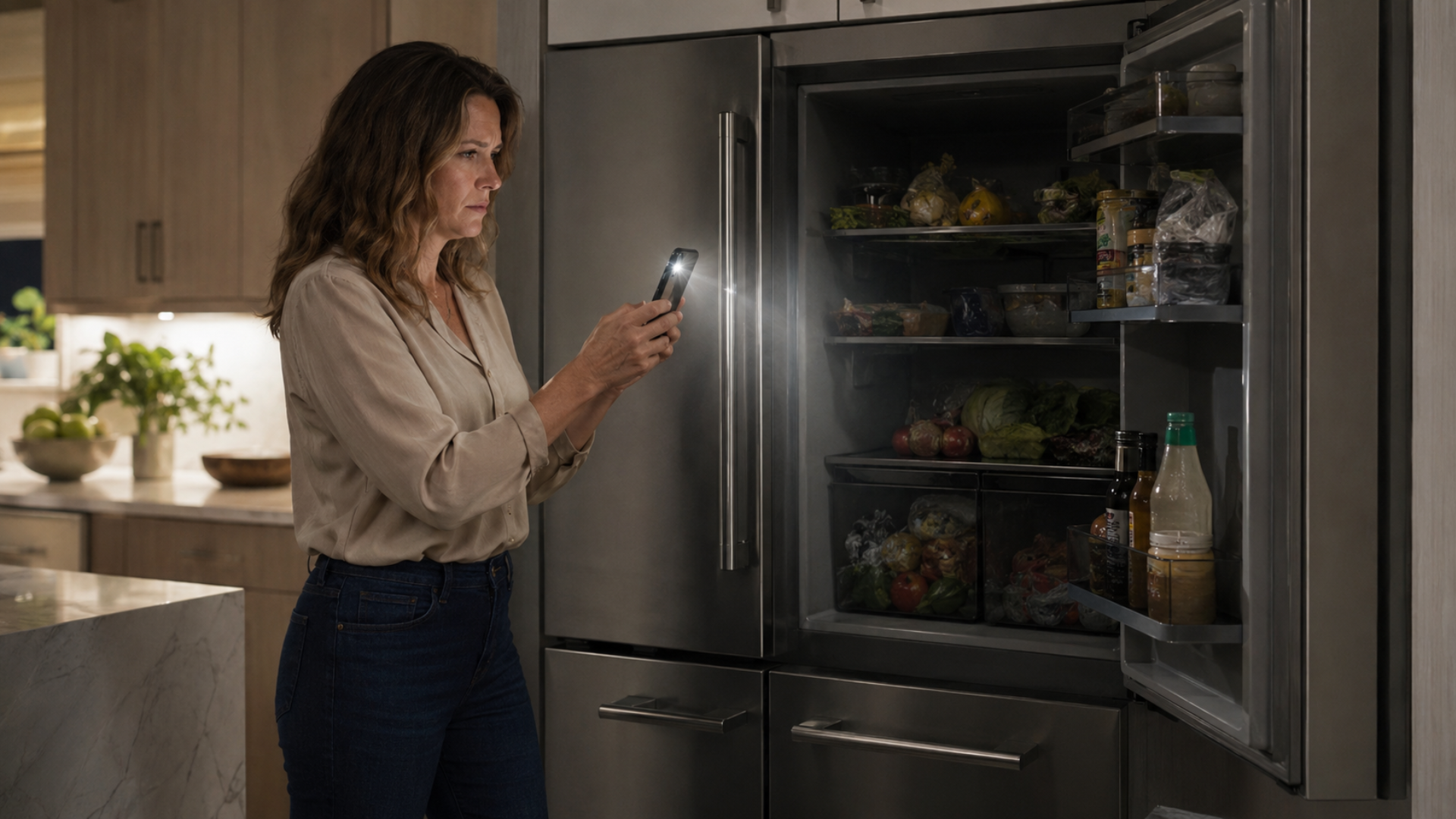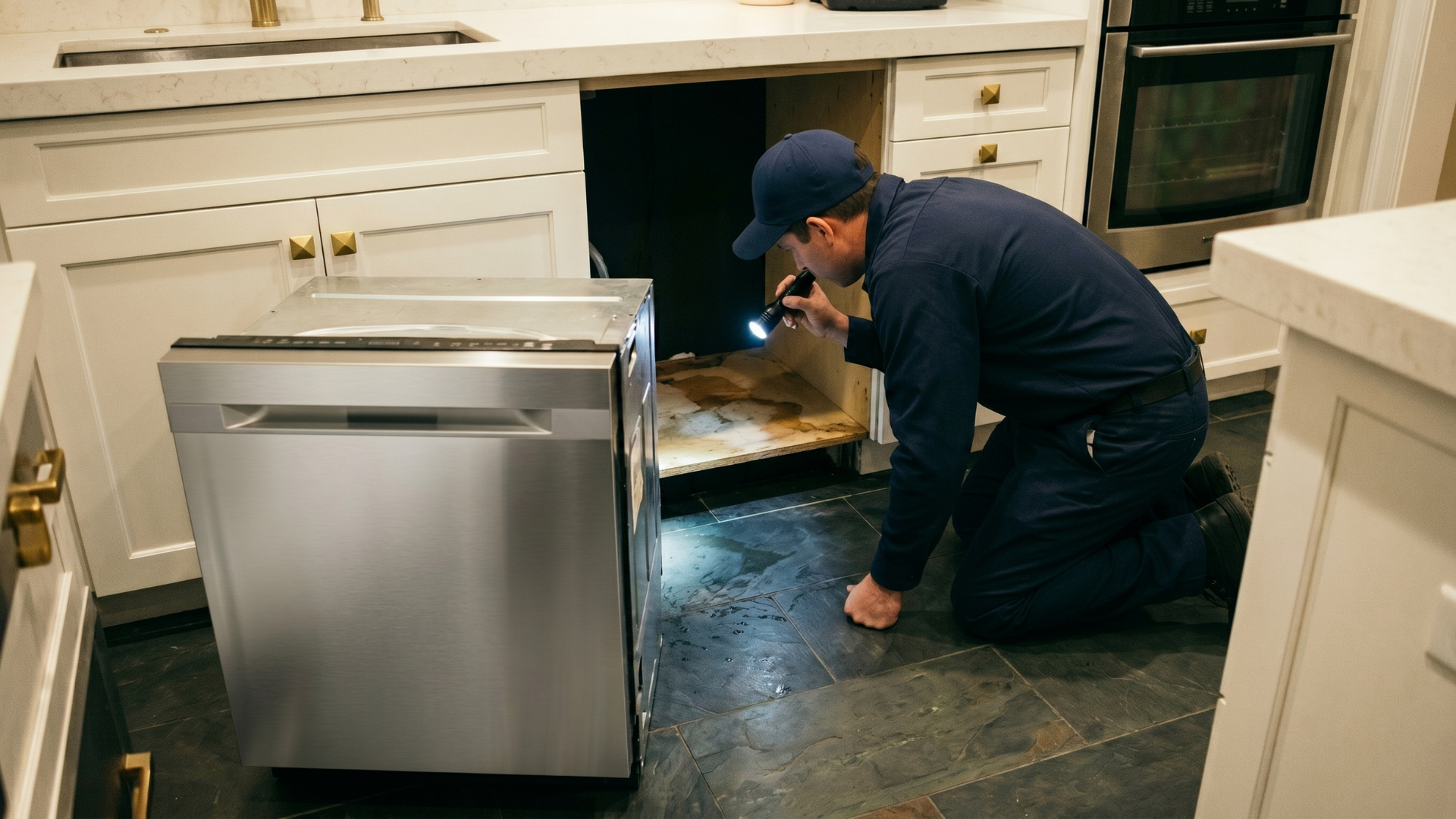





In Houston and Dallas, a Sub-Zero that won’t hold temp or a Wolf oven stuck at preheat isn’t just an inconvenience—it’s a risk to a five-figure asset and the rhythm of your home.
When something fails, the first decision is the most consequential: use genuine OEM parts or gamble on aftermarket. The difference shows up in performance, safety, and resale value—and in what your warranty will (and won’t) cover.
The Case for OEM: Fit, Safety, and Predictable Outcomes
Luxury appliances are engineered as systems. Swapping in a look-alike component can throw off tolerances, accelerate wear on adjacent parts, or create safety hazards. Genuine parts are built to the exact spec of your model and are covered by the manufacturer’s own parts warranty. Sub-Zero, Wolf, and Cove back replacement parts for one year when installed, and their certified service network explicitly uses genuine parts.
The stakes are higher with water filtration, refrigeration, and high-heat cooking. Counterfeit or deceptively labeled parts—especially refrigerator water filters—can fail to remove contaminants and even damage equipment, trading short-term savings for long-term risk. The Association of Home Appliance Manufacturers (AHAM) warns that risks to health and property outweigh any lower price.
Bottom line: OEM parts preserve performance as engineered and maintain a clean chain of custody on safety and reliability.
“Will Aftermarket Void My Warranty?” What the Law—and Brands—Actually Say
Two truths can be confusing when read in isolation:
- Federal law: The FTC’s Magnuson-Moss Warranty Act bars manufacturers from conditioning warranty coverage on using a particular brand of part or service—so-called “tie-in sales.” That means a blanket statement like “your warranty is void unless you use our brand’s parts” is not allowed.
- Real-world practice: Brands define what counts as a warrantable defect and what counts as damage or misuse. If an incompatible or sub-spec part causes a failure, the manufacturer can legitimately deny that claim. Manufacturers also make genuine parts easy to identify and source—Viking, for instance, sells genuine OEM parts directly through its Middleby Advantage channel and routes owners to authorized service.
How to navigate this: using OEM parts doesn’t just avoid arguments; it documents that repairs adhere to brand specifications, which supports future warranty claims and protects resale value.
The Hidden Costs of “Cheap” Parts
Aftermarket components vary widely in materials, tolerances, and quality control. The most expensive failures tend to be indirect:
- Collateral stress: A compressor start device that’s a hair out of spec can shorten compressor life. A mis-formed door gasket can spike energy use and strain evaporator fans.
- Safety exposure: Counterfeit or uncertified electrical components pose shock and fire hazards. Eaton’s safety advisory and the U.S. Chamber of Commerce have documented the growing risks of counterfeit electrical goods.
- Warranty friction: Even when a claim isn’t disqualified, you may face delays, extra inspections, or replacement at your expense if the root cause traces to a non-conforming part.
In a luxury kitchen, the “savings” from an off-brand control board can disappear with one repeat visit—or with a wine collection that runs a few degrees warm for a weekend.
Brand Signals That Matter (and How to Verify Them Quickly)
If you own Sub-Zero, Wolf, Miele, Viking, Thermador, or similar, look for these indicators before approving a repair:
- Certified service locator: Check the brand’s official locator for authorized providers. Sub-Zero/Wolf listings note providers use genuine parts backed by a one-year replacement warranty.
- Parts warranty language: Sub-Zero/Wolf/Cove publicly states replacement parts are covered for one year from installation (parts only). Miele USA publishes warranty and extended-warranty terms on its U.S. site.
- Direct OEM parts channels: Viking’s Middleby Advantage portal offers verified OEM parts with direct support.
These are fast, verifiable checks that keep your documentation clean and your risk low.
When OEM Is Non-Negotiable (and When There’s Nuance)
- Precision cooling & filtration (Sub-Zero refrigeration, wine cellars): Temperature stability and humidity control depend on matched components and firmware. OEM is the safe choice. (Counterfeit filters are a no-go.)
- High-heat cooking (Wolf, Viking): Thermal sensors, igniters, and control boards operate near limits; spec deviations compound quickly.
- Smart/connected modules: Firmware compatibility and sensor calibration make OEM boards and harnesses prudent defaults.
Nuance exists with cosmetic parts (knobs, shelves) and certain non-electrical components. But even here, brand provenance helps with fit and future claims. When in doubt, ask your technician to document part numbers and confirm manufacturer origin.
Why Uptown Appliance Repair Only Installs Genuine OEM Parts
At Uptown Appliance Repair, our position is straightforward: we protect the asset. Our technicians are factory-certified for the brands we service, trained on diagnostics and installation procedures, and we back our work with a 2-year parts-and-labor warranty—double what most shops offer. Using genuine parts is how we make those promises hold up in the real world.
- Learn how to spot a certified luxury technician and the questions to ask before you hire: How to Choose a Certified Luxury Appliance Technician
- See why an extended guarantee matters for high-end equipment: Why 2-Year Warranties Matter
- Own a Sub-Zero in River Oaks or Highland Park? Sub-Zero Appliance Repair in Houston
- Troubles with connected features? Diagnosing Connected Sub-Zero & Wolf Units
Practical Buyer’s Guide: Approve the Repair with Confidence
- Ask for the part number upfront. A genuine part number is traceable in the manufacturer’s system or on an official parts site such as Sub-Zero’s or Viking’s.
- Confirm certification. Verify your provider on the brand’s locator or support page. Certified networks signal training, tooling, and access to OEM parts.
- Keep the paper trail. Save the invoice showing part numbers and the warranty term (many OEM parts carry a one-year parts warranty from the brand).
- Be skeptical of deep discounts. Below-market “equivalents” in filtration, electronics, or safety-critical items can be counterfeit. Industry advisories continue to flag the risks of fake electrical components.
The Editorial View: In a Luxury Kitchen, “Almost Right” Is Wrong
The economics of high-end appliances reward certainty. OEM parts and certified service don’t eliminate all risk, but they minimize the unknowable: unseen tolerances, firmware mismatches, counterfeit components, and denied claims. Federal law protects your right to choose—but the disciplined choice is clear if you want predictable performance and resale value.
If you value the engineering you paid for, buy its parts and its expertise.
Call to Action
Protect your investment with certified diagnostics and genuine OEM parts—backed by a 2-year warranty.
Schedule service with Uptown Appliance Repair or call (281) 758-9978.