




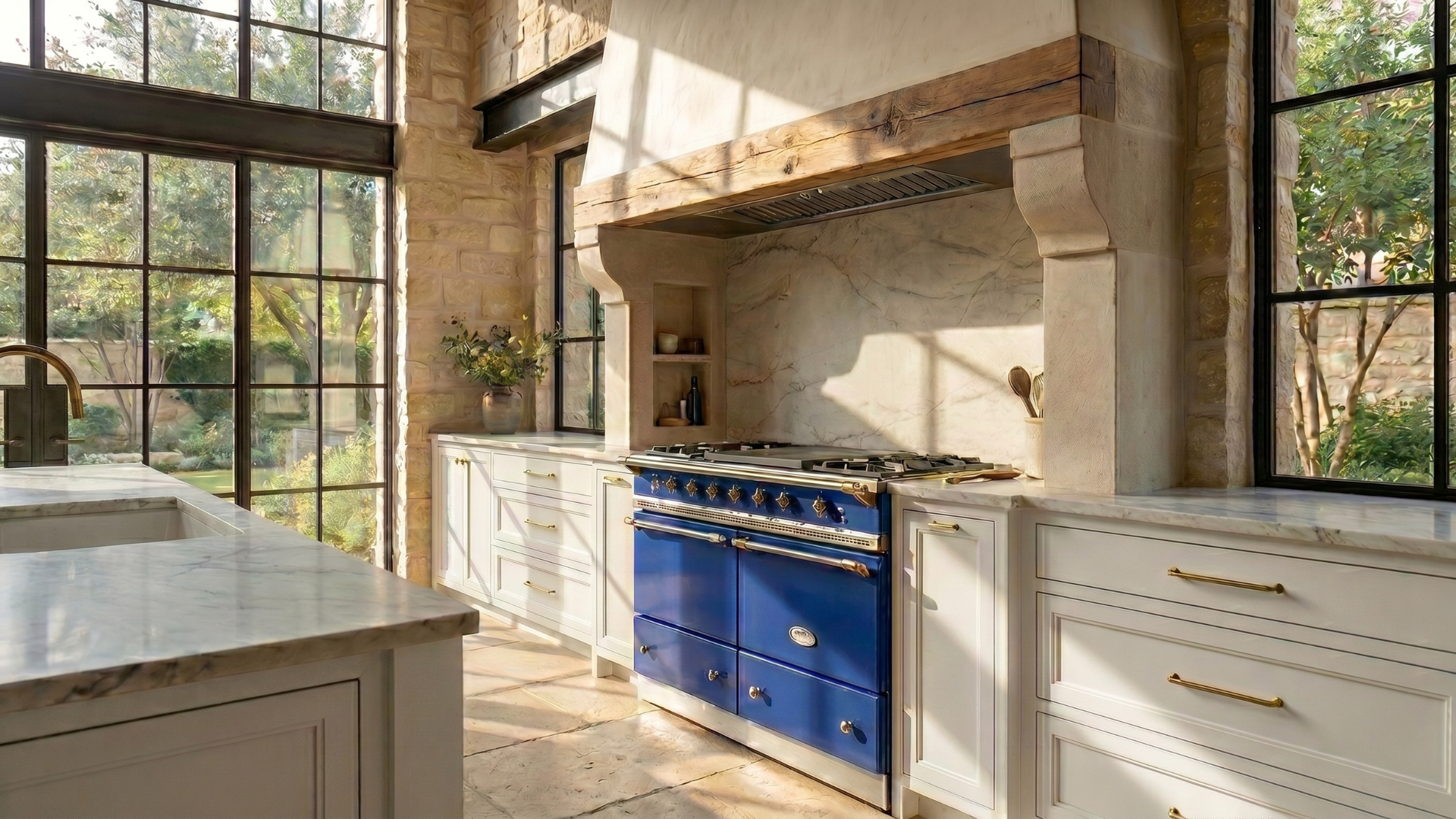
TL;DR: A LaCanche range is hand-assembled in Burgundy, France, and designed to cook for 50+ years. Servicing one in Houston requires a technician who understands its French-spec gas valves, proprietary brass fittings, and porcelain enamel — not a generalist with a manufacturer’s diagnostic app. Uptown Appliance Repair specializes in LaCanche service for Houston kitchens and sources genuine parts through Art Culinaire, the sole US distributor.
What Makes a LaCanche Different From Every Other Range in Your Kitchen
The village of Lacanche, in Burgundy, has been producing cooking ranges since 1796. Each range is assembled by hand, built to order, finished with attention to detail that makes a Wolf or Thermador look mass-produced by comparison. Art Culinaire, the sole US distributor since 1995, quotes a 5–6 month production window — because each unit is built to your configuration, color, and trim. Bloomberg has called it “the greatest stove on earth.” The price point — typically $15,000–$25,000+ — reflects what it takes to build a range that way.
The model line reads like a map of Burgundy: Sully, Cluny, Volnay, Saulieu, Chambertin, Beaune, Fontenay. Each name maps to a width class and cooking configuration — 35-inch to 55-inch, single or dual cavity. What they share is a construction philosophy most American ranges don’t attempt: solid brass fittings machined from bar stock (not chrome-coated plastic), porcelain enamel fired at high temperature for a glass-like finish, dual-cavity options pairing a gas oven with a separate electric convection oven, and French-spec gas valves converted for US natural gas and propane.
That last point matters in Houston. Your LaCanche was configured for US gas lines before it left Burgundy, but the gas valve tolerances and simmer plate calibration remain French-derived. A technician who approaches it like a Wolf burner will miscalibrate it.
The Heirloom Service Expectancy
The word “heirloom” gets used loosely in appliance marketing. For LaCanche, it’s technically accurate. The factory builds to a 50+ year service expectancy — not as a marketing claim, but as a design constraint. Brass fittings are sized for multiple replacement cycles. The enamel is thick enough to survive decades of thermal cycling without crazing. Oven door hinges are mechanical rather than electronic, precisely because mechanical components can be replaced in perpetuity.
Art Culinaire’s own service and warranty page captures this: “We aim to facilitate quick and efficient repairs for all Lacanche range owners, ensuring longevity as a cherished heirloom through proper care and maintenance.” Even out-of-warranty owners are encouraged to contact Art Culinaire for diagnostics and part recommendations — because the expectation is that you’ll still be cooking on this range in 30 years.
When your LaCanche needs a thermostat or spark module, the part is still available — it was designed on the assumption it would be needed.
Common Service Needs for Houston LaCanche Owners
Houston’s climate creates maintenance pressures on a LaCanche you wouldn’t face in a climate-controlled Paris apartment. Here’s what comes up most often in local service calls:
Oven Thermocouple and Safety Valve Wear
The gas oven in a LaCanche uses a thermocouple-fed safety valve to confirm ignition before holding the gas open. Houston’s humidity — regularly above 80% in summer — accelerates oxidation on the thermocouple probe tip, which affects its millivolt output and can cause nuisance flame failures (“the oven lights, then goes out”). This is one of the most common LaCanche service calls in the Houston market. It’s a calibrated replacement, not a parts-bin swap — the thermocouple must be sourced from Art Culinaire or a vetted LaCanche service partner to match the French valve specification.
Brass Burner Cap and Igniter Maintenance
The solid brass burner caps that give a LaCanche its visual character are also its most maintenance-sensitive component in Houston’s humid environment. Brass oxidizes in humidity, forming a patina that is aesthetically intentional — but if the patina builds unevenly on the burner port openings, you’ll see uneven flame distribution and hard-starting burners. Regular cleaning with a soft cloth and mild dish soap (no abrasives, no citric-acid cleaners) keeps the ports open. If a port is clogged, the correct tool is a toothpick or soft-bristle brush — never a metal pick, which damages the brass bore.
The igniters on a LaCanche are ceramic-tipped, French-spec components. If a burner clicks but won’t catch, or catches only after extended clicking, the igniter tip usually needs replacement — not a universal igniter, but a LaCanche-specific part. These are available through Art Culinaire’s parts department.
Simmer Plate Temperature Calibration
The plaque mijoteur — the dedicated simmer plate present on most LaCanche configurations — maintains a consistent low surface temperature for slow braises, sauces, and chocolate work. In Houston, where ambient kitchen temperatures run high in summer, the thermostat reference can drift slightly and require recalibration. It’s a straightforward adjustment, but it requires the French spec temperature range — not a field estimate.
Enamel Surface Care in a Texas Climate
The porcelain enamel on a LaCanche is more durable than painted steel, but it has specific enemies: thermal shock and harsh chemicals. In Houston kitchens: allow the range to cool naturally before cleaning (sudden cold water on a hot surface can crack enamel); use warm water and mild soap only — no oven-cleaner sprays, no bleach. LaCanche electric ovens include a pyrolytic self-clean cycle; Art Culinaire recommends using it no more than 4–6 times per year to avoid enamel stress from repeated extreme heat cycles.
Why Factory-Sourced Parts Are Non-Negotiable
There is no aftermarket parts ecosystem for a LaCanche. Unlike Sub-Zero or Miele, where an experienced technician can sometimes source compatible third-party components for non-critical repairs, a LaCanche requires Art Culinaire-sourced parts for anything touching the gas system, oven control circuit, or burner assembly.
This isn’t overprotective policy — it’s engineering reality. The French-spec gas valves, thermocouples, and spark modules are calibrated to tolerances that don’t align with the US aftermarket. A generic thermocouple in a LaCanche oven will often get it running, but temperature calibration will be off by 15–25°F — enough to ruin a soufflé and enough to stress the safety valve over time.
Art Culinaire maintains a network of over 300 Preferred Service Providers across the US, hand-selected for their ability to work on French ranges. When you schedule LaCanche service with Uptown, we source parts through the Art Culinaire supply chain, not from a generalist distributor.
Repair vs. Restoration: A Different Decision Framework
With a US production range, the repair-vs-replace decision is largely financial: if repair costs approach 50–60% of replacement cost, most technicians will recommend replacement. For a LaCanche, this calculation works differently on three axes.
Replacement cost. A new LaCanche runs $15,000–$25,000 and takes 5–6 months to arrive. A $1,500 thermocouple and brass burner cap service is almost always favorable against that baseline, even on a 20-year-old range.
Parts availability. The factory still produces the same core range lines with largely consistent components. Parts for a 15-year-old Sully are generally still available through Art Culinaire — a materially better outlook than most US ranges of similar age.
Heirloom value. A well-maintained LaCanche that has lived in a Houston kitchen for 20 years has monetary and functional value a new unit can’t immediately replicate. The enamel has developed depth. The brass carries the patina of that kitchen’s history. The range has been dialed to your gas pressure and cooking habits. These aren’t sentimental excuses — they’re real factors in the decision.
Where restoration becomes the conversation (rather than a single repair) is when multiple systems have degraded at once: gas valves, thermocouple, ignition system, enamel chips. A comprehensive service visit that addresses everything together is more economical and less intrusive than sequential calls — and a LaCanche technician can walk through a complete system assessment in a single visit.
Installing a LaCanche in a Houston Kitchen
A few Texas-specific questions come up consistently whether you’re commissioning a new LaCanche or inheriting one.
Gas line specs. US-configured LaCanche ranges operate on standard natural gas or propane. Houston’s CenterPoint Energy line pressure (typically 7–14 inches water column at the appliance) is within spec. Your installer needs the model-specific installation manual, available through Art Culinaire’s installation resources page.
Ventilation. High-power burners on a Sully or Cluny run 15,000–18,000 BTU each. Most standard residential hoods are undersized for this output — plan ventilation around the range’s spec sheet before installation.
Humidity. Houston’s humidity doesn’t damage the enamel or brass structurally, but it does increase burner port maintenance frequency. Expect to clean ports more often than you would in a drier climate.
Frequently Asked Questions
How long does a LaCanche range typically last? LaCanche builds to a 50+ year service expectancy, and ranges from the 1980s and 1990s are still in active service in US kitchens. The factory’s continued production of the same core range lines means parts availability follows the range’s life, not a manufacturer’s arbitrary support cutoff.
Is LaCanche service covered under warranty in Houston? New LaCanche ranges sold through Art Culinaire come with a 3-year warranty against manufacturing defects in materials and workmanship, transferable to new owners. For warranty service, contact Art Culinaire at 888-222-2930 before engaging any local service company — warranty authorization from Art Culinaire is required prior to any warranty repair. For out-of-warranty service, you can contact Uptown directly or ask Art Culinaire for a local referral.
Can a general appliance technician repair a LaCanche? Technically, yes — but practically, the risk of mis-calibration is significant. The French-spec gas valves, thermocouples, and ignition components operate to tolerances that a technician unfamiliar with the range may not recognize. The result is often a range that runs, but runs incorrectly. Seek a technician with documented LaCanche experience and access to Art Culinaire’s parts supply chain.
What’s the most common LaCanche repair in Houston? In humid Houston conditions, thermocouple wear on the gas oven is the most frequent service call, followed by igniter cleaning and replacement and burner port maintenance from oxidation buildup. None of these are major repairs, but all require LaCanche-specific parts.
How is a LaCanche different from a La Cornue? Both are hand-built French ranges, but from different traditions. La Cornue is a Paris-based manufacturer known for its curved Château-style convection oven, a design dating to 1908. LaCanche is a Burgundy factory producing dual-cavity ranges in a broader model range and color palette. Both sit at the top of European range craftsmanship; they serve different kitchen aesthetics. Uptown services both.
What should I use to clean the brass trim on my LaCanche? Mild dish soap and warm water, applied with a soft cloth. Never use abrasive pads, brass polishes with ammonia, citric-acid cleaners, or commercial oven cleaners on or near the brass fittings. The natural patina of brass is part of the LaCanche aesthetic — aggressive polishing that removes the patina is both unnecessary and difficult to reverse.
Ready to Schedule Service?
Your LaCanche is built to outlast most of what’s around it in your kitchen. Keeping it there requires service that respects what it is — a hand-built French range with French-spec components and a production philosophy that treats longevity as a design requirement, not a marketing claim.
Uptown Appliance Repair services LaCanche ranges in Houston with certified technicians, genuine parts sourced through the Art Culinaire supply chain, and a 2-year warranty on all work performed. We also service La Cornue and other premium French and European ranges.
Call us at (281) 758-9978 or send a message through our contact page. We’re happy to start with a phone assessment before scheduling a visit.
Sources
- LaCanche — Official Manufacturer Site — manufacturer background, model line (Sully, Cluny, Volnay, Chambertin, Beaune, Fontenay), and production philosophy from the Burgundy factory
- Art Culinaire — Service & Warranty — US distributor warranty terms, Preferred Service Provider network, and repair authorization process
- Art Culinaire — Installation Resources — installation manuals, gas line specs, and technical support documentation for US-configured LaCanche ranges
- Art Culinaire — French Ranges US Distributor — sole authorized US distributor since 1995; parts sourcing and service referral network
Related Reads from Uptown
- Gaggenau Appliance Repair in Houston and Dallas: Why Most Technicians Can’t Service a 341-Year-Old Brand — if you own a LaCanche, you likely appreciate why German and French heirloom appliances demand brand-specialist technicians — this article explains the same principle applied to Gaggenau’s century-old engineering
- Wolf Range Repair Guide: Common Issues for Houston and Dallas Homeowners — Wolf and LaCanche owners share the same high-BTU cooking expectations; this guide covers the Houston-specific failure modes and service considerations for professional-grade ranges
- OEM vs. Aftermarket Parts for Luxury Appliances: What Protects Your Investment and What Puts It at Risk — the case for factory-sourced parts in LaCanche service is the same argument made here at broader scale — essential reading before any luxury appliance repair decision