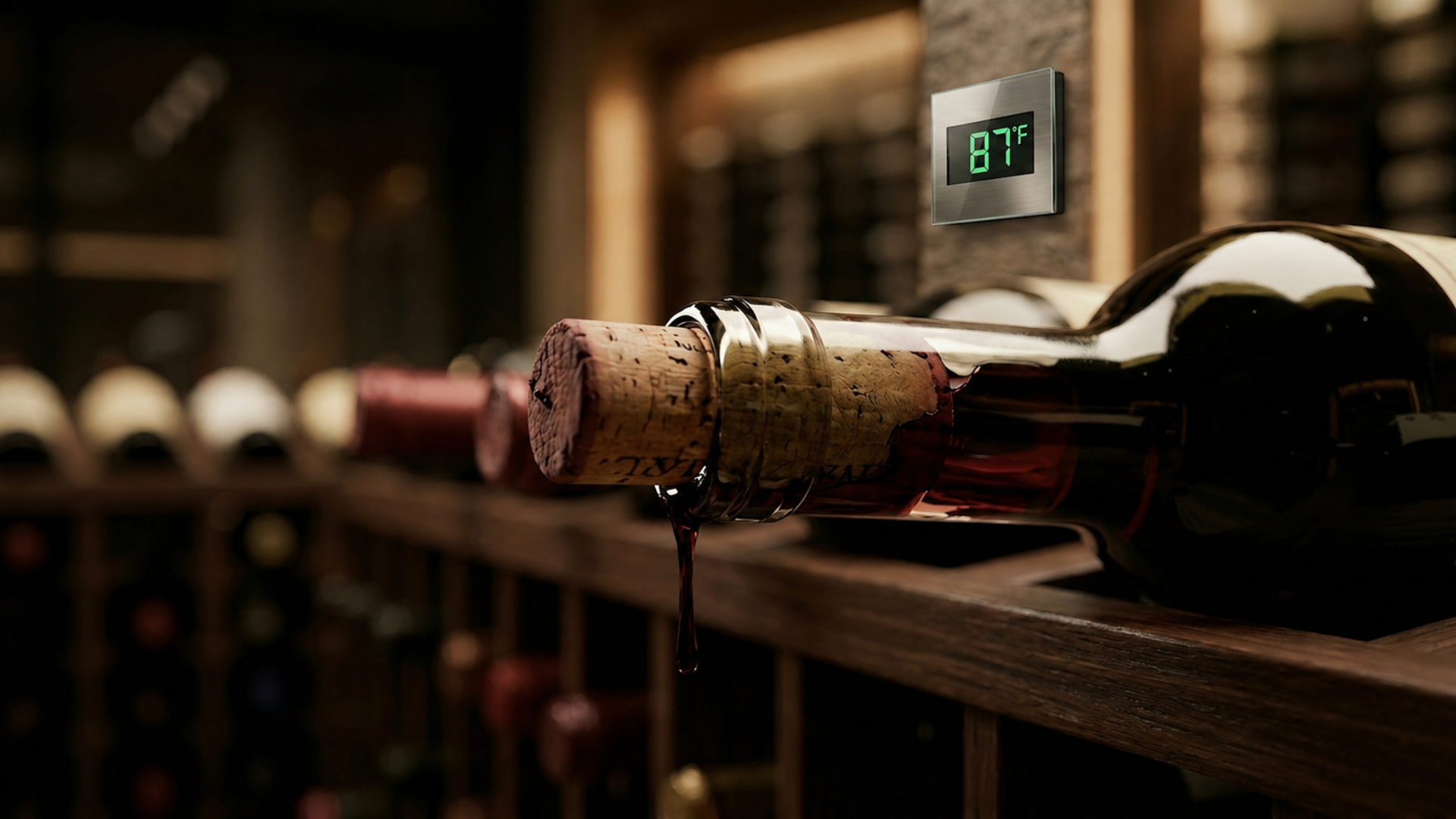





The Arrhenius equation quantifies what collectors feel intuitively: wine stored at 73°F ages 2–8 times faster than at the ideal 55°F. At 91°F, aging accelerates 4 to 56 times — meaning one month at that temperature equals up to 18 years of normal aging. A cooling unit that fails silently during a Houston summer doesn’t give a collection weeks to recover. It gives hours.
The warning signs come well before that point. Most owners miss them because they’re not watching for the right signals.
Temperature: The Threshold That Matters More Than the Setpoint
A cellar displaying 55°F isn’t necessarily holding 55°F. The metric that matters is temperature delta stability — how much the reading fluctuates from the setpoint over time. Fluctuations exceeding ±5°F signal a system struggling to maintain load. Compressor cycling more than 8 times per hour indicates short-cycling malfunction, which accelerates compressor wear while failing to maintain stable conditions.
In Dallas, the average high swings from 77°F in April to 97°F in July — roughly doubling the cooling load in 10 weeks. A system that “seems fine” in spring may be short-cycling into failure by August without any visible symptoms between those months.
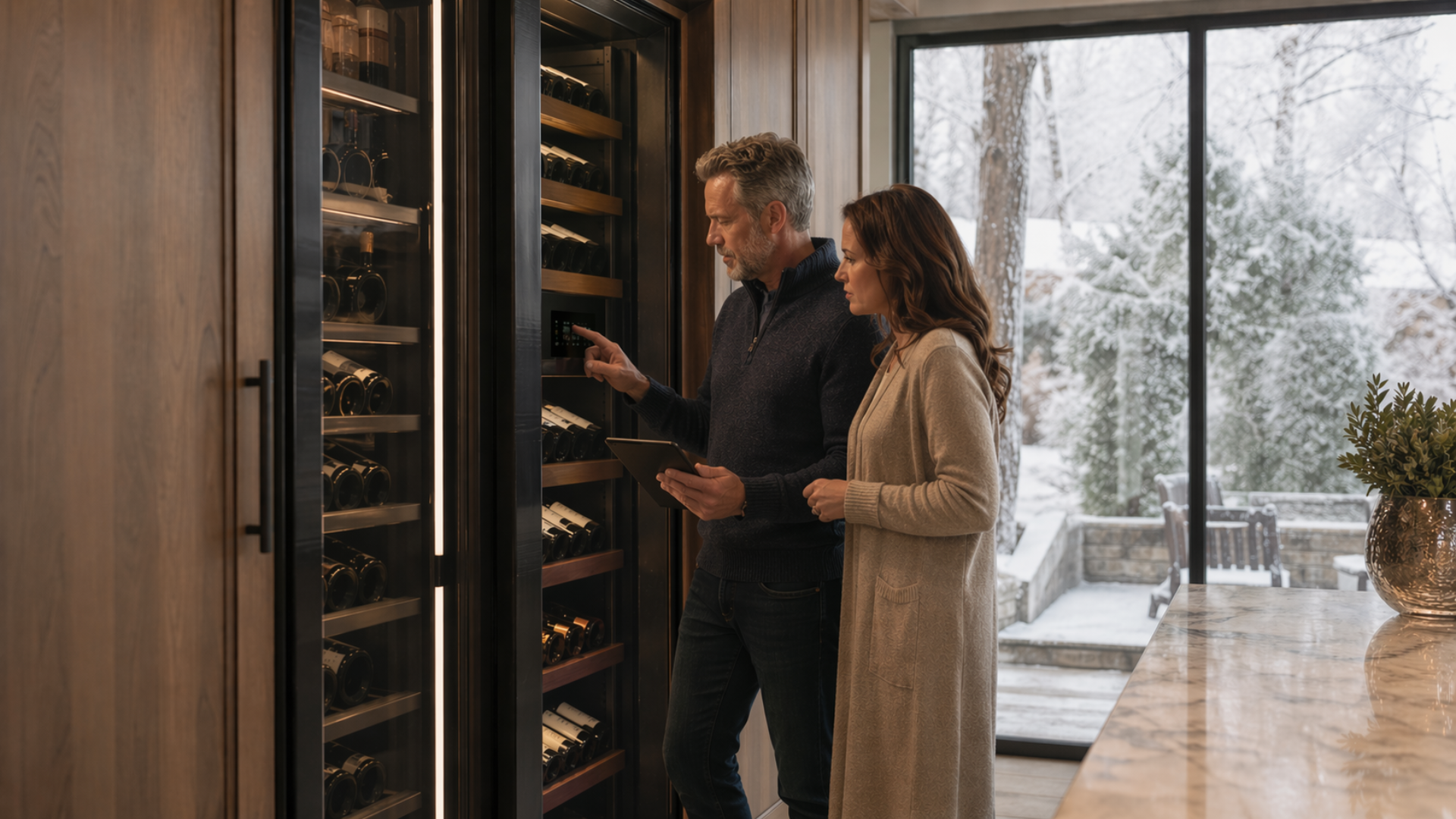
For monitoring, SensorPush HT1 ($50–70 sensor, $100 gateway) provides ±0.3°C accuracy with no monthly fees and smartphone alerts. A $200 monitoring setup protecting a $200,000 collection represents less than 0.1% of collection value — less than a single year of specialized wine insurance.
Humidity: The Half of Cellar Care Most Collectors Ignore
Ask a serious collector their cellar temperature and they answer immediately. Ask about humidity and most pause. That gap is where cork damage originates.
The ideal range is 60–70% RH. A 2021 neutron radiography study in the American Journal of Enology and Viticulture examined 200 bottles and found optimal cork performance peaks at 62–68% RH, where radial swelling pressure is highest and oxygen transmission lowest. Below 55% RH, measurable cork shrinkage begins within 4–6 months. A UC Davis study of 12,000 bottles over 7 years found a 3.8x higher rate of premature oxidation at sub-50% humidity compared to the 60–70% range.
Houston’s summer cooling cycles strip moisture continuously — a running unit in August is also a dehumidifier. Dallas drops below 50% RH for weeks at a time unnoticed. Neither city’s ambient conditions naturally support cellar humidity without active management.
Visible signs of failure include brittle corks, label lifting or staining, and visible cork recession below the bottle lip. By the time any of these appear, the damage to the seal is already done.
Sound and Cycling: What the Compressor Is Telling You
A functioning wine cellar cooling unit runs with a steady, low hum. Deviations from that baseline are diagnostic data:
Hissing or bubbling anywhere in the system indicates refrigerant leaks requiring immediate attention — this is never a wait-and-see situation. Grinding or banging points to bearing failure or liquid slugging in the compressor. Continuous humming without temperature drop suggests a seized compressor still drawing power. A temperature delta between air entering and exiting the cellar below the normal 12–15°F range points to low refrigerant or airflow restriction before the compressor itself fails.
For units from EuroCave, CellarPro, WhisperKool, Breezaire, and Wine Guardian, these symptoms manifest differently by brand — EuroCave sealed systems show refrigerant loss as INOA error codes before audible symptoms appear; CellarPro units typically exhibit condenser coil fouling first in Texas outdoor installations; Breezaire units show disproportionately high evaporator leak rates after approximately three years.
The Monitoring Investment vs. The Insurance Gap
Standard homeowner’s insurance covers wine at $1,000–$2,500 total — the same category as kitchen goods. Mechanical breakdown of cooling equipment, gradual temperature change, and power failure are explicitly excluded from most policies. Fewer than 10% of serious wine collections carry appropriate specialized coverage despite average affluent collection values around $200,000.
Chubb leads the specialized wine insurance market at $0.40–$0.80 per $100 of value annually. Even with a policy in place, a documented equipment failure during a covered event requires proof of the failure timeline — which a monitoring system with data logging provides and a manual thermometer check does not.
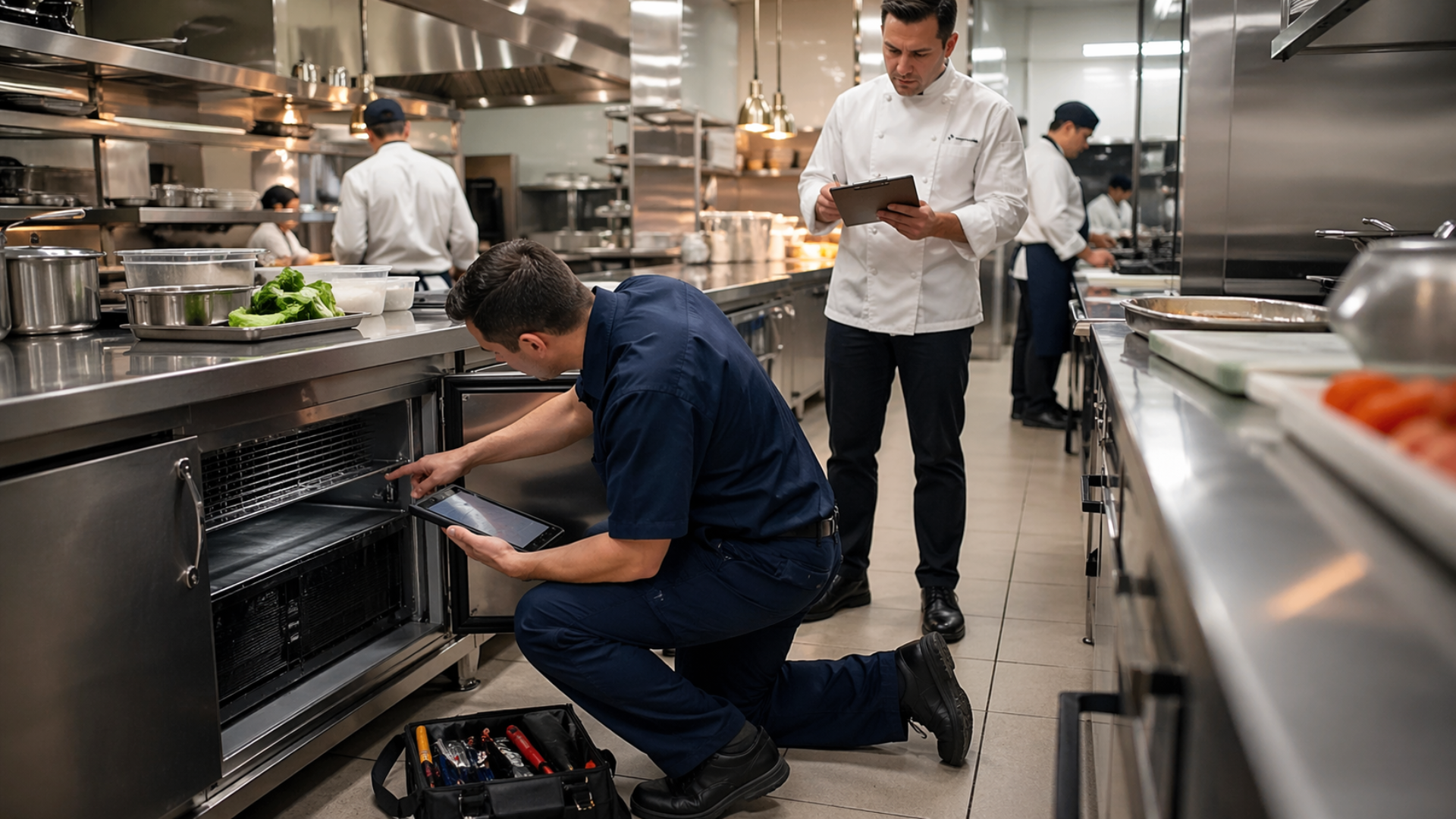
For wine cellar service that addresses cooling unit performance alongside the maintenance issues that precede failures — condenser cleaning, refrigerant verification, drain line clearing, door seal integrity — the window for preventive action is narrow in Texas. The pre-summer audit that catches a marginal compressor in April costs a fraction of the emergency replacement call in July.
That math holds for any collection worth protecting.
Uptown Appliance Repair serves wine cellar clients across Dallas (Highland Park, Preston Hollow, University Park) and Houston (River Oaks, Memorial, The Woodlands). Same-day emergency service available. Call (281) 758-9978.