




TL;DR
If your Sub-Zero won’t cool after a power outage in Houston, don’t panic — and don’t open the doors. According to Sub-Zero’s own factory FAQ, an empty refrigerator section typically takes about 3 hours before air temps rise above 45°F, and food becomes unsafe once the refrigerator compartment reaches 42°F (5°C) or the freezer climbs above 20°F (-6°C). The hour-by-hour guide below walks you through every decision point, from the moment the lights flicker back on to knowing when it’s time to call a technician. If your unit still isn’t cooling by hour 24, call Uptown Appliance Repair at (281) 758-9978 — this is exactly what we handle for Houston homeowners with premium appliance
Why Houston Power Outages Are Especially Hard on Premium Refrigeration
Houston homeowners don’t need to be told that the electrical grid can be unpredictable. Between hurricane season, active spring storm lines, and the intense heat loading on the ERCOT network during Texas summers, outages in the Houston metro range from quick flickers to multi-day events. What makes them particularly punishing for high-end refrigeration isn’t just the lack of power — it’s the quality of the power when it comes back online.
Voltage surges and brownout conditions during power restoration are when your Sub-Zero unit is most vulnerable. Unlike what many homeowners assume, Sub-Zero refrigerators do not have a built-in surge protector. Per Sub-Zero’s own FAQ on internal surge protection, their control boards are engineered to be durable, and units are designed to turn back on automatically when power is restored. However, a GFCI, AFCI, or even an aftermarket surge protector on the dedicated circuit can actually prevent the unit from restarting. That’s often the first and most overlooked culprit when a homeowner says their Sub-Zero won’t cool after a power outage.
The good news: most Sub-Zero units that fail to restart after an outage have a recoverable, non-catastrophic cause. The walkthrough below helps you identify exactly where you are in the diagnostic process.
Hour 0–2: The Outage Is Over. What Do You Do First?
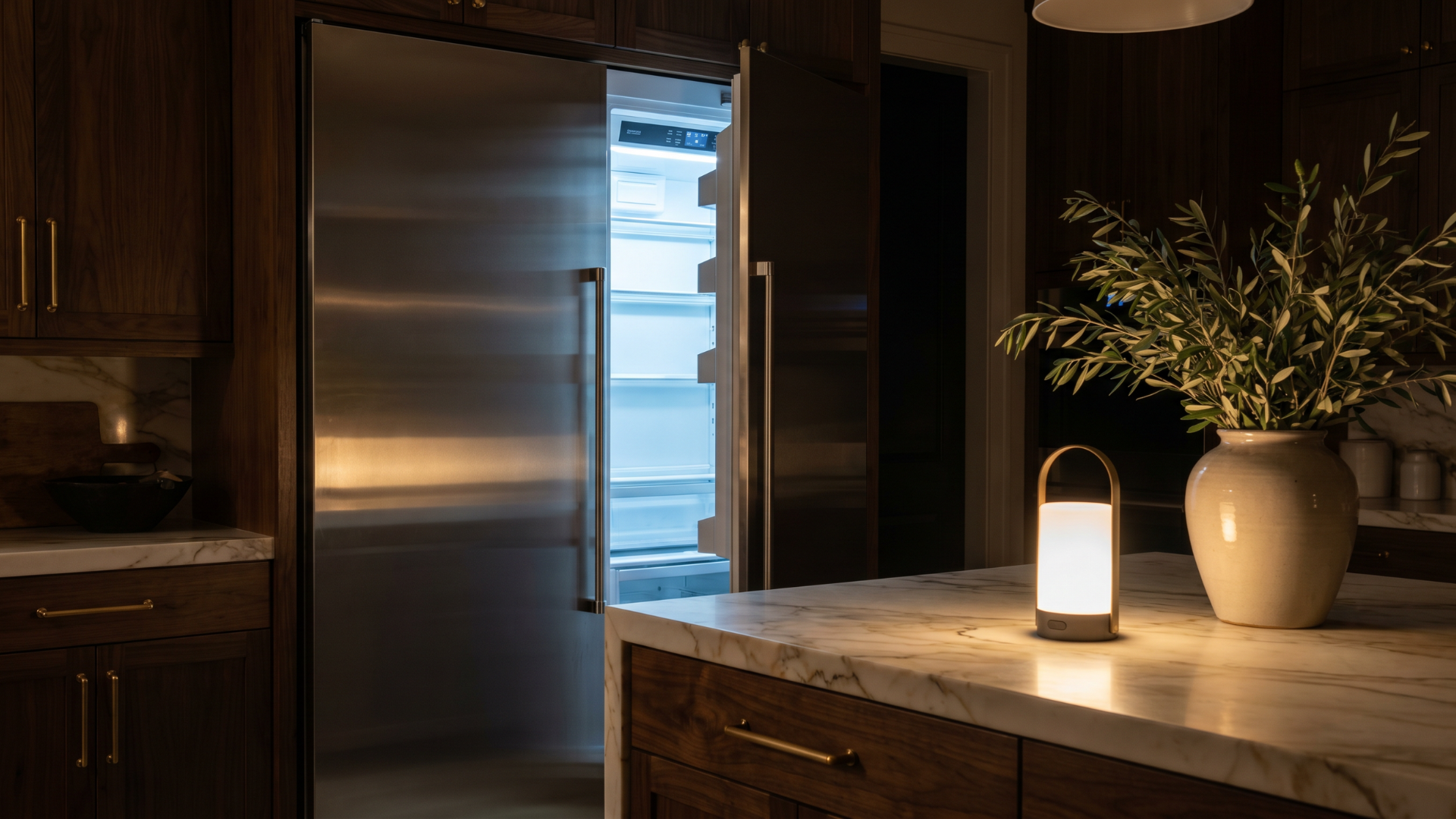
The single most important action is also the easiest: keep both doors closed.
According to the USDA and FoodSafety.gov, a refrigerator with the door kept closed will maintain safe food temperatures for approximately 4 hours. Sub-Zero’s own food storage guidance — which accounts for the superior insulation and build quality in their units — notes that in an empty Sub-Zero refrigerator, air temperatures typically don’t rise above 45°F for about 3 hours. If your refrigerator is well-stocked (and it usually is), it will hold cold even longer. The thermal mass of your food acts as an effective buffer.
What to do in the first two hours:
- Resist opening the doors. Even once. Every time the door opens, you’re trading precious cold air for warm Houston air — especially brutal in summer when your kitchen ambient temperature may be 78°F or higher.
- Note the time the power went out if you can determine it. Your food safety window is measured from that moment, not from when the power came back.
- Check your circuit breaker panel. After power is restored, confirm the dedicated circuit for your Sub-Zero has not tripped. These premium units typically run on a 15-amp dedicated circuit. If the breaker tripped during the surge, the unit will not restart on its own — and it may appear completely dead.
- Listen. Within a few minutes of power restoration on a normally functioning unit, you should hear the compressor hum and the internal fans begin circulating. Silence is an important diagnostic clue.
Hour 2–4: Power Is Back, But the Sub-Zero Still Isn’t Cooling — What’s Going On?
This is the window where your active diagnostic work actually begins. Your food is almost certainly still safe (assuming the unit was properly stocked and its doors remained closed), but it’s time to understand what’s happening with your appliance.
Step 1: Check the Display Panel
Modern Sub-Zero units (Classic, Designer, and Pro series with electronic controls) will feature a display. If the display is dark and completely unresponsive, the unit has not received power — in which case, return to the breaker panel. If the display is lit but showing an alarm or error code, make a note of it exactly.
Common post-outage codes to watch for:
- EC50 / Service flashing: This is Sub-Zero’s high-temperature alarm. If the temperatures are still near normal (refrigerator below 42°F, freezer below 20°F), Sub-Zero’s guidance is to first clean the condenser, then press and hold the door ajar alarm (bell symbol) for 15 seconds to clear the code. If temperatures are genuinely high, service is needed — do not clear the code prematurely.
- EC05 / EC06: These indicate a thermistor (temperature sensor) issue, which can sometimes be triggered by power instability. A soft reset — turning the unit off at the breaker for 30 seconds, then back on — sometimes resolves a sensor fault caused by a voltage irregularity.
- Alarm chiming with no code: This is often a door-ajar alarm that activated during the outage. Check that both doors are fully sealed, then hold the alarm button to silence.
Step 2: The Soft Reset
If the unit is receiving power but not actively cooling, perform the factory-recommended soft reset:
- Locate your Sub-Zero’s dedicated circuit breaker.
- Flip it off and leave it off for a full 30 seconds — not 5, not 10. Precision matters here.
- Flip it back on.
- Wait 5 minutes and listen for the compressor to engage.
This reset clears the control board’s memory and allows the unit to go through its normal startup sequence. Many post-outage “failures to cool” resolve entirely at this step, saving a service call.
Step 3: Check the Surge Protector (If You Have One)
Here’s a counterintuitive aspect for many Houston homeowners: if you added a surge protector to the outlet serving your Sub-Zero, it may be the primary reason the unit isn’t starting. Per Sub-Zero’s published FAQ, third-party surge protectors, GFCI, and AFCI devices can prevent the unit from powering on after an outage, even when grid power is fully restored. If you have any of these devices on the circuit, try bypassing them temporarily and plugging the Sub-Zero directly into a properly grounded outlet. If the unit springs to life, your electrician needs to evaluate the residential electrical setup — not your refrigerator.
Hour 4–8: The Unit Is Running, But Temperatures Aren’t Coming Down
Your unit has power, the display is active, the compressor is humming — but when you check the internal temperature, it’s not dropping at the rate you’d expect. What now?
First, recalibrate your expectations on recovery time.
Sub-Zero’s factory documentation is clear: always allow 24 hours for the unit to reach a new temperature setpoint. After a power interruption, especially if the unit was off for multiple hours and the kitchen is warm, full temperature recovery can legitimately take 12–24 hours. If the unit is running and the temperatures are trending downward, that’s a good sign — even if the display still reads 48°F at hour 6.
What to watch for in this window:
- Temperatures trending down, even slowly: This is normal recovery behavior. Keep the doors closed. Let your Sub-Zero do its work.
- Temperatures not moving at all after 6+ hours of compressor run time: This points to a mechanical issue. The most common post-surge culprits are a failed start relay or a degraded starting capacitor on the compressor. A power outage with voltage instability on restoration can degrade the capacitor that gives the compressor its initial electrical kick — you’ll hear a brief hum followed by a ‘click’ as the compressor attempts to start but fails. This requires a professional appliance technician.
- Fans running but compressor silent: If you can hear the internal evaporator fans circulating air but the compressor never engages, the refrigerant system may have been compromised or the control board may have a damaged component from a voltage surge.
Hour 8–12: The Food Safety Threshold
This is the critical decision window for your groceries. Sub-Zero’s factory food storage guidance establishes two specific thresholds Houston homeowners need to know:
Refrigerator section: If food has reached 42°F (5°C), do not keep it. > Freezer section: If food has risen above 20°F (-6°C), do not refreeze it.
These are Sub-Zero’s own published thresholds — more conservative than the USDA’s general 40°F guideline — and they reflect the standard for food that may have been warming for an unknown period.
Practical steps for hour 8–12 if your unit is still not cooling:
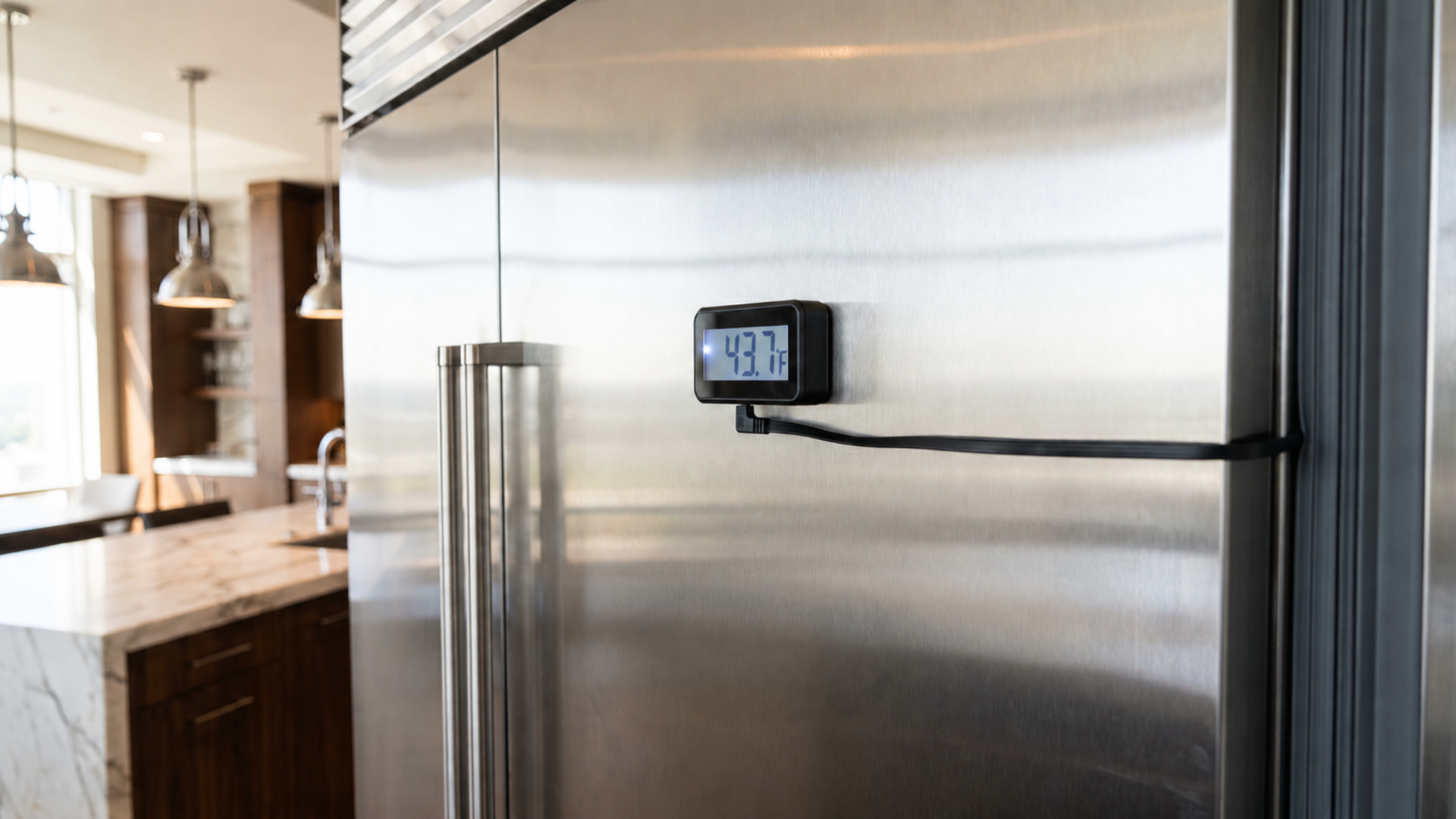
- Use an appliance or probe thermometer to check actual internal temperatures — do not rely on the control panel display if you suspect a sensor issue.
- If refrigerator temps are below 42°F: Your food is still safe. Continue monitoring.
- If refrigerator temps are above 42°F: Begin transferring the most perishable items — proteins, dairy, eggs, deli meats — to a cooler with ice. Hard cheeses, condiments, and certain produce have more tolerance; refer to FoodSafety.gov’s detailed power outage chart for item-by-item guidance tailored to a power outage.
- For the freezer: A fully stocked Sub-Zero freezer will hold safe temperatures for approximately 48 hours if the door stays closed; a half-full unit for about 24 hours. Ice crystals still present generally indicate safe conditions. No ice crystals, and temperatures above 40°F for more than 2 hours, mean you should discard perishable proteins per USDA guidance.
A note on generators: Sub-Zero’s official guidance states that their products are not designed for long-term operation on generator power. If possible, keep the unit off at the breaker until full grid power is restored. If you must run it on a generator, ensure the generator is properly sized — an undersized generator can create exactly the kind of voltage instability that damages the control board or compressor start components. For more detailed information, consult Sub-Zero Generator Considerations.
Hour 12–24: The Unit Still Won’t Cool. Is It Time to Call?
Yes — at this point, it is definitely time.
If your Sub-Zero has had 12 or more hours with restored grid power, has been properly reset at the breaker, has no surge protector blocking its dedicated circuit, and is still not achieving temperatures within 10°F of its setpoint, you are dealing with a mechanical or electronic failure that requires a trained technician.
The most common technician-level repairs after a Houston outage include:
- Compressor start relay replacement: A small, relatively inexpensive component that provides the crucial starting “kick” for the compressor. This is often quick to diagnose and replace.
- Starting capacitor replacement: This presents similarly to a failed relay (compressor hums briefly then clicks off). This is a technician repair. Power outages with voltage instability during restoration are a known cause of capacitor degradation.
- Control board damage from voltage surge: Less common given Sub-Zero’s renowned board durability, but possible in a severe surge event. Control boards are the most expensive single component in these units, which is why accurate diagnosis by a qualified technician matters — you want to confirm board damage before such a significant replacement.
- Condenser blockage: Houston’s climate means condenser coils can accumulate dust, pet hair, and debris faster than in drier climates. A partially blocked condenser forces the compressor to work harder and can trigger high-temperature shutdowns. While this is often a DIY-addressable issue before a service call (cleaning the coils), a technician can confirm if this is the root cause after an outage.
One more thing to check before you call: Confirm that the condenser coils are clean and that there is adequate clearance for ventilation around the unit. Sub-Zero recommends precise minimum clearance for proper airflow and notes that inadequate ventilation is a common reason the unit runs but doesn’t reach optimal temperature.
FAQ
My Sub-Zero display is completely dark after the power came back. What’s the first thing to check?
Start at your home’s breaker panel. The most common reason a Sub-Zero shows no display after an outage is a tripped dedicated circuit. Reset the breaker, wait 30 seconds, then flip it back on. If the display comes on but shows an error, the unit received power but needs a reset or service. If the display stays dark, check that the outlet is live with a simple plug-in tester or by plugging in another small appliance.
How long does it take a Sub-Zero to cool back down after a power outage?
Sub-Zero’s factory documentation states that you should allow 24 hours for the unit to reach its full operating temperature setpoint. After a prolonged outage — particularly in Houston’s summer heat — it’s not unusual for the unit to take 12–18 hours to fully recover its set temperatures, even while functioning normally. You should, however, observe temperatures trending downward within the first 2–3 hours of compressor operation.
At what temperature is Sub-Zero refrigerator food unsafe? Per Sub-Zero’s published food storage guidelines, 42°F (5°C) is the threshold at which refrigerated food should not be kept. For the freezer compartment, the threshold is 20°F (-6°C) — if freezer temperatures rise above this, food should not be refrozen. These are Sub-Zero’s own specifications and align closely with USDA food safety guidance for premium appliances.
Can a surge protector actually prevent my Sub-Zero from turning back on?
Yes, this is a common point of confusion for homeowners. Sub-Zero specifically notes in their FAQ that surge protectors, GFCI outlets, and AFCI devices can prevent power from being restored to the unit after an outage. While the unit is designed to turn back on automatically with power restoration, a protective device upstream may be holding it off. If you have any of these devices on the circuit, checking (and potentially bypassing them temporarily) is the first thing to investigate after confirming the breaker hasn’t tripped.
I hear a brief hum and then a clicking sound, but the compressor never runs. What does that mean?
This is a classic presentation of either a failed start relay or a degraded starting capacitor — the critical components that give the compressor its initial electrical push to begin cooling. Power outages with voltage instability during restoration are a known cause of capacitor degradation. This is a technician repair, but it’s important to note that it’s generally not a full compressor replacement. If a technician correctly diagnoses this and you’re quoted a full compressor replacement without confirming the relay/capacitor first, we recommend getting a second opinion.
Should I run my Sub-Zero on a generator after a Houston power outage?
Sub-Zero’s official guidance advises turning the unit off at the circuit breaker until full grid power is restored, and only running it on a generator briefly if absolutely necessary. An improperly sized generator can create voltage irregularities that are often more damaging to the control board than the initial outage itself. If you do run on generator power, ensure your generator is properly rated for the Sub-Zero’s running amp draw and startup wattage before connecting it.
My Sub-Zero cooled back down but now the ice maker isn’t working. Is that related?
Very likely, yes. Ice maker systems are often the last subsystem to fully recover after a power interruption — they depend on the freezer reaching a stable, consistent temperature before the ice-making cycle can reliably initiate. This stabilization can take 12–24 hours after a prolonged outage. We recommend giving your Sub-Zero a full 24 hours of stable temperature operation before troubleshooting the ice maker separately. If it still hasn’t produced ice after that window, that would warrant its own diagnostic and potential service call.
Sources
- Sub-Zero Factory FAQ: Food Storage in a Sub-Zero Without Power — establishes the 42°F refrigerator and 20°F freezer safety thresholds directly from the manufacturer.
- Sub-Zero Factory FAQ: Internal Surge Protectors — explains GFCI/AFCI interaction and the absence of a built-in surge protector.
- Sub-Zero Factory FAQ: Refrigerator and Freezer Temperature Settings — details factory-recommended setpoints (38°F refrigerator, 0°F freezer) and the crucial 24-hour recovery guidance.
- Sub-Zero Factory FAQ: EC50 Error Code and Service Flashing — provides guidance on handling a common post-outage alarm code.
- Sub-Zero Factory FAQ: Generator Considerations — official guidance from Sub-Zero on running their appliances on backup generator power.
- FoodSafety.gov: Food Safety During Power Outage — comprehensive USDA guidelines for refrigerator/freezer food safety thresholds and item-by-item recommendations during a power disruption.
- ERCOT Grid and Market Conditions Dashboard — real-time data and insights into Texas grid reliability and generation outage status.
Related Reads from Uptown
- Why Your Sub-Zero Isn’t Cooling: 7 Common Causes & Solutions — a deeper diagnostic guide for ongoing cooling issues that persist beyond the post-outage window.
- Smart Appliance Reconnect After Power Outage Texas: Getting Your Wi-Fi Sub-Zero and Connected Wolf Range Back Online — once the cooling is confirmed, find out how to get your connected appliances talking to your home network again.
- Smart Appliance Repair: Diagnosing Connected Sub-Zero and Wolf Units — explores how app-based diagnostics and remote monitoring can assist in servicing modern Sub-Zero units.
If you’ve meticulously walked through every step in this guide and your Sub-Zero still won’t cool, the right move is a call, not another reset. Our expert technicians at Uptown Appliance Repair work with Sub-Zero refrigeration in Houston and Dallas kitchens daily — we know exactly what these sophisticated units can experience the morning after a significant storm. Reach us directly at (281) 758-9978 or conveniently schedule a visit at uptownappliancerepair.com/contact. Your premium appliance deserves premium care.